

Understanding Employer Matching
A 401(k) match is employer-provided money added to your retirement account based on your contributions. It’s essentially free cash—but only if you contribute enough. To maximize 401k match, you need to know your plan’s specific formula.
Most employers match a percentage of your salary, often dollar-for-dollar up to a cap. For example, a 50% match on 6% of pay means you contribute 6%, they add 3%.
Missing this is leaving real money on the table.
Understanding your plan's exact structure is the first step to capturing every dollar. Many workers fail to contribute enough to trigger the full match, losing thousands over their careers.
Setting a contribution rate at or above the match threshold ensures you never miss out.
How Vesting Works
Common structures include immediate vesting or graded vesting over years. Immediate vesting gives you full ownership right away.
Graded vesting often requires 2-6 years of service before the match is fully yours.
Know your vesting schedule. If you leave before fully vesting, you forfeit some or all of the employer contributions.
This is critical when job-hopping.
Some employers match per paycheck, so waiting until year-end can reduce your total match. Contribute consistently throughout the year to capture the full employer contribution.
Maximize 401k Match: The Essential Strategy
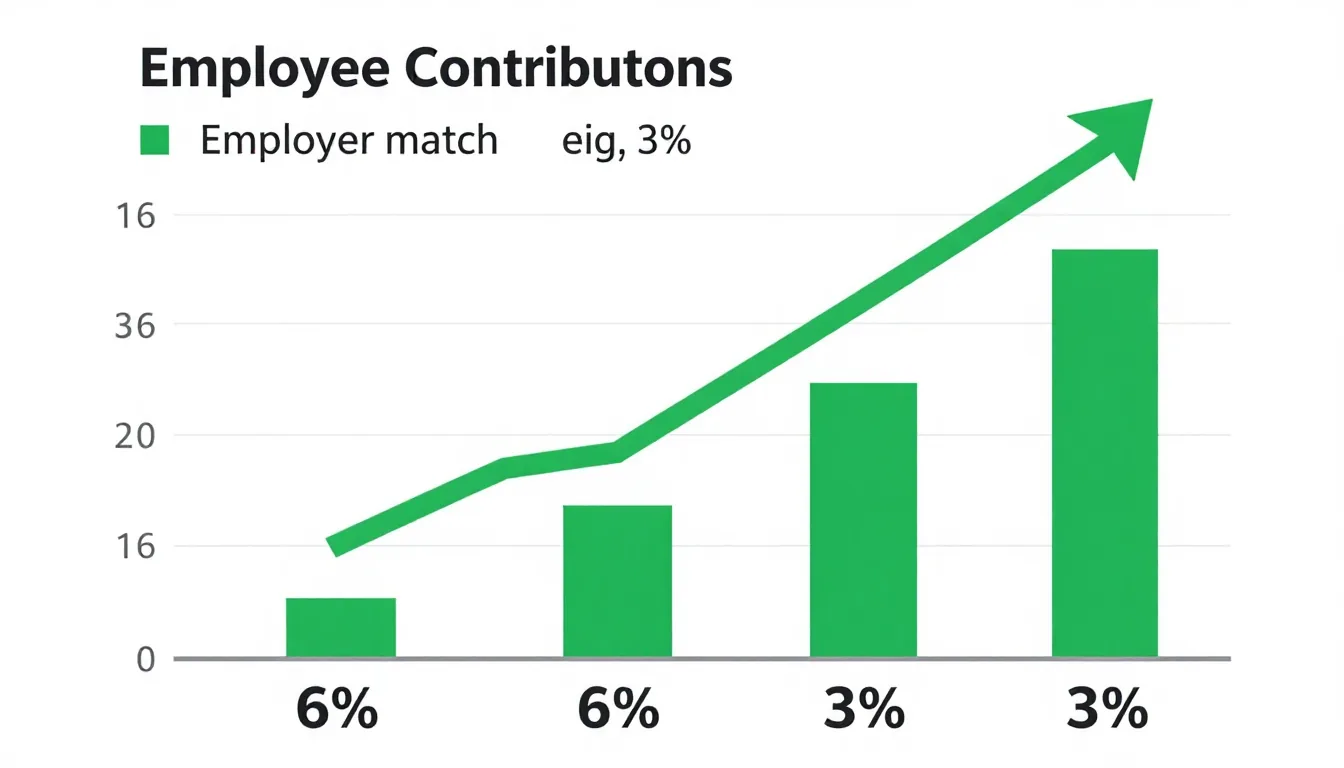
The first step is contributing at least enough to get the full match. If your employer matches 100% up to 5% of salary, you must contribute 5%.
Anything less means you're leaving free money.
Set your contribution rate to at least the match threshold. If you can't afford that now, start lower and increase gradually.
Many plans allow automatic escalation.
To maximize 401k match, prioritize this goal above other savings. The immediate 50-100% return is unbeatable compared to most investments. Use raises or bonuses to bump your contribution rate annually.
Steps to Capture Full Match
First, review your plan documents or online portal to find the match formula. Second, adjust your contribution percentage to meet or exceed the maximum matching limit.
Third, check annually—limits change.
Use a compound interest calculator to see the long-term impact of capturing the match. Even a small match can grow into tens of thousands over 30 years.
Automate contributions to avoid missing a paycheck. Set up automatic annual increases to stay ahead of salary changes and contribution limits.
Common Mistakes That Cost You Money
Contributing below the match threshold is the biggest error. Another is not understanding vesting—if you leave early, vested match stays, unvested disappears.
Also, avoid waiting until year-end: some employers match per paycheck.
If you can't contribute enough, prioritize the match before other savings goals. The immediate return of 50-100% beats almost any investment.
Don't skip the match to fund an IRA first.
Failing to increase contributions after a raise is another pitfall. Life changes often allow you to contribute more, locking in more match.
Review your plan each time your income rises.
When to Contribute More
After securing the full match, consider whether to max out the 401(k) or invest elsewhere. The match is a guaranteed return, so always capture it first.
Then decide based on your overall financial plan.
High income earners may want to contribute up to the IRS limit ($23,000 in 2026, plus catch-up). But never skip the match to fund an IRA or taxable account—the match is likely better.
Prioritize match capture above all else.
Once the match is fully secured, you can explore other retirement accounts like Roth IRAs for tax diversity. The key is to never leave employer contributions on the table.
Final Tips for Long-Term Success
To maximize 401k match year after year, know your plan, contribute enough, and stay until vested. Automate increases to keep pace. Review annually.
Your employer’s match is one of the best wealth-building tools available. Don’t leave it behind. For more on retirement planning, see our Personal Finance section.
External resources: IRS 401(k) contribution limits and Bogleheads employer plan guide offer deeper details. Use them to refine your strategy and maximize 401k match every year.