
Meet the Ghostly Neutrino
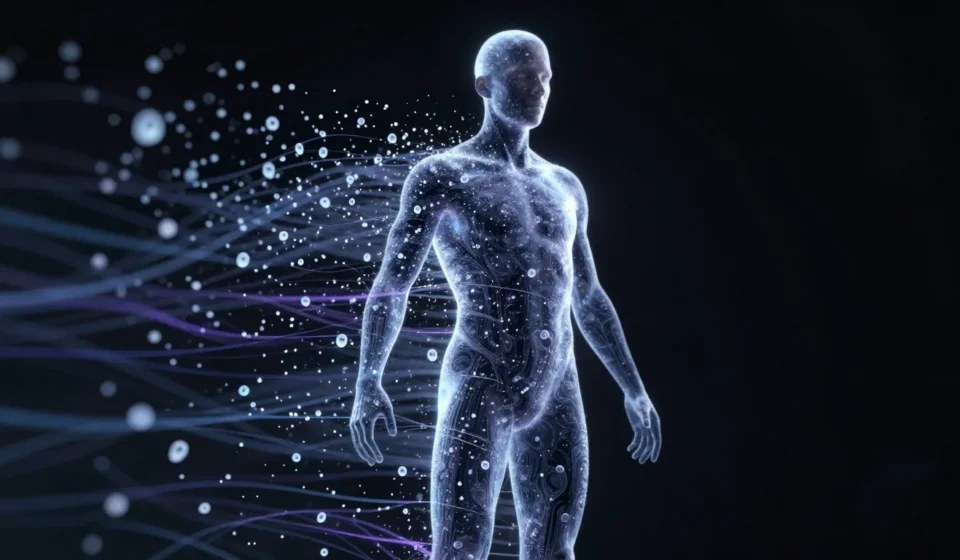
Neutrinos ghost particles are aptly named: trillions pass through your body every second without a trace. But these elusive subatomic particles hold the keys to the universe’s deepest mysteries.
First proposed by Wolfgang Pauli in 1930, neutrinos ghost particles were initially thought to be a desperate theoretical fix. Pauli himself called his idea a 'desperate remedy' to explain missing energy in radioactive decay.
It took 26 years before scientists finally detected one.
Neutrinos come in three types, or 'flavors': electron, muon, and tau neutrinos. They can oscillate between these flavors as they travel, a quantum quirk that earned the 2015 Nobel Prize.
This transformation proves neutrinos have mass, though it's astonishingly tiny—a million times lighter than an electron.
Detecting the Invisible: A Challenge of Epic Proportions
Neutrinos ghost particles are notoriously hard to catch. They interact only via the weak nuclear force and gravity, ignoring electromagnetic forces entirely.
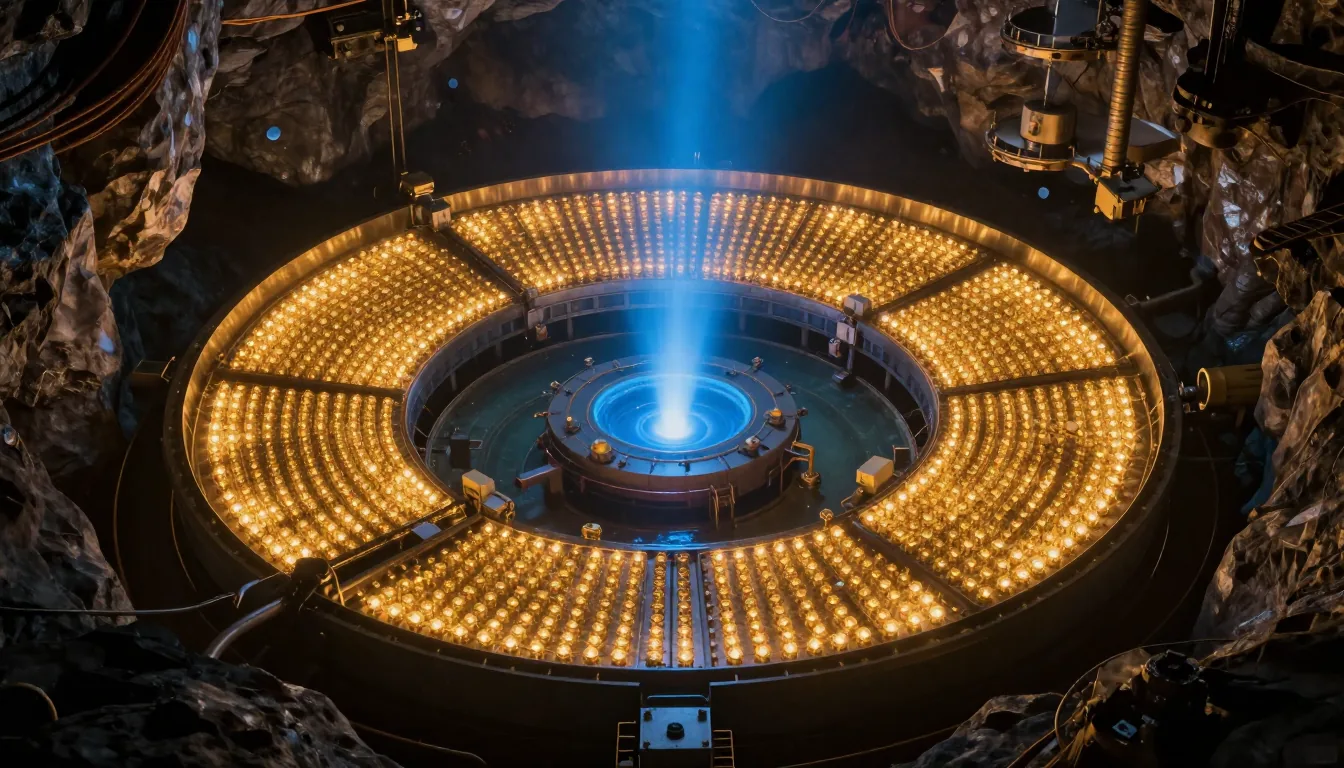
To spot them, scientists build colossal detectors in deep mines, under ice, or in the ocean, shielded from cosmic rays.
One famous detector is the Super-Kamiokande in Japan—a 50,000-ton tank of pure water lined with light sensors. When a neutrino occasionally strikes a water molecule, it produces a faint flash of Cherenkov radiation.
Analyzing these flashes reveals the neutrino's energy and direction.
Another giant is the IceCube Neutrino Observatory at the South Pole, which uses a cubic kilometer of Antarctic ice. Thousands of sensors buried deep track neutrino interactions from across the universe.
Detecting a single high-energy neutrino can take years of patience and terabytes of data.
Neutrinos Ghost Particles: Why the Ghostly Nickname?
Neutrinos ghost particles earn their nickname because they can pass through lead walls light-years thick without interacting. They are the most abundant massive particles in the universe, yet they remain invisible to our eyes and most instruments.
To imagine their elusiveness, think of a ghost walking through a crowded room. That's a neutrino passing through Earth.
For every neutrino that does interact with matter, billions pass through without a ripple. That's why detecting them requires enormous volumes and painstaking analysis.
Why Neutrinos Matter for Astrophysics
Neutrinos ghost particles are cosmic messengers from the most extreme environments. They carry information from the core of the Sun, from supernova explosions, and even from distant active galactic nuclei.
Unlike light, neutrinos escape dense matter almost unimpeded, bringing us news from places no photon can reach.
In 1987, neutrinos from a supernova in the Large Magellanic Cloud were detected hours before its light reached Earth. This confirmed that neutrinos are released early in a stellar collapse.
Studying them helps refine models of how stars explode and how heavy elements are forged.
Solar neutrinos have also solved a long-standing puzzle: why the Sun produces fewer electron neutrinos than predicted. The answer lies in neutrino oscillation—they change flavor en route, a discovery that reshaped particle physics. Beyond our Sun, Popular Science & Space articles often highlight how neutrinos from deep space can reveal new physics.
The Future of Neutrino Astronomy
Scientists are building next-generation detectors to push neutrino astronomy further. The Hyper-Kamiokande in Japan, set to start in 2027, will be ten times more sensitive than its predecessor.
It aims to study neutrino properties with unprecedented precision.
Another project, the Deep Underground Neutrino Experiment (DUNE) in the United States, will send a beam of neutrinos 1,300 kilometers through Earth. By comparing the flavors at source and destination, DUNE will probe matter-antimatter asymmetry and potentially explain why the universe is made of matter.
Studying neutrinos ghost particles may also help us understand dark matter. Some theories suggest that sterile neutrinos—a hypothetical fourth flavor—could be a component of dark matter.
Experiments like the KATRIN in Germany are searching for these elusive particles, pushing the boundaries of our knowledge.
We are just beginning to listen to the universe’s ghostly whispers. Each detected neutrino carries a story from billions of light-years away, telling us about the violent processes that shaped our cosmos. For more on the wonders of particle physics and space, check out ScienceAlert’s neutrino coverage and the Nobel Prize summary on neutrino oscillations.