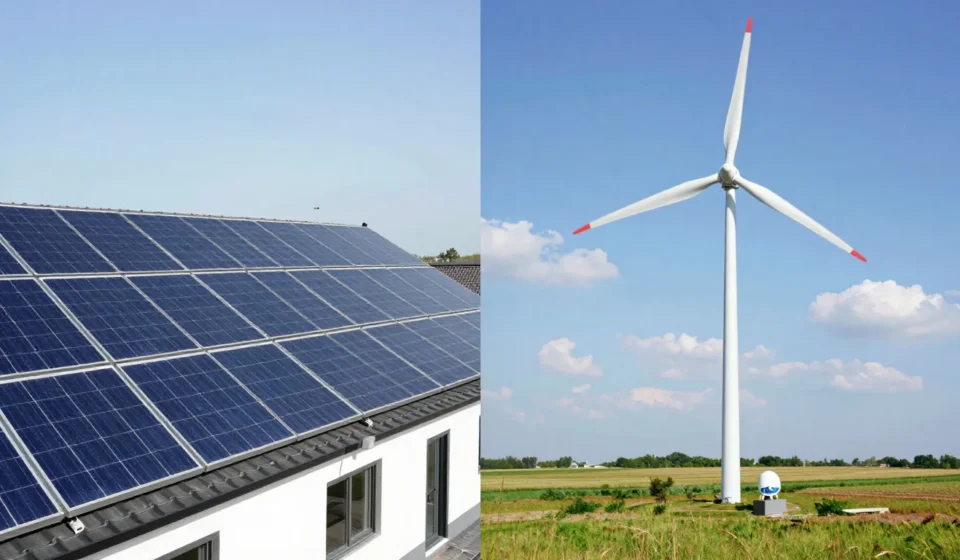

Understanding Your Home Renewable Energy Options
When considering home renewable energy, solar panels and wind turbines are the most popular choices. Both reduce carbon footprints and energy bills, but their suitability depends on location, budget, and energy needs.
This guide compares costs, efficiency, and climate factors to help you decide.
Cost Comparison: Upfront Investment and Long-Term Savings

Solar panel installation costs have dropped significantly, averaging $15,000 to $25,000 for a typical home system before incentives. Wind turbines cost between $4,000 and $8,000 per kilowatt of capacity, but residential turbines often need higher installation and maintenance expenses due to tower height and moving parts.
Federal tax credits and local rebates can offset 30% or more of solar costs. Wind projects may qualify for similar incentives, but fewer installers means higher initial quotes.
Over 20 years, solar savings are more predictable, while wind energy payback periods vary heavily depending on wind speed.
For a balanced home renewable energy approach, many homeowners combine both technologies. The initial investment for a hybrid system can be higher, yet it offers energy production in diverse weather conditions.
When evaluating home renewable energy, upfront costs should be weighed against potential utility savings over time.
Efficiency and Energy Output in Different Climates
Solar panels generate power whenever sunlight hits them, but output drops on cloudy days and at night. Average efficiency ranges from 15% to 22%, with newer panels reaching higher rates.
They work best in regions with at least 4–6 peak sun hours daily.
Wind turbines convert kinetic energy into electricity with efficiencies around 20%–45% depending on wind speed. They require consistent winds of 10–15 mph (4–5 m/s) to be viable.
Urban areas often have turbulent winds, making turbines less effective than in open rural or coastal zones.
Suitability by Geographic Location
Solar panels are ideal for sunny, southern-facing roofs in most climates. They also perform reasonably in cooler temperatures, as heat reduces efficiency.
Wind turbines shine in windy plains, hilltops, or near coastlines—but poorly in wooded or densely built neighborhoods.
Sustainability & Ecology experts recommend assessing your site’s solar access and average wind speeds before committing. Tools like the National Renewable Energy Laboratory’s maps can guide your choice. The efficiency of your home renewable energy system largely depends on these local conditions.
Maintenance and Lifespan Considerations
Solar panels require minimal upkeep—occasional cleaning and annual inspections. They typically last 25–30 years with gradual degradation.
Wind turbines have moving parts that need more frequent servicing, lubricating, and part replacements, with lifespans of 20–25 years.
Nuisance factors include noise and visual impact. Turbines produce a humming sound that some find bothersome, while solar panels are silent and less intrusive.
Check local zoning laws, as many areas restrict turbine height or require permits. Maintenance needs for home renewable energy can influence your long-term satisfaction.
Environmental Impact Beyond Carbon Reduction
Both technologies have low emissions over their lifecycle. Solar panel manufacturing involves energy-intensive processes and rare minerals, but recycling programs are growing.
Wind turbine blades are harder to recycle, though most components are metal. Land use differs: turbines require larger clearances, while solar mounts on roofs or ground without interfering with agriculture.
For more data, visit Energy.gov’s solar guide and AWEA’s wind basics. Choosing a home renewable energy solution also means considering your environmental priorities beyond carbon.
Key Takeaways for Your Home
If your home has good sun exposure and limited open space, solar is the straightforward winner for most homeowners. If you live on an acreage with steady winds, a small wind turbine can complement solar.
Hybrid systems are also possible, but higher upfront costs require careful payback analysis.
Ultimately, the best choice depends on your energy goals, local climate, and property characteristics. Consult multiple installers and use energy modeling tools to compare home renewable energy options side by side.
Many find that a combination of solar panels and wind turbines provides the most resilient home renewable energy system.