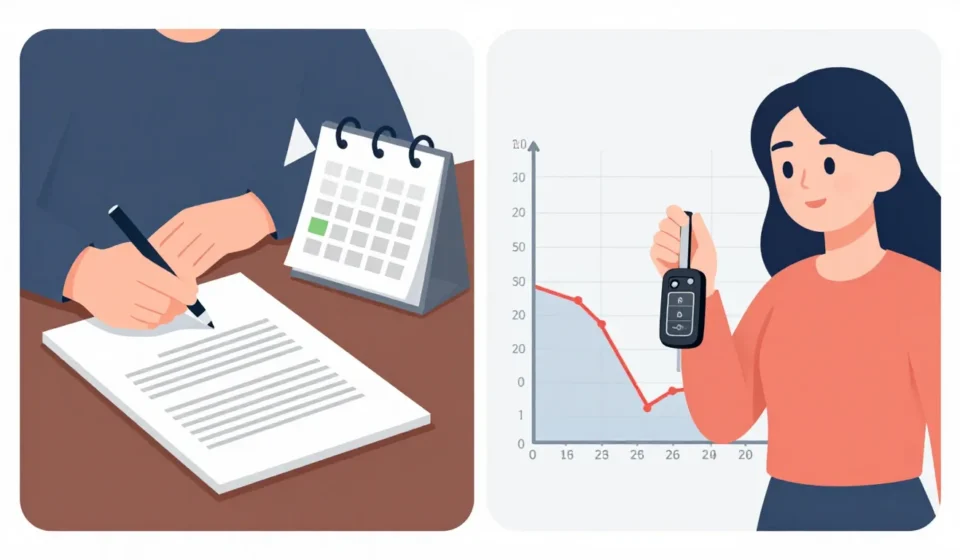

Depreciation: The Silent Slice of Your Payment
When comparing leasing vs buying car, depreciation is the largest hidden expense. New cars lose about 20% of value in the first year and 60% after five years.
With a lease, you only pay for the depreciation during the lease term, plus fees and interest, keeping monthly payments lower but never building equity.
Leasing shifts the risk of excessive depreciation to the lessor, but you still feel it through higher lease costs on models that depreciate quickly. Finance experts warn that buying and holding for 8–10 years almost always beats leasing on total cost per mile.
For example, a $35,000 car purchased and kept for 10 years costs about $0.40 per mile, while a series of three-year leases costs $0.60 per mile or more.
Luxury vehicles often see the steepest drops. A $50,000 sedan may lose $20,000 in just two years.
That loss is baked into your lease payment or your car’s trade-in value if you buy.
Interest Rates and Financing Costs
Buying: Loan APR and Opportunity Cost
When considering leasing vs buying car, the loan APR adds directly to total cost. A 6% APR on a $35,000 loan over five years adds over $5,600 in interest.
The money you tie up could be invested elsewhere, but once the loan ends, you own the car free and clear.
Your credit score heavily influences the APR that lenders offer. A score above 750 might land you a rate near 4%, while below 650 could push it above 10%.
Lower payments can save thousands over the loan term.
Leasing: Money Factor and Hidden Fees
Leases use a money factor instead of an APR, which can mask true cost. Multiply by 2,400 to get an approximate APR.
For example, 0.0025 equals 6% APR, but leases include acquisition fees, disposition fees, and mileage penalties that add $1,000–$2,000 beyond the monthly payment.
These extra costs are often overlooked. The acquisition fee may be $500–$1,000, and the disposition fee at lease end typically runs $300–$500.
Always ask for a complete breakdown before signing.
Mileage Restrictions and Wear Costs
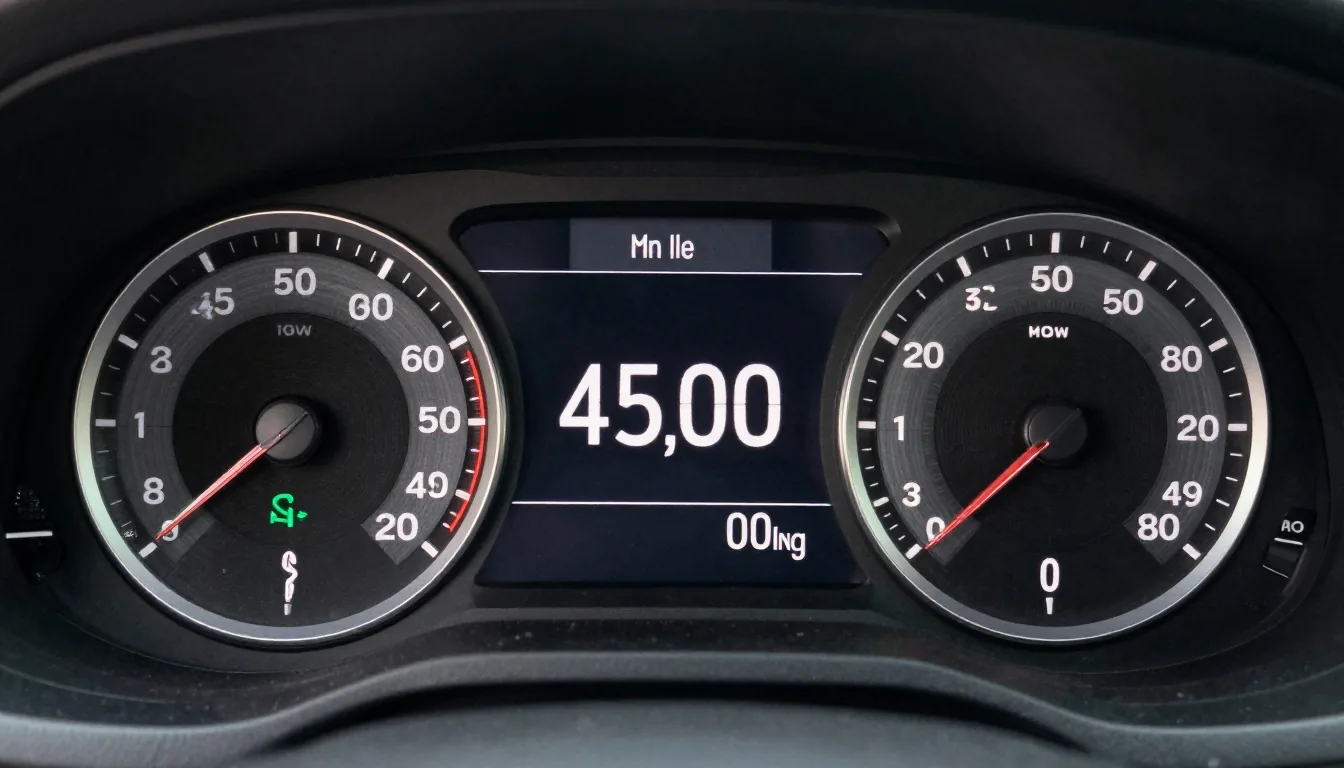
Mileage limits are a key factor in the leasing vs buying car equation. Lease contracts typically allow 10,000–15,000 miles per year, with overage charges of $0.15–$0.30 per mile.
If you drive 18,000 miles annually, a three-year lease with a 12,000-mile limit costs about $1,800 in penalties. Buying eliminates caps, but high mileage accelerates depreciation.
Excess wear and tear can also trigger fees. Dents, scratches, or worn tires might cost you hundreds at lease return.
With a purchased car, you can ignore minor blemishes until you sell.
Leasing vs Buying Car: The Cost Comparison
This fundamental decision—leasing vs buying car—affects your monthly budget and long-term wealth. Leasing offers lower payments and a new car every few years.
Buying builds equity and provides payment-free years after the loan ends, with lower total cost per mile over time.
For a typical driver covering 12,000 miles a year, leasing a compact car might cost $300 monthly versus $450 for a loan. But after five years, the buyer has a paid-off asset, while the lessee is always in a new lease.
Long-Term Ownership vs. Perpetual Payments
Ultimately, the leasing vs buying car decision hinges on your driving habits and financial goals. Buying a car and keeping it 8–10 years spreads the cost over many years, while leasing always has a payment.
For low-mileage drivers who value new cars, leasing can work, but for maximum savings, buying usually wins.
Consider resale value as well. Some cars hold value better than others.
Models like the Toyota Tacoma or Subaru Outlaw depreciate slowly, making them excellent buys but less favorable for leases due to lower residual values. Check residual percentages online.
For more insights, visit our Personal Finance section. Also check Edmunds’ leasing vs buying guide and NerdWallet’s comparison for detailed calculators.