
What Is Hawking Radiation?
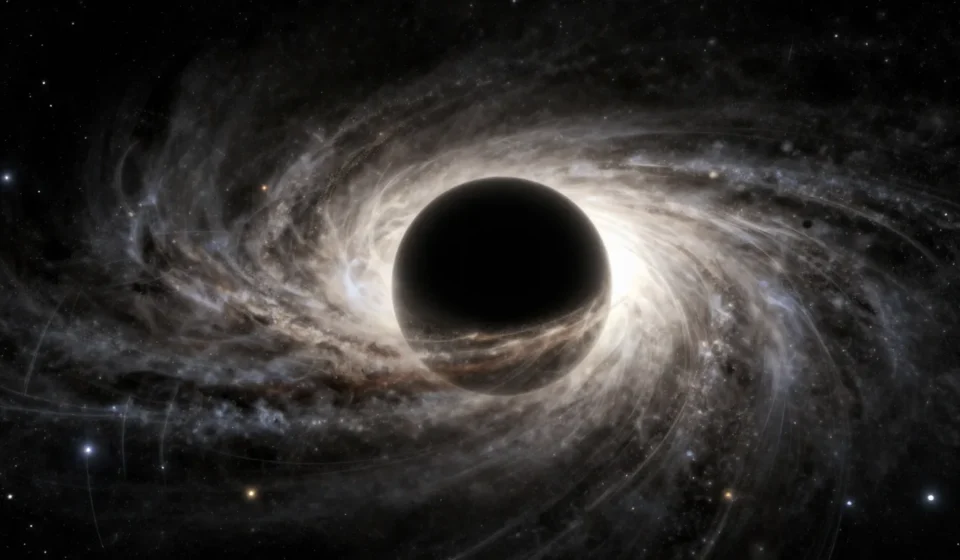
Imagine a black hole not as an eternal vacuum cleaner, but as a slowly leaking balloon. That's the essence of Hawking radiation, a quantum process that causes black holes to evaporate over cosmic timescales.
Proposed by Stephen Hawking in 1974, this idea revolutionized our understanding of black holes, linking gravity with quantum mechanics.
The Quantum Party at the Event Horizon
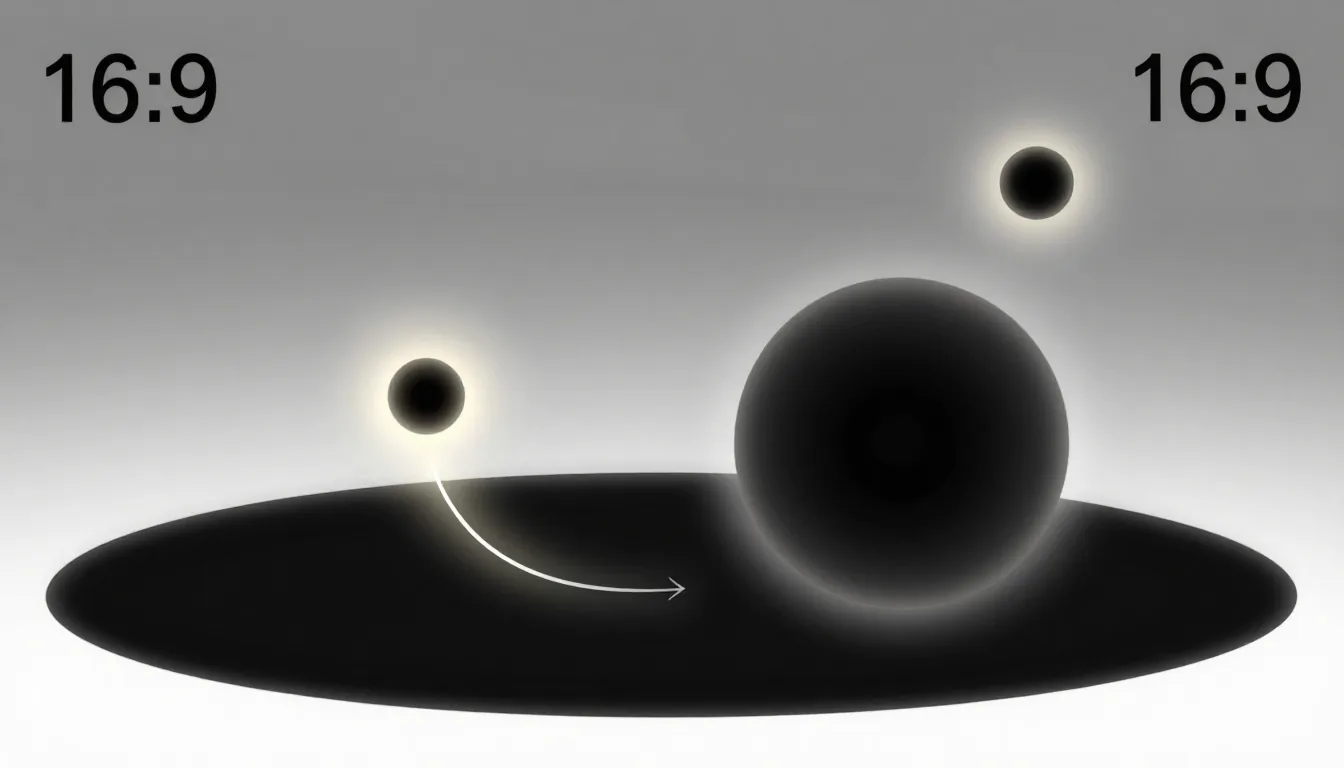
In empty space, particle-antiparticle pairs constantly pop into existence and annihilate almost instantly. Normally, this is a silent quantum dance.
But near a black hole's event horizon, something bizarre happens.
One particle can fall into the black hole while its partner escapes. The escaping particle becomes real Hawking radiation, carrying away energy.
The black hole effectively loses mass to balance the energy book.
This is like a cosmic embezzlement: the black hole pays for the particle's existence with its own mass. The process is slow but relentless.
Over time, the black hole shrinks and eventually disappears.
Slow Leak Over Eons
The evaporation is incredibly slow. A black hole with the mass of our Sun would take about 10^67 years to completely evaporate.
That's a number with 67 zeros!
For supermassive black holes, like the one at the center of our galaxy, the timescale is even longer: around 10^90 years or more. As the black hole shrinks, it gets hotter and radiates faster.
The final moments end in a burst of energy, like a cosmic firework.
Smaller black holes, if they exist, would evaporate faster. Primordial black holes from the early universe might be exploding right now.
Astronomers search for these final flashes using telescopes scanning the sky.
What This Means for the Universe
If Hawking radiation is correct, every black hole has an expiration date. The universe, which currently hosts countless black holes, will eventually become a graveyard of evaporating objects.
In the far future, the last black holes will explode, leaving behind a cold, dark cosmos filled with diffuse particles.
This is a crucial part of the Popular Science & Space narrative about the ultimate fate of the universe. It suggests that nothing is permanent, not even the most extreme objects. The heat death of the universe may be preceded by a black hole era.
Testing the Theory of Black Hole Evaporation
Direct observation is impossible with today’s telescopes. The radiation from a solar-mass black hole is only a trillionth of a degree above absolute zero. However, physicists are testing the idea with NASA experiments using analog systems, such as sonic black holes in fluids.
So far, the math holds up, and most experts accept Hawking radiation as a genuine prediction of quantum gravity. For more details, check Space.com or Quanta Magazine. Future space telescopes might one day detect the signature of evaporating black holes.
Information Paradox and Quantum Gravity
Hawking radiation leads to a famous puzzle: the black hole information paradox. If a black hole evaporates completely, what happens to the information about objects that fell in?
Quantum mechanics says information cannot be lost, but Hawking's calculation suggests it might be.
This paradox has spurred decades of research. Many physicists believe that a full theory of quantum gravity will resolve it.
String theory and loop quantum gravity offer possible solutions, but no consensus exists.
The paradox highlights that Hawking radiation is more than a curiosity. It is a gateway to understanding the deepest laws of nature.
The resolution may require revising our concepts of space and time.
The Legacy of Hawking’s Idea
Hawking radiation ties together three pillars of physics: general relativity, quantum mechanics, and thermodynamics. It suggests that black holes are not truly black but glow faintly, erasing information in the process.
This puzzle remains one of the most exciting problems in theoretical physics.
Stephen Hawking's work continues to inspire new research. The idea that black holes can die opens up profound questions about the nature of space and time.
It reminds us that even the most mysterious objects obey the laws of quantum mechanics.