

Why Minimalist Toys Brain Development Matters
In a world of flashing plastic gadgets, minimalist toys brain development better than anything with batteries. When a toy does less, your child’s brain does more.
Pediatric research shows that open-ended, low-stimulation playthings spark creativity, problem-solving, and focus. Real parents agree: fewer toys often mean deeper engagement, which is why experts recommend simplifying the playroom.
This principle of minimalist toys brain growth is backed by science.
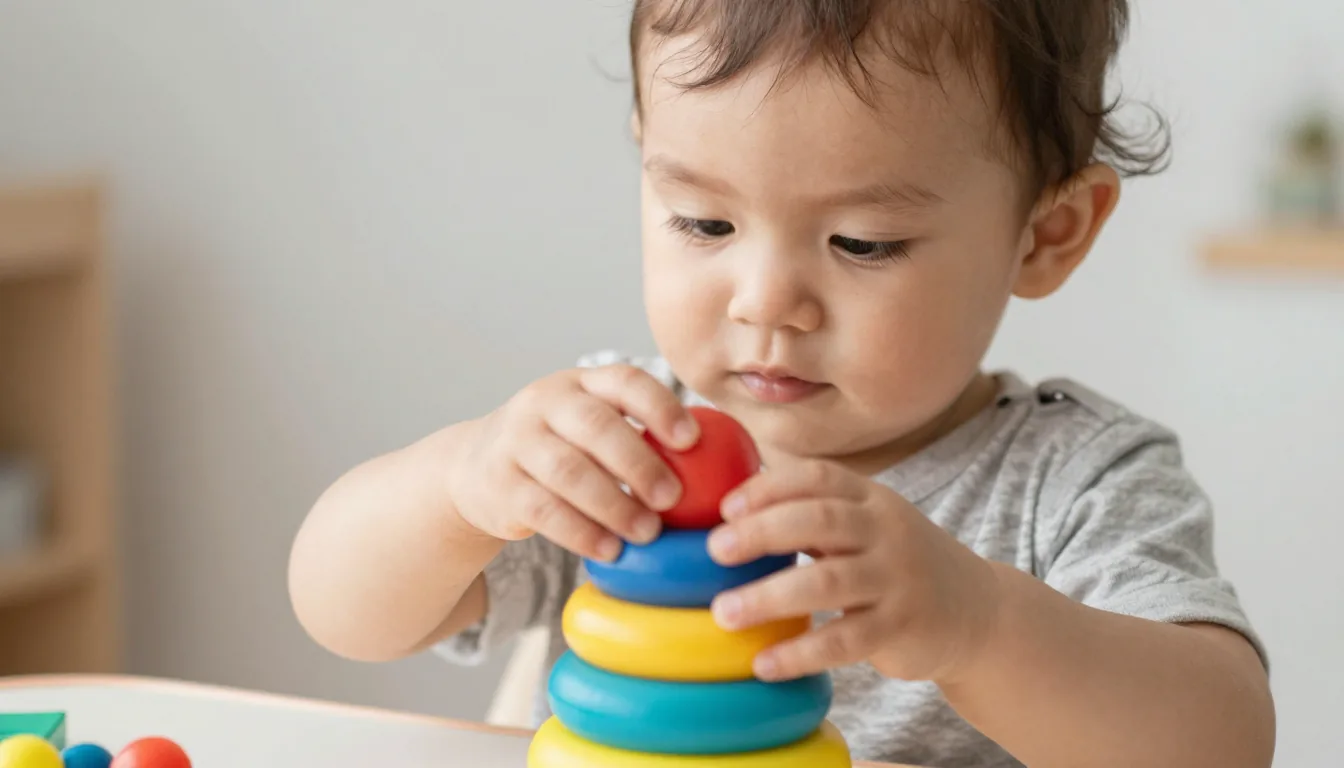
1. Wooden Building Blocks: The Cognitive Classic
Plain wooden blocks are the ultimate cognitive blank slate. Stacking, balancing, and knocking down teach spatial reasoning and cause-and-effect relationships.
A 2018 study found that block play boosts math skills in preschoolers. No instructions or sounds needed—just imagination.
Plus, building together encourages language development as children describe their creations. Research confirms that minimalist toys brain engagement through simple shapes is highly effective.
2. Silicone Stacking Rings: Sensory Learning
Unlike noisy plastic rings, silicone stackers offer subtle sensory feedback. Sorting sizes and colors strengthens fine motor control and early classification skills.
Parents love that they’re chewable, dishwasher-safe, and never trigger a meltdown with loud music. The simple act of stacking also teaches problem-solving through trial and error.
3. Fabric Play Scarves: Open-Ended Imagination
A simple scarf can become a cape, a roof, or a river. This open-ended prop encourages pretend play, which is linked to better executive function and social skills.
Research from the University of Colorado shows that make-believe scenarios improve self-regulation and language skills. Children also learn to negotiate roles with peers, building empathy.
4. Cardboard Box: The Ultimate Blank Canvas
It’s not technically a toy, but a cardboard box is a minimalist dream. Kids transform it into a car, a castle, or a spaceship, exercising creative problem-solving and engineering thinking.
One parent review reads: “My son spent an hour making a ‘robot mask’ from a cereal box—more learning than any tablet app.” It’s also a lesson in sustainability and resourcefulness. This everyday item exemplifies minimalist toys brain stimulation through pure imagination.
5. Natural Wood Puzzles: Patience and Precision
Simple peg puzzles with chunky pieces teach shape recognition and hand-eye coordination. Without flashing lights, children learn persistence through trial and error.
Pediatric occupational therapists recommend these for building grip strength and concentration. Completing a puzzle gives a sense of accomplishment that boosts confidence.
6. Cotton Play Tunnel: Gross Motor Gains
A soft, collapsible tunnel encourages crawling, rolling, and hide-and-seek. Gross motor movement directly fuels brain development by building neural pathways and improving balance.
Studies show that active play improves attention spans and reduces anxiety in young children. The tunnel also provides proprioceptive input, which is calming for sensory seekers.
7. Magnetic Tiles (Basic Set): STEM Foundations
Choose a plain set of clear or primary-color tiles—no themed characters. Magnetic construction teaches geometry, balance, and creativity through hands-on exploration.
“My daughter built a ‘dog house’ and then redesigned it three times. That’s engineering thinking,” says a Montessori-aligned parent.
These tiles also encourage collaborative play and spatial reasoning.
8. Simple Doll or Figure: Emotional Intelligence
One wooden doll without accessories encourages nurturing and storytelling. This fosters empathy and emotional intelligence as children project feelings onto the figure.
Research indicates that children who engage in doll play activate brain regions linked to social processing and perspective-taking. It’s a low-tech tool for high-level emotional growth.
9. Sensory Bean Bag Set: Body Awareness
Small, weighted bean bags in different textures sharpen the sense of touch. Tossing and catching them improves coordination and body awareness while providing calming sensory input.
They’re also great for calm-down corners—a low-stimulation way to reset an overwhelmed child. Parents report that bean bag games help with focus and self-regulation.
Bringing It All Together
Choosing minimalist toys brain development means prioritizing quality over quantity. Each of these nine picks encourages active, creative play without overstimulation, building cognitive skills that last a lifetime. For optimal minimalist toys brain results, rotate toys regularly to maintain novelty.
For more ideas on intentional parenting, explore our Parenting & Family archive. You can also learn more about the science of play from the National Association for the Education of Young Children and the American Academy of Pediatrics.