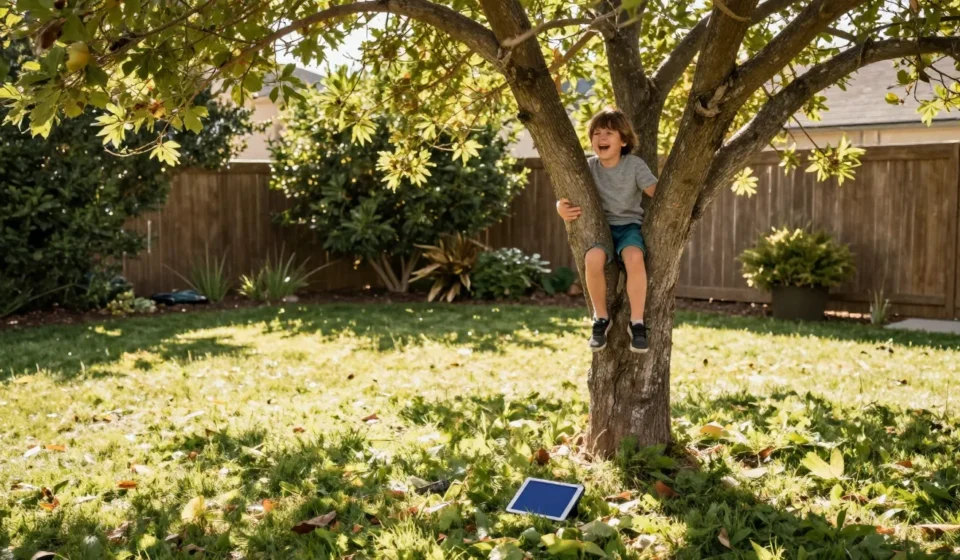

Why We Need to Rethink the Screen Time vs Outdoor Play Debate
As parents, we’ve all heard the warnings: screens are rotting our kids’ brains, and outdoor play is the only path to happy childhoods. But the reality of screen time vs outdoor play is more nuanced than that. Your child can benefit from both—if you approach it wisely.
The key isn’t to demonize screens but to understand what each activity offers. Let’s dig into the science and the real-world struggles so you can stop feeling guilty and start feeling confident.
What Outdoor Play Actually Does for Development
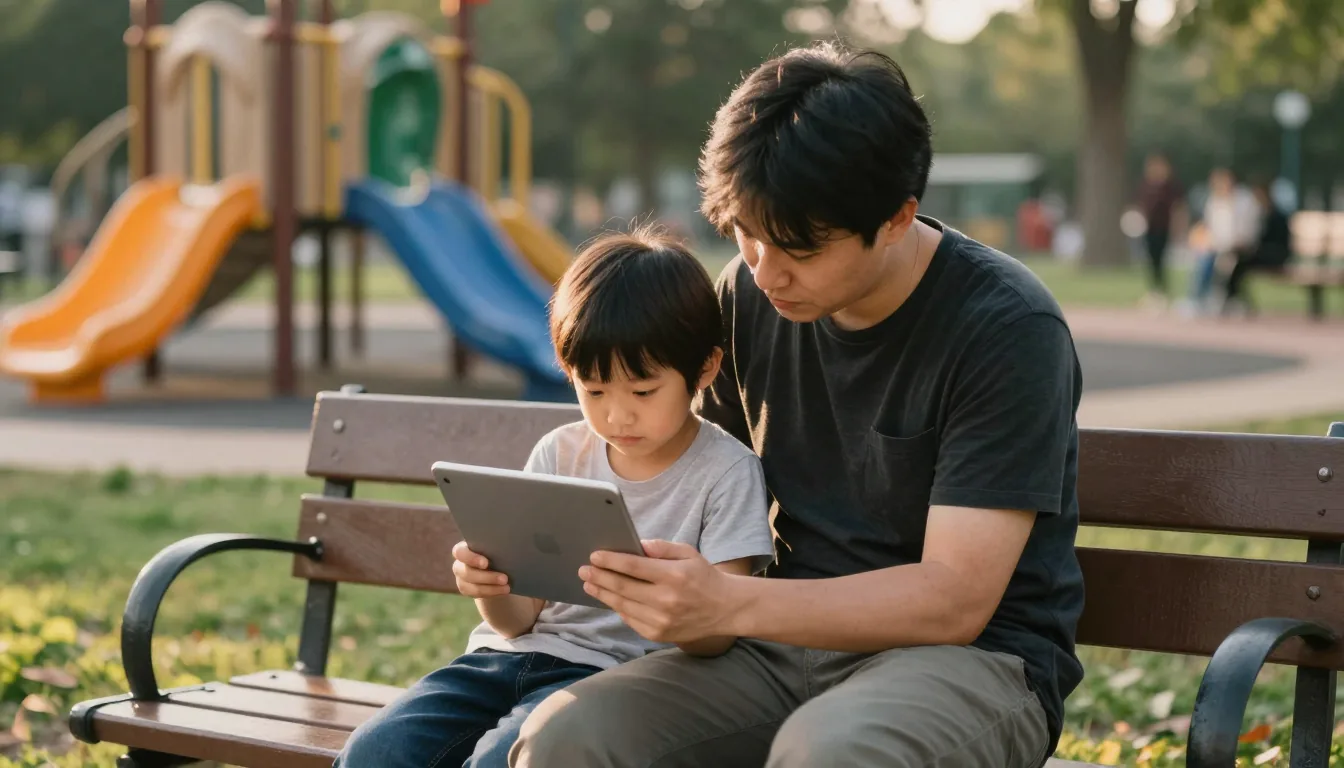
Physical Health and Motor Skills
Running, climbing, and jumping strengthen muscles, improve coordination, and build cardiovascular health. Studies show that just 60 minutes of unstructured outdoor play reduces obesity risk and boosts immunity.
But it’s not just about moving. Nature play involves uneven terrain, which challenges balance and spatial awareness in ways a flat playroom floor never can.
Outdoor play also teaches social skills through group games. Kids learn negotiation, turn-taking, and conflict resolution without adult intervention.
Cognitive and Emotional Benefits
Outdoor play fosters creativity because there are no rules. A stick becomes a sword, a puddle becomes an ocean.
This open-endedness builds problem-solving skills and resilience.
Time in green spaces also lowers cortisol levels—even a short walk in the park can calm a stressed child. And yes, vitamin D from sunlight is a bonus for mood and bone health.
When weighing screen time vs outdoor play, remember that outdoor environments stimulate all senses. This enhances memory and attention span better than any app.
What Screens Can Offer That Outdoor Play Can’t
Educational Potential and Skill Building
Not all screen time is equal. Quality apps and shows can teach literacy, math, and even empathy.
For example, interactive storytelling apps can improve vocabulary by 20% compared to passive TV watching.
Digital tools also let kids explore worlds they can’t physically access—like the ocean floor or outer space. That’s a form of learning that complements outdoor experiences.
Many educational games adapt to a child’s skill level, providing personalized learning that outdoor play cannot replicate. This makes screen time a valuable supplement.
Social Connection in a Digital Age
Many kids use screens to stay connected with friends who live far away or to collaborate on creative projects. Video chats with grandparents are meaningful screen moments that strengthen family bonds.
The problem isn't the screen itself but what's on it. Passive scrolling?
Bad. Active creating or connecting?
Better than you think.
How to Balance Both for Optimal Child Development
The American Academy of Pediatrics recommends no more than 1 hour of high-quality screen time per day for kids aged 2-5, and consistent limits for older children. When considering screen time vs outdoor play, it’s not about choosing one over the other—it’s about synergy.
Try these strategies: 1) Make outdoor play non-negotiable—schedule it like a doctor’s appointment. The screen time vs outdoor play balance doesn’t have to be perfect, just consistent.
2) Use screens as a reward or tool, not a default babysitter. 3) Co-view and discuss what they watch to turn passive time into active learning.
Creating a Balanced Routine
Consistency is key. Aim for a daily routine that includes both activities.
For instance, after school, allow 30 minutes of outdoor play before any screen time. This structure helps children value outdoor time and use screens more intentionally.
The screen time vs outdoor play debate doesn’t have to be a battle. By embracing both, you give your child a richer, more varied childhood.
And remember: the guilt is pointless. You’re not a bad parent if your kid watches TV.
You’re a real human juggling a thousand things. The goal is intentionality, not perfection.
For more on balancing family life, check out our Parenting & Family section.
If you want deeper science, read AAP’s guidelines on media and children or explore The Outdoor Foundation for nature play research.