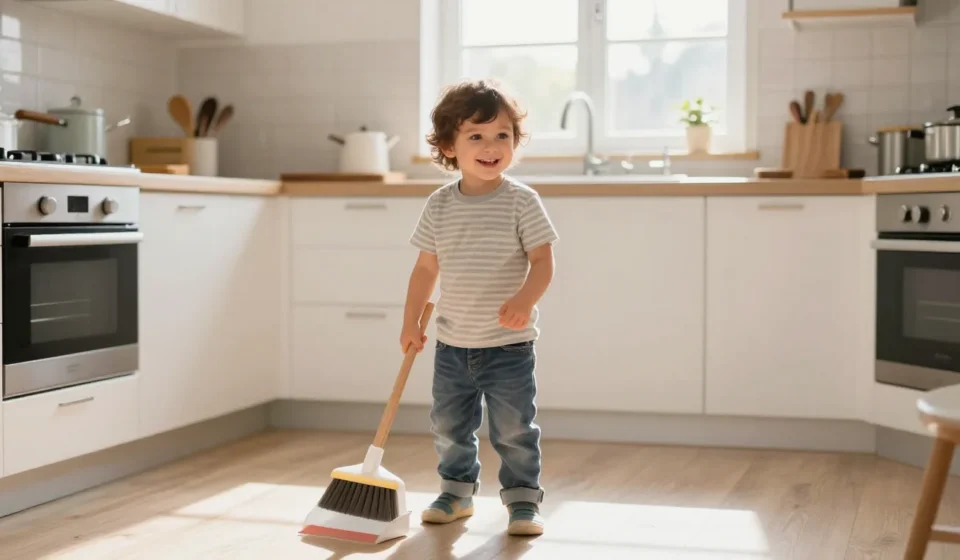

The Surprising Link Between Chores and Confidence
Let's be honest: asking your kid to fold laundry often feels like a negotiation with a tiny terrorist. But here's the thing—age-appropriate chores are one of the most effective ways to build real, lasting confidence in children.
Research from the University of Minnesota shows that kids who do regular chores from age three are more likely to have higher self-esteem and better academic performance later on.
Age-appropriate chores give children a genuine sense of contribution. When a four-year-old sets the table (even if the forks are upside down), they experience a feeling of competence that forms the foundation of self-confidence.
What the Science Says About Responsibility
A 2018 study in the Journal of Developmental Psychology found that children who participated in household tasks showed greater prosocial behavior and emotional regulation. Studies consistently show that age-appropriate chores are key to developing these traits.
The key is consistency—not perfection.
Dr. Marty Rossmann, a researcher at the University of Minnesota, followed a group of children for 25 years.
She found that those who started chores at age three or four were more likely to have successful careers and relationships later. The magic ingredient?
Early responsibility builds a 'can-do' mindset.

How Chores Teach Self-Reliance
Self-reliance isn't born; it's built through small victories. When a five-year-old pours their own cereal (and cleans up the spill), they learn that they can handle life's messy moments.
Start with age-appropriate chores that match your child's age, like making the bed or watering plants.
Each completed task is a tiny proof that they are capable. That proof stacks up over time into genuine self-reliance.
A toddler can put toys in a bin; a seven-year-old can sort recycling.
Chores for Emotional Regulation
You might not think of sweeping the floor as emotional regulation practice, but it is. Age-appropriate chores provide a low-stakes environment for practicing patience and handling frustration.
Kids learn to manage those feelings because they see the task through to completion.
A simple chore chart can also teach delayed gratification. For example, earning a sticker for five days of making their bed helps children understand that effort pays off.
This is emotional regulation in action—the ability to stick with something even when it's boring or hard.
Practical Tips to Get Started
Don't aim for perfection. The goal is participation, not a spotless house.
Praise the effort, not the outcome. Focus on age-appropriate chores to ensure success.
Say, 'You worked so hard on that!' instead of 'Good job.'
Use a visual chore chart for younger kids. For older ones, involve them in deciding the tasks.
When children have ownership, they're more likely to cooperate. And remember: consistency over intensity.
Five minutes of daily chores beats an hour of spring cleaning once a month.
Age-Appropriate Chores: Ideas for Every Age
- Ages 2-3: Put toys away, wipe spills, throw trash in bin.
- Ages 4-5: Set the table, water plants, make bed (roughly).
- Ages 6-7: Fold washcloths, sort laundry, sweep floors.
- Ages 8-9: Load dishwasher, take out trash, vacuum.
- Ages 10+: Prepare simple meals, mow lawn, clean bathrooms.
Building Confidence Through Contribution
At the end of the day, chores aren't about free labor—they're about belonging. Implementing age-appropriate chores is about building belonging and showing children they matter.
When a child helps set the dinner table, they're sending a message: 'I am part of this family, and I matter.' That sense of belonging is the strongest confidence builder there is.
For more insights on fostering responsibility and independence, explore our Parenting & Family articles. You can also check out the APA’s guidelines on teaching responsibility and Zero to Three’s age-appropriate chore list.