
The Basics of Rocket Engine Science
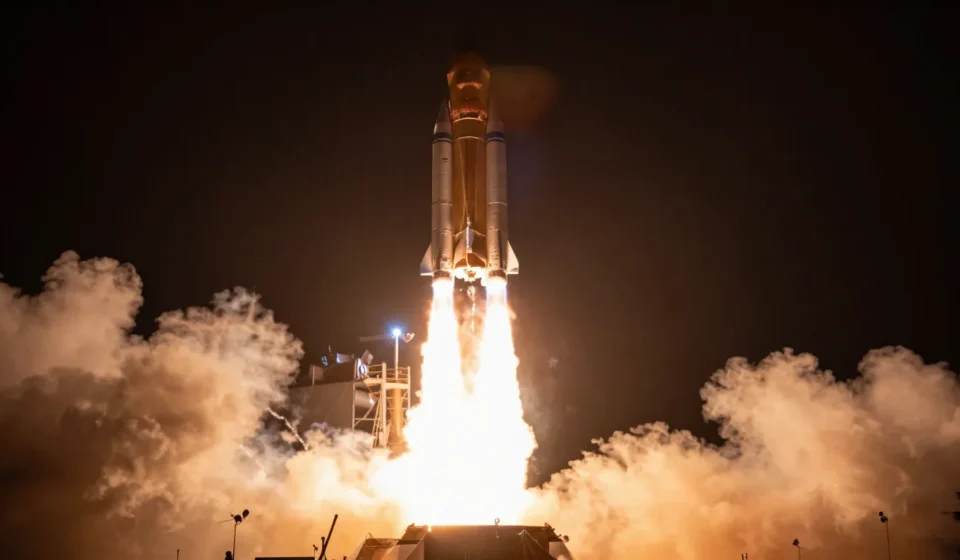
Rocket engine science is the art of turning fuel into raw thrust. At its core, a rocket works by expelling mass at high speed in one direction to push itself the opposite way.
This simple principle, Newton's third law, powers everything from tiny thrusters to massive launch vehicles.
To escape Earth's gravity, a rocket must achieve a velocity of about 28,000 km/h (17,500 mph). That requires enormous energy, and how that energy is released defines the type of engine.
Understanding these mechanisms helps us appreciate the engineering marvels that carry humans and satellites into space.
Chemical Propulsion: The Workhorse
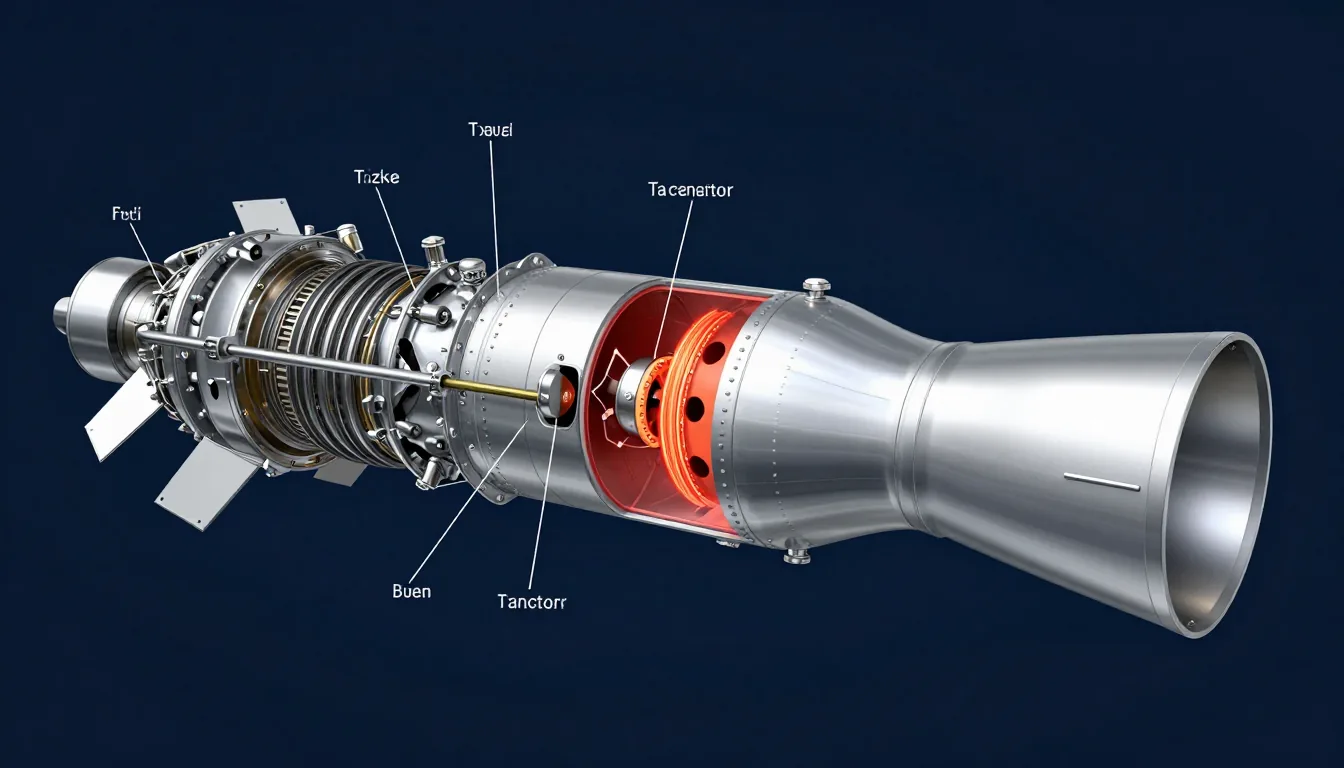
Chemical rockets are the most common type, mixing fuel and oxidizer in a combustion chamber. The resulting hot gases expand through a nozzle, accelerating to supersonic speeds.
This creates thrust, measured in newtons or pounds-force.
There are two main subtypes: solid and liquid. Solid rockets use a pre-mixed propellant that burns steadily once ignited—simple but hard to control.
Liquid rockets can throttle, restart, and offer higher efficiency, making them ideal for orbital insertion. The diversity of propellants is a key aspect of rocket engine science.
Nozzle design also plays a critical role in rocket engine science. Convergent-divergent nozzles accelerate exhaust to supersonic speeds, maximizing thrust.
Engineers optimize nozzle shape for specific altitude ranges to improve performance.
Combustion Chemistry and Specific Impulse
The efficiency of a rocket engine is measured by specific impulse (Isp), which is the total impulse per unit of propellant. Higher Isp means more thrust per kilogram of fuel.
Chemical engines typically achieve 250–450 seconds of Isp, depending on the propellant combination.
Common liquid fuels include kerosene (RP-1) with liquid oxygen (LOX), or hydrogen with LOX. The hydrogen engine produces cleaner exhaust and higher Isp, but requires complex insulation due to extreme cold.
Combustion temperatures can exceed 3,000°C, so cooling systems are critical.
The Rocket Equation: Escaping Gravity
The Tsiolkovsky rocket equation mathematically links propellant mass, exhaust velocity, and final velocity. It shows that to reach orbit, the rocket must carry most of its mass as fuel.
The equation is: Δv = ve * ln(m0/mf), where ve is exhaust velocity, m0 is initial mass, and mf is final mass.
This explains why rockets are built in stages: shedding empty tanks reduces mass, making it easier to accelerate. Gravity and atmospheric drag add losses, so actual Δv requirements are higher than the orbital speed alone.
Understanding the rocket equation is fundamental to grasping rocket engine science.
Rocket engineers optimize staging to minimize dry mass. For example, the Saturn V used three stages to send astronauts to the Moon.
Each stage drops away when its fuel is spent, reducing the weight the remaining engines must push. This design allows a higher final velocity without requiring an impossibly large single-stage rocket.
Types of Rocket Propulsion Beyond Chemical
Ion thrusters use electric fields to accelerate ions, achieving Isp up to 3,000 seconds. They produce low thrust but are extremely efficient for long-duration missions.
Nuclear thermal rockets, still experimental, could double the Isp of chemical engines by heating propellant with a nuclear reactor.
Each propulsion method has trade-offs. Chemical rockets remain the only practical way to lift heavy payloads from Earth's surface.
But once in space, electric or nuclear systems can take over for interplanetary travel. Advanced rocket engine science includes these electric and nuclear concepts.
Hybrid rockets, which use a solid fuel and liquid oxidizer, offer a compromise between simplicity and control. They are safer than pure solids and simpler than full liquids, making them popular for educational and amateur rocketry.
Future innovations like aerospike nozzles could further improve efficiency by automatically adjusting to atmospheric pressure.
For more exciting insights, visit our Popular Science & Space section. External resources: NASA Rocket Engine Science and Britannica on Rocket Propulsion.
Rocket engine science combines chemistry, physics, and engineering in a breathtaking dance. Each launch represents years of research and testing.
As we push toward Mars and beyond, understanding these principles becomes even more critical. Next time you watch a launch, remember: every flame is a triumph of human ingenuity over gravity.