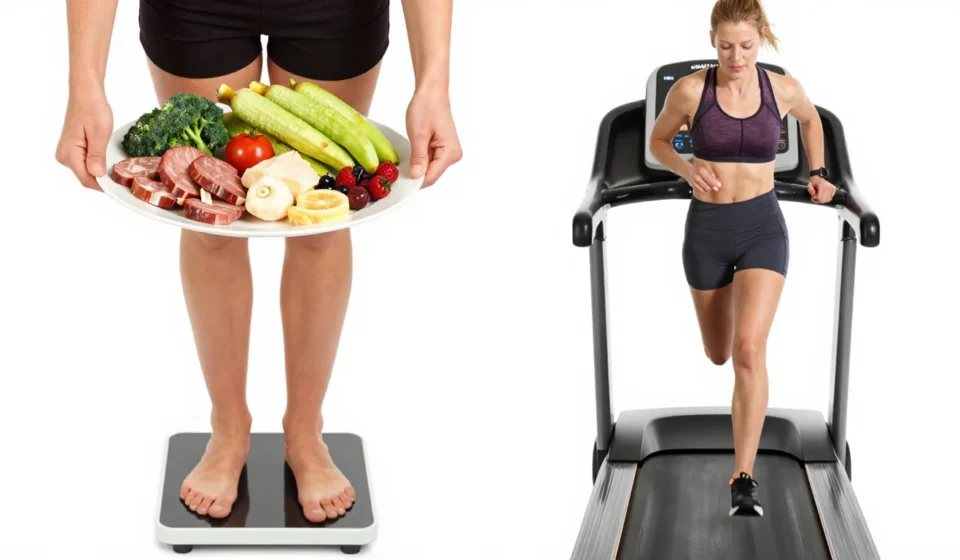

The Diet vs Cardio Fat Loss Equation
If you want to lose fat, the first thing most people tell you is to start running. But the real debate is diet vs cardio for fat loss—and the answer is clear.
The real driver of fat loss is your diet, not how much you sweat. The diet vs cardio debate ends when you look at the science: you can’t outrun a bad diet, yet people keep trying.
This equation is simple: calorie deficit equals fat loss. Diet controls your intake precisely, while cardio burns calories but is inefficient for creating a deficit.
A single slice of pizza can take 30 minutes of running to burn off. That’s a terrible trade-off, which is why diet always wins.
Why Nutrition Dominates the Deficit
Fat loss happens when you’re in a caloric deficit—burning more energy than you consume. Diet controls the intake side of that equation with surgical precision.
Cardio burns calories, but it’s inefficient compared to simply eating less. You’ll never win a fat loss battle by trying to exercise away a poor diet.
Experts across Fitness & Sports agree: nutrition is 80% of the result. Studies have shown that diet alone produces comparable fat loss to diet plus cardio over 12 weeks.
Cardio adds health benefits, but it’s not the fat loss lever most believe it to be. Your body adapts to cardio quickly, reducing its calorie burn over time.

The Energy Balance Truth
Your body doesn’t care about macros or meal timing—it cares about total energy. Eat 500 fewer calories daily, and you lose about a pound per week.
Add cardio, and you might accelerate that, but it’s optional. The key is consistency, not intensity.
One common misconception is that you need to suffer through long runs. In reality, a modest dietary adjustment often yields faster results than extreme exercise.
Consider this: if you eat an extra 200 calories daily, you’d need about 20 minutes of jogging to break even. Or you could simply skip that snack.
Cardio’s Real Role: Supplementary, Not Essential
Cardio improves cardiovascular health, boosts endurance, and burns extra calories. But it’s a supplement, not the main course.
Relying on cardio for fat loss often backfires because it increases appetite and creates a false sense of entitlement. People who start running often unconsciously eat back the calories they burn.
That mindset destroys deficits. Keep cardio in perspective: use it for health, not as your primary fat loss tool.
Hidden Pitfalls of Cardio-Centric Approaches
Many people think that more cardio equals faster fat loss. But overdoing it can lead to fatigue, injury, and metabolic slowdown.
Resistance training actually beats cardio for long-term fat loss. Muscle increases your resting metabolic rate, meaning you burn more calories at rest.
Cardio doesn’t build muscle; it can even hinder gains if overdone. So prioritize strength training and diet adjustments first.
Practical Steps to Prioritize Diet Over Cardio
Stop using cardio as a punishment for eating. Instead, focus on these three actions:
- Track your calories for a week to understand your baseline.
- Reduce processed foods and increase protein to stay full.
- Add resistance training to preserve muscle during the deficit.
Consider keeping a food diary for the first week. It reveals hidden calories from sauces or drinks that add up fast.
Only add cardio after you’ve mastered your nutrition. Use it for heart health and stress relief, not as a fat loss crutch.
This shift in mindset is the difference between struggling for months and sustainable results.
Remember the core truth: diet vs cardio isn’t a competition. Diet wins every time. Cardio is a tool, but it’s not the solution.
Build your fat loss plan around what you eat, and let cardio be the optional extra—not the star player.
To illustrate the impact of diet vs cardio, consider a study showing that diet-only groups lost similar weight to diet-plus-exercise groups. Another study on metabolism confirms that diet adjustments are more effective than exercise for initial weight loss. For more evidence, check out this study on diet vs exercise for weight loss and this Harvard article on metabolism.
Weight loss is a marathon, not a sprint. Focus on sustainable habits, not quick fixes.
Consistency matters more than intensity.
Ultimately, the diet vs cardio choice is clear: prioritize what you eat. Cardio can help, but it’s not necessary for fat loss.