

When planning for retirement, one of the most persistent questions is how much you can withdraw annually without depleting your savings. The 4% rule retirement guideline has been a cornerstone for decades, offering a simple starting point for sustainable withdrawals.
But does it still hold up in today’s market? Understanding this benchmark is essential for any retiree.
The Origins of the 4% Rule
Financial advisor William Bengen introduced the 4% rule in 1994. He analyzed historical market returns and inflation data to find a safe withdrawal rate.
His research suggested that withdrawing 4% of your initial portfolio value annually, adjusted for inflation, would last at least 30 years. This 4% rule retirement benchmark has been widely cited.
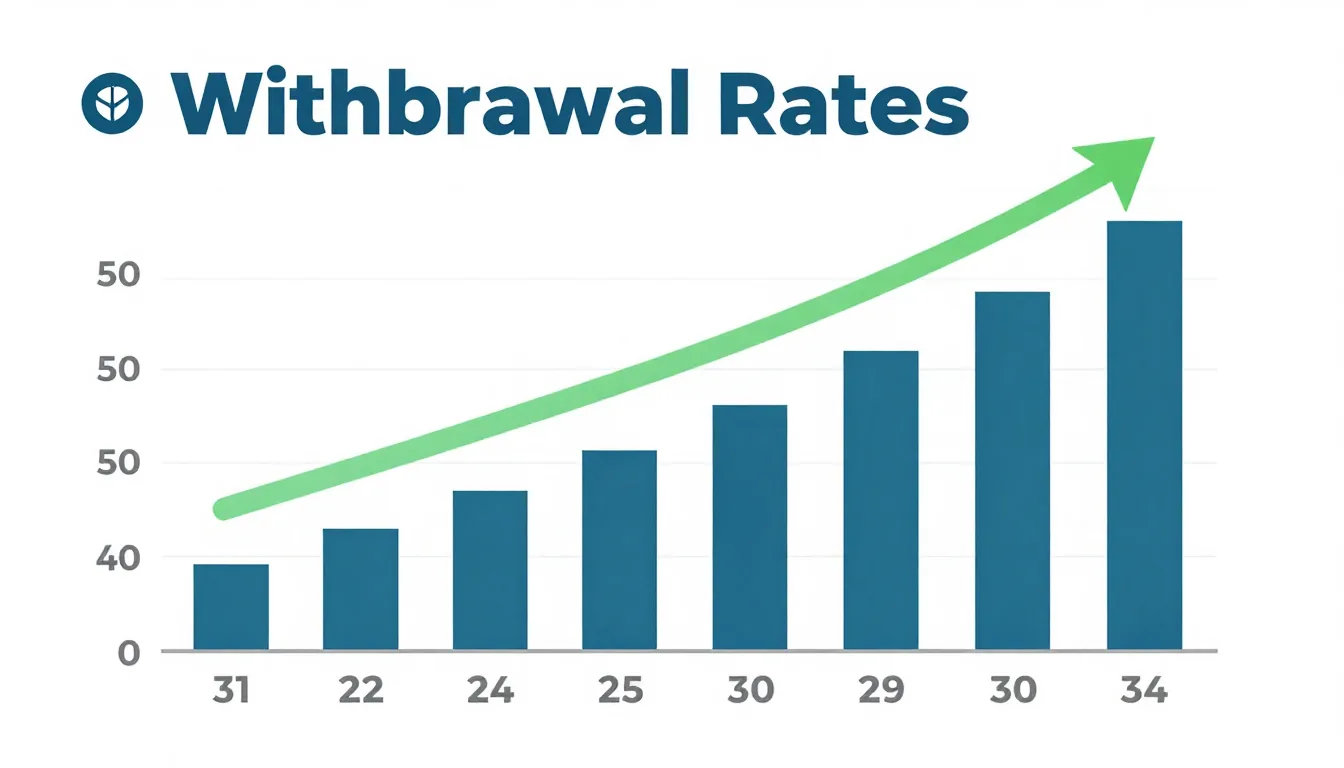
Bengen's study assumed a portfolio of 50% stocks and 50% bonds. The rule became widely adopted due to its simplicity and conservative nature.
However, it's not a guarantee—it's a guideline based on past performance.
How the Rule Works in Practice
Imagine you have a $1 million retirement portfolio. In the first year, you withdraw $40,000.
Each subsequent year, you increase that amount by the previous year’s inflation rate. If inflation runs at 3%, your second-year withdrawal would be $41,200.
This approach aims to maintain your purchasing power over time while keeping portfolio depletion risk low. The rule’s success depends heavily on market conditions during the early years of retirement—a phenomenon known as sequence-of-returns risk.
Is the 4% Rule Retirement Strategy Still Valid?
Recent studies have questioned whether the 4% rule remains appropriate given today’s lower bond yields and higher stock valuations. Some experts suggest a more conservative 3% to 3.5% withdrawal rate for retiring early or with a heavy bond allocation.
Others argue that flexibility is key. Instead of rigidly adjusting for inflation each year, retirees can cut spending during market downturns and increase during booms.
This dynamic approach can extend portfolio longevity significantly.
Factors That Impact Your Safe Withdrawal Rate
- Portfolio Allocation: A higher stock allocation historically supports a higher withdrawal rate, but adds volatility. A 60/40 stock-bond mix is common.
- Retirement Horizon: The longer your retirement, the lower your safe withdrawal rate. For a 40-year horizon, 3.5% may be more appropriate.
- Spending Flexibility: Being able to cut discretionary spending during bear markets can allow for a higher initial withdrawal rate.
- Social Security and Pensions: Guaranteed income reduces the burden on your portfolio, potentially allowing higher withdrawals from savings.
Testing the Rule with Real Data
Historical simulations using U.S. data show that a 4% withdrawal rate has succeeded in most 30-year periods.
However, international markets may behave differently.
A globally diversified portfolio can reduce country-specific risk. Historical simulations validate the 4% rule retirement approach but caution is needed.
Tools like the Portfolio Visualizer Monte Carlo simulation allow you to test your own assumptions. They show the probability of portfolio survival under different scenarios.
Alternatives to the 4% Rule
Two popular alternatives are the guardrails approach and the required minimum distribution (RMD) method. The guardrails approach adjusts withdrawals based on portfolio performance, while the RMD method mimics the IRS’s required minimum distribution schedule.
Both offer flexibility that can improve long-term outcomes. However, they require more active management than the simple 4% rule. For more foundational strategies, explore our Personal Finance category, which covers budgeting, saving, and investing basics.
Final Thoughts on the 4% Rule
The 4% rule retirement guideline is a useful starting point, but not a one-size-fits-all answer. Your personal situation—health, lifestyle, legacy goals—matters more than any historical average. Work with a fee-only financial planner to tailor a withdrawal strategy to your needs.
Remember, the goal is not just to avoid running out of money, but to enjoy a fulfilling retirement. A well-thought-out spending plan can give you both confidence and freedom.