
The Hidden Dynamo: What Powers Our Magnetic Shield?
Every day, a hidden engine spins beneath our feet, generating earths magnetic field generation through a process that scientists call the geodynamo. Without this invisible force, our planet would be a barren world blasted by solar radiation.
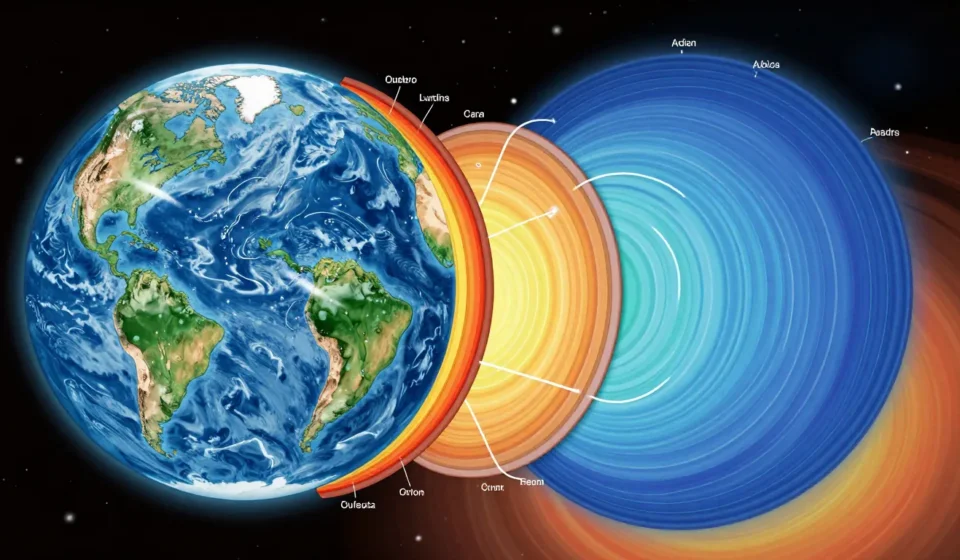
The magic happens 2,900 kilometers down in the outer core, a layer of liquid iron and nickel hotter than the Sun’s surface. Here, the metal churns in a complex dance that creates a giant electromagnet.
Understanding earths magnetic field generation is crucial for grasping how life survives on our planet. This process has been running for billions of years, shielding us from harmful cosmic rays.
How Does the Geodynamo Work?
Imagine a pot of soup on a hot stove, but instead of broth, it’s molten metal. Heat from the solid inner core and Earth’s interior drives convection currents in the outer core, much like boiling water rises and falls.
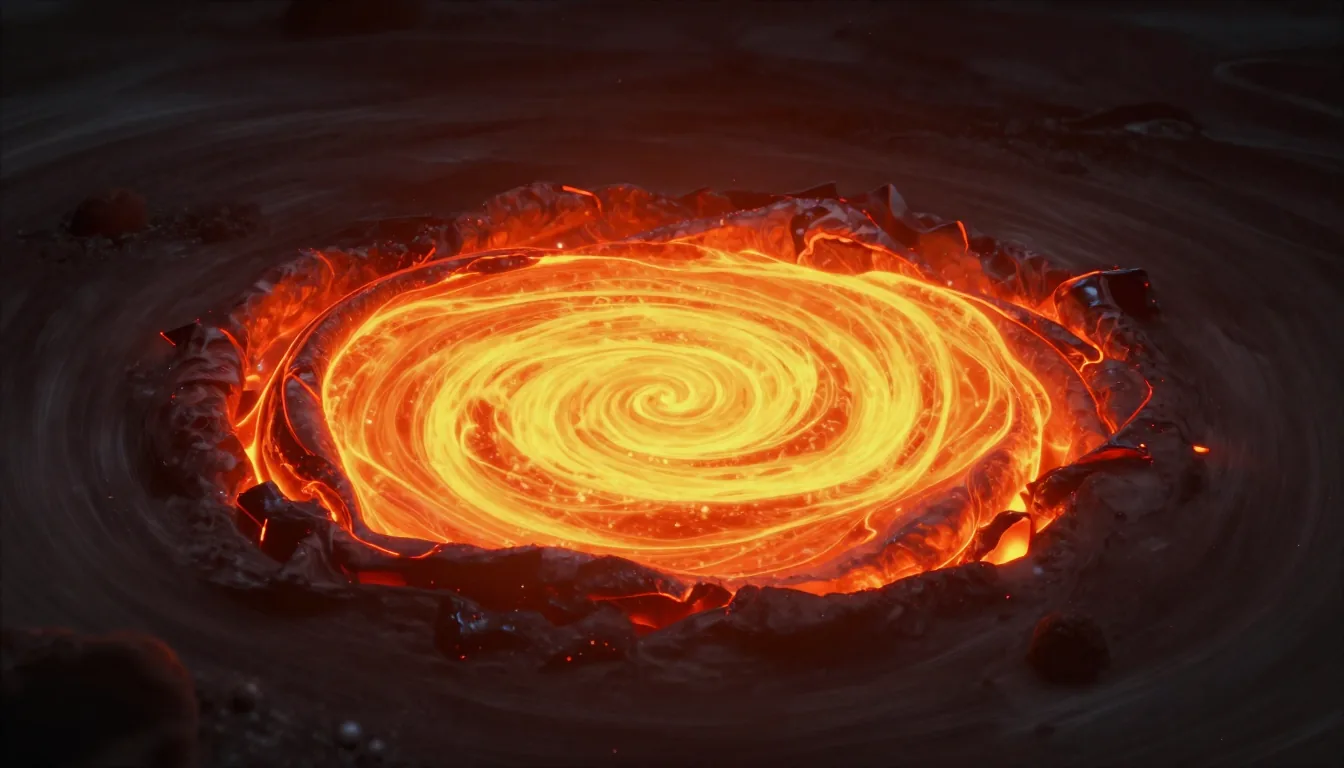
Now add Earth's rotation into the mix. The Coriolis effect twists these rising and falling metal plumes into helical spirals.
This twisting motion generates electric currents, which in turn produce magnetic fields.
Earths Magnetic Field Generation: The Self-Sustaining Loop
Here’s the clever part: the magnetic field from those currents then tugs at the moving liquid metal, creating even more electric current. This feedback loop is the geodynamo, a self-sustaining cycle that has been running for at least 3.4 billion years.
Without this constant churning, the field would decay within a few tens of thousands of years. Instead, it regenerates continuously, protecting us from charged particles blasted out by the Sun.
Why Earth’s Core Stays Hot and Active
The inner core is a solid iron ball about 70% the size of the Moon, with temperatures reaching 5,400°C. This heat comes from two main sources: leftover thermal energy from planet formation, and radioactive decay of elements like uranium, thorium, and potassium.
As the inner core slowly solidifies, it releases additional heat and light elements, stirring the outer core even more. That extra stirring keeps the geodynamo vigorous and stable.
Comparison with Other Planets
Not every world has a magnetic field. Mercury has a weak one, Venus lacks it entirely, and Mars has only fossilized remnants. Popular Science & Space explains that the key is having a liquid, electrically conductive interior that is actively convecting — exactly what Earth has.
Comparing earths magnetic field generation to other planets highlights why Earth is special. Small planets cool down faster, freezing their cores and stopping the dynamo.
Earth's larger size and radioactive heat keep its core hot and active for billions of years.
The Magnetosphere: Our Invisible Shield
The magnetic field extends far into space, forming the magnetosphere — a bubble that deflects the solar wind, a stream of charged particles from the Sun. Without it, the solar wind could strip away our atmosphere, as it did on Mars.
The magnetosphere is a direct result of earths magnetic field generation, forming a protective bubble. We see the effects of the magnetosphere at work during auroras.
When charged particles penetrate near the poles, they collide with gas molecules and create shimmering lights. It's a beautiful reminder that our planet's magnetic engine is running.
Real-World Proof: Paleomagnetism
Rocks lock in the direction and strength of the magnetic field at the time they form. By studying ancient volcanic rocks, scientists have observed that the field has reversed polarity hundreds of times — north becomes south and vice versa.
These reversals are random and take thousands of years, but they prove the dynamo is dynamic and ever-changing. The last reversal happened 780,000 years ago, and we’re overdue, but don’t worry — another reversal won’t end the world, just confuse compasses.
Curious to learn more? NASA’s explanation of Earth’s magnetic field is a great starting point. For deeper science, explore this Nature Geoscience article on the geodynamo.