

Bench Press Form Cues: The Setup
Your bench press is weak because you ignore the basics. Fix your setup first, and the weight will feel lighter. The key lies in bench press form cues that force your body into a stronger position.
Lie down, grip the bar, and plant your feet. Squeeze your shoulder blades together like you're holding a pencil between them.
This isn't optional—it's the foundation for every rep. This simple setup is your first critical bench press form cue.
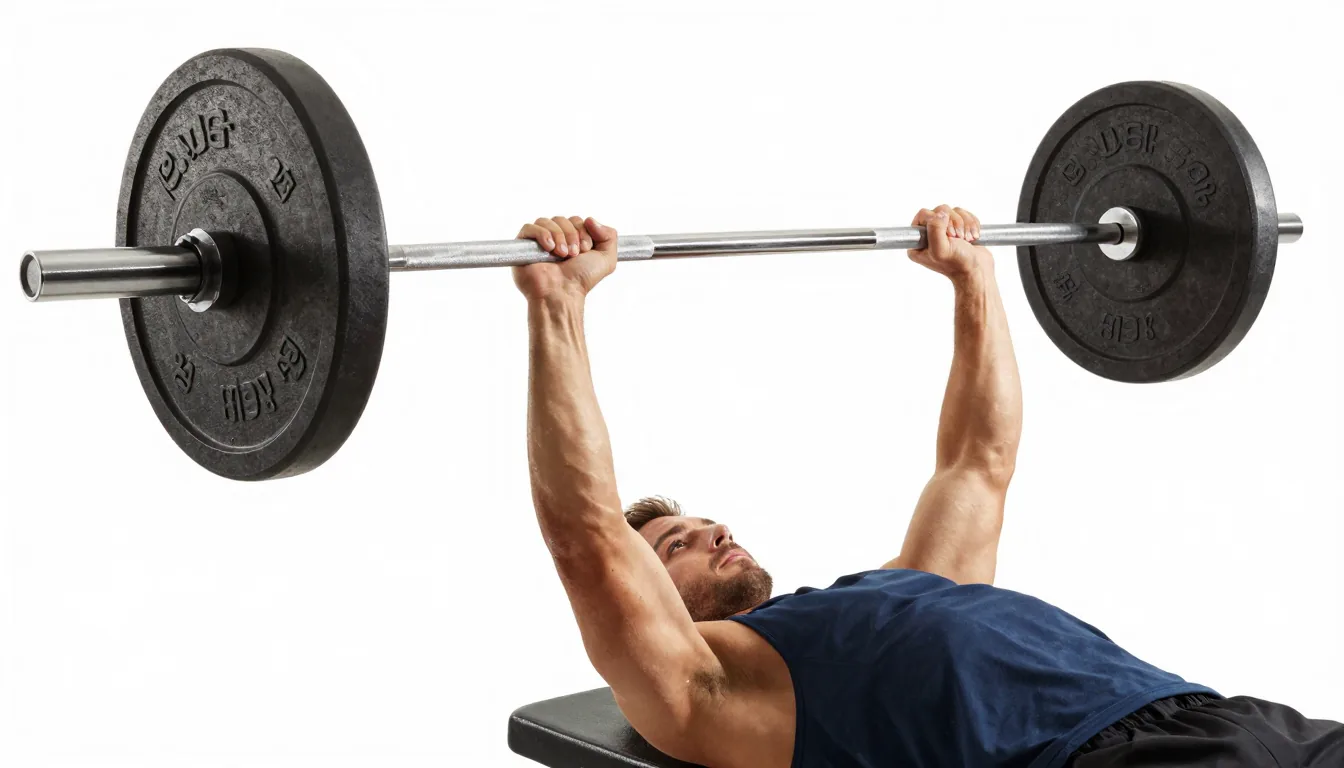
Arch Your Back, Not Your Ego
A solid arch is a crucial bench press form cue that many skip. A stable arch reduces your range of motion and activates your legs.
Push your upper back into the bench and lift your chest. Your butt stays on the pad.
Think about pushing the bar with your feet, not just your arms. Leg drive starts from the ground and travels through your hips into the bar.
That's how you move more weight.
Bar Path: The Straight Line Lie
The bar should not travel in a straight line. The bar path is another bench press form cue that directly affects your max.
Lower it to your sternum, not your throat. At the bottom, your forearms should be vertical when viewed from the side.
Think about touching the bar lower on your chest, then pressing it back toward your face. This curved path keeps your shoulders safe and maximizes power.
Practice this on warm-up sets.
Grip Width Matters More Than You Think
Adjusting your grip width is a simple bench press form cue to try. Your grip should be just outside shoulder width.
Too wide, and you lose power. Too narrow, and you strain your shoulders.
When the bar lowers, your elbows should be at a 75-degree angle to your torso—not flared, not tucked. Wrap your thumbs around the bar and squeeze hard.
A death grip recruits more upper body muscle.
For heavier sets, consider a false grip if you have a spotter, but only if you know the risks.
Elbow Position: The 45-Degree Rule
Many lifters flare elbows to the sides because it feels strong. That’s a mistake.
Keep elbows at roughly 45 degrees relative to your torso. This protects your shoulders and transfers force better.
At the bottom of the rep, your elbows should be slightly below the bench.
That deep stretch builds more muscle and primes your nervous system for heavier loads.
Breathe and Brace Before Every Rep
Breathing technique is an often overlooked bench press form cue. Take a deep breath at the top, hold it, and squeeze your abs.
Unrack the bar, lower it, then explode up.
Exhale only after you've locked out. This valsalva maneuver stabilizes your spine and transfers power.
The valsalva maneuver increases intra-abdominal pressure, which protects your spine and helps you lift heavier.
Treat each rep as a single effort. Reset your breath and tension between reps.
Rushing through sets is how you lose pounds on your max.
Warm Up With These Form Fixes
Before heavy sets, perform three to five warm-up reps with the empty bar. Warm-up sets are the perfect time to ingrain proper bench press form cues.
Focus on each cue: setup, arch, bar path, grip, and breath. This primes your nervous system and grooms your technique.
As you add weight, maintain the same standards. If a rep breaks form, reduce the load.
Consistency in bench press form cues builds long-term strength. Gradually add weight while preserving each cue.
Apply These Cues Tonight
Walk into your next bench session with a plan. Practice these bench press form cues on every warm-up set. Start with 60% of your max and focus on perfection.
By the time you work up to heavy sets, the technique will be automatic. Record your sets to spot errors and adjust.
Small adjustments compound into big gains over time.
For more on building strength safely, explore our Fitness & Sports archives. Additional research on optimal bench press mechanics can be found at Stronger by Science and Barbell Medicine.