
The Essential Ingredients for Perfect Pasta Dough
The foundation of any great homemade fresh pasta begins with just a few simple ingredients. You need all-purpose or tipo 00 flour, fresh eggs, a pinch of salt, and sometimes a drizzle of olive oil. The ratio is critical: one large egg per 100 grams of flour yields a supple, workable dough.
For the best homemade fresh pasta, choose high-protein flour for extra chewiness. Many Italian chefs prefer tipo 00 for its silky texture.
For richer flavor, use egg yolks only or add semolina for a rustic texture. Always weigh your flour for accuracy.
The quality of eggs matters—farm-fresh ones bring a deep golden hue and silky mouthfeel.
The Heart of Homemade Fresh Pasta: Mastering the Dough
Pour the flour onto a clean surface and make a well in the center. Crack the eggs into the well and gently beat them with a fork, slowly incorporating the flour from the inner walls.
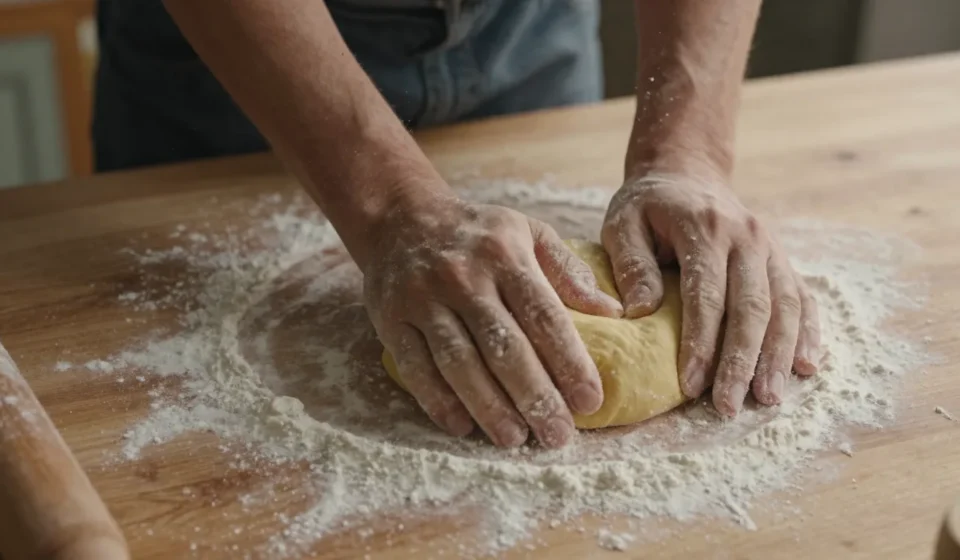
Once a shaggy mass forms, use your hands to bring it together.
Knead the dough for 8 to 10 minutes until it becomes smooth and elastic. Wrap it in plastic and rest at room temperature for at least 30 minutes.
This hydrates the flour and relaxes the gluten, making rolling easier.
Rolling and Thinning the Dough
Divide the rested dough into four pieces. Keep the rest covered while you work.
Flatten one piece into a disc and run it through a pasta machine on the widest setting, then fold and repeat. Gradually narrow the setting until you reach your desired thinness—usually setting 6 or 7 for fettuccine, or slightly thinner for ravioli.
If rolling by hand, use a long rolling pin and stretch the dough evenly, turning frequently. It takes practice but yields a beautifully irregular texture.
Homemade fresh pasta rolled this way has a rustic charm that machine-rolled pasta lacks. Dust with flour to prevent sticking.
Shaping Fettuccine by Hand
Lay a thin sheet of dough on a floured work surface. Lightly dust the top, then loosely roll it into a cylinder.
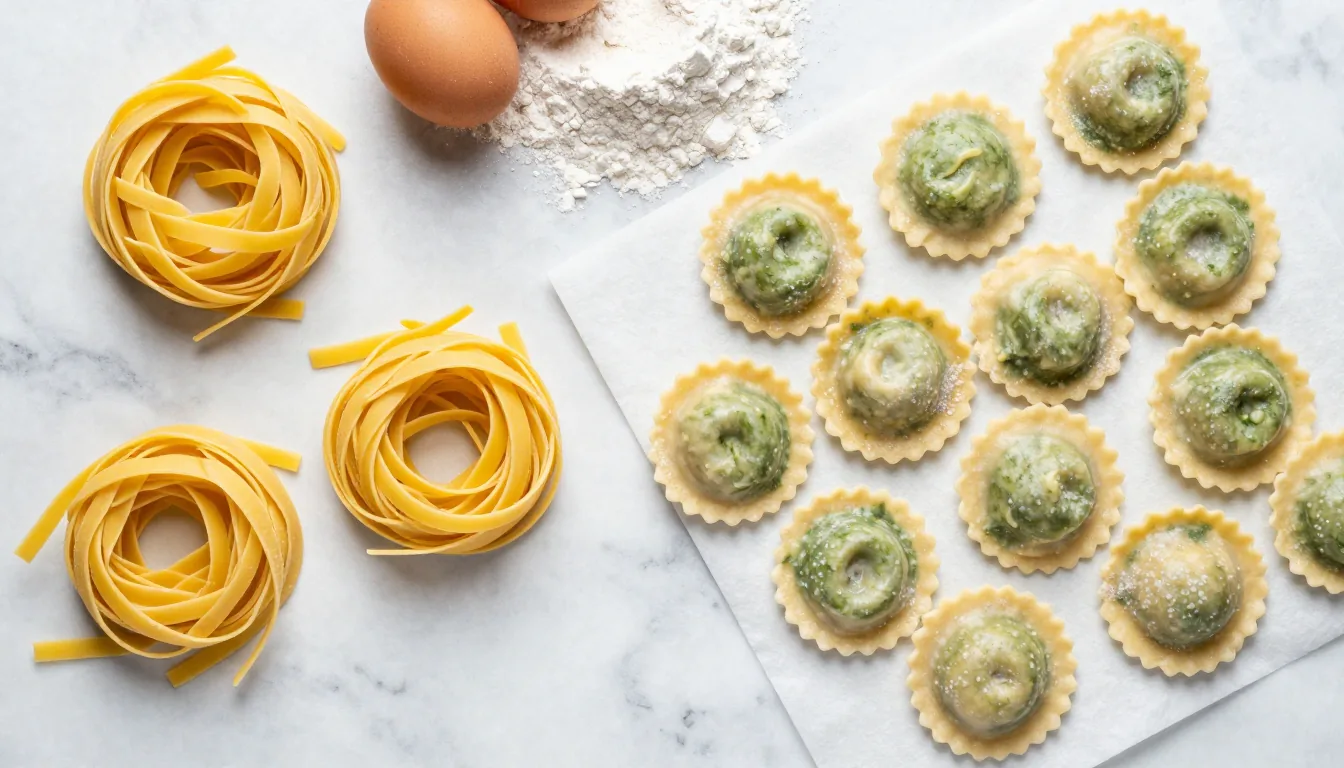
Use a sharp knife to cut crosswise into ¼-inch strips. Unroll each strip and toss with a bit of flour to keep them separate.
These strips of homemade fresh pasta are perfect for a simple aglio e olio.
You can also use a pasta cutter for straighter edges. Hang the fettuccine over a drying rack or dusted surface until ready to cook.
Fresh pasta cooks in just 2 to 3 minutes, so have your sauce ready.
Crafting Delicate Ravioli
For ravioli, cut the sheet into rectangles about 4 inches wide. Place small mounds of filling—such as ricotta and spinach or butternut squash—spaced 2 inches apart along one half.
Brush the edges with water, then fold the other half over and press around each mound to seal.
Use a fluted cutter or knife to separate the ravioli. Ensure no air pockets remain, or they may burst during cooking.
Arrange them on a floured tray in a single layer. You can freeze them for later use.
Cooking and Serving Your Handmade Pasta
Bring a large pot of well-salted water to a rolling boil. Drop the pasta in gently and stir once.
Fresh pasta cooks quickly—fettuccine in about 2 minutes, ravioli in 3 to 4 minutes. Taste a piece to check doneness; it should be tender but with a slight bite.
Cooking homemade fresh pasta requires attention, as it can become mushy in seconds.
Drain and toss immediately with your chosen sauce. For fettuccine, a classic butter and sage sauce or a simple tomato basil works beautifully.
Ravioli shine with a light brown butter or cream sauce. Finish with fresh herbs and grated Parmesan.
For more culinary explorations, visit our Gastronomy & Food section. For deeper insights, check out Serious Eats’ pasta guide or Kitchn’s tutorial.