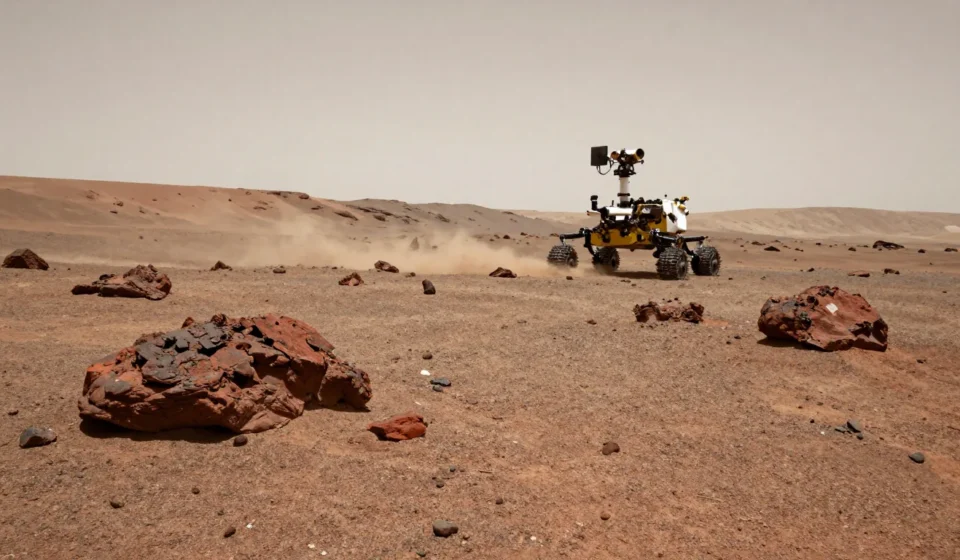

Ever looked up at the night sky and wondered why is Mars red? The answer lies in billions of tons of iron oxide covering the surface.
This reddish hue, which answers why is Mars red, is a chemical fingerprint of a wetter, more dynamic past.
Why Is Mars Red? The Chemistry Behind the Rust
Mars gets its signature color from iron oxide, the same compound that gives rust on Earth its reddish-brown tint. The Martian soil is rich in iron minerals, especially olivine and pyroxene, which have been oxidized over eons.
Oxidation occurs when iron reacts with oxygen. On Mars, this process likely happened with the help of water or even acidic vapors.
The result is a fine dust of hematite and magnetite that blankets the planet and gives it that distinctive red appearance from space.
The exact shade of red varies across the surface. Darker regions contain more basalt, while lighter areas are covered in fine oxidized dust.
Windstorms constantly redistribute this dust, creating global dust storms that can obscure the entire planet for weeks.
Water’s Role in Creating the Red Planet
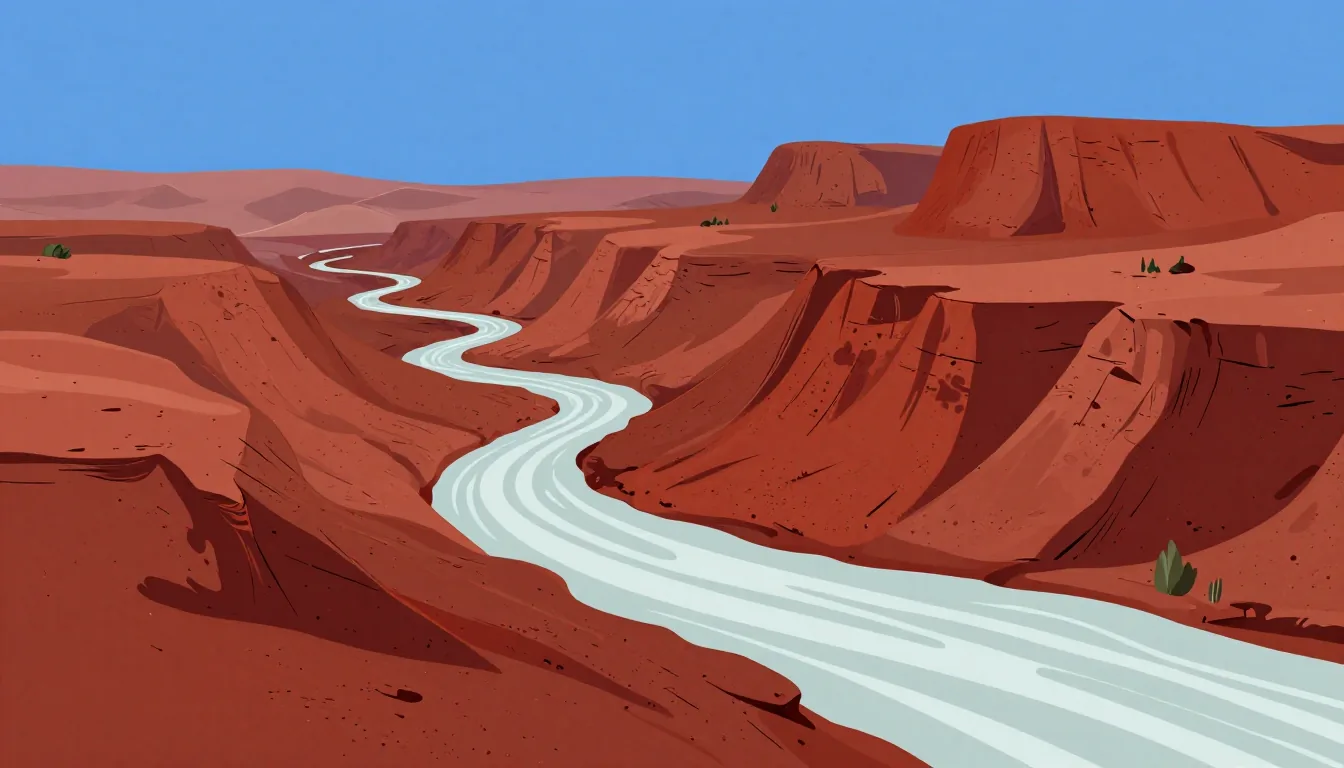
Water is the key catalyst for rust formation. Evidence of ancient rivers, lakes, and even oceans suggests that liquid water once flowed on Mars, accelerating the oxidation of iron-rich rocks and explaining why is Mars red.
Without water, the rusting process would be much slower.
NASA's Curiosity and Perseverance rovers have found minerals that only form in the presence of water, like clays and sulfates. These discoveries confirm that Mars was once a wet world, and the rust is a relic of that watery era.
The presence of hematite concretions, nicknamed "blueberries," further supports the role of water in oxidation.
How Ancient Water Bodies Left Their Mark
Scientists have identified ancient lakebeds and river deltas using orbital images. These features show that water was abundant on early Mars.
The oxidation of iron in these wet environments produced the rust we see today.
Some theories suggest that subsurface water continued to interact with iron minerals long after the surface dried up. This could explain why some regions appear redder than others, depending on their history of water exposure.
Implications for Mars’ Past Climate
The global layer of rust implies a prolonged period of chemical weathering. This indicates that Mars had a thicker atmosphere and a warmer climate in its early history, capable of sustaining liquid water over long timescales.
Thus, the red color directly relates to why is Mars red and its climatic evolution.
Understanding the timeline of oxidation helps scientists reconstruct how Mars lost its atmosphere and turned from a potentially habitable planet into the cold desert we see today. The rust is like a time capsule recording millions of years of environmental change.
By dating the iron oxide minerals, researchers can estimate when the planet dried up. These dates suggest that most rust formed during the Noachian period, over 3.5 billion years ago, when water was most abundant.
Future Missions and the Quest for Answers
Upcoming missions like the Mars Sample Return aim to bring back rock and dust samples for detailed analysis. These samples will reveal the exact composition of the iron oxide and any trapped organic compounds, providing clues about past habitability.
By studying the rust up close, we can learn more about the Red Planet's past climate and whether it ever supported life. The answer to why is Mars red is just the beginning of a much larger story about water, atmosphere, and the potential for life beyond Earth.
Future missions will aim to further unravel why is Mars red.
For additional insights, check out this study on Martian surface composition and explore Popular Science & Space for more on our solar system. Also, the Space.com article provides a great overview of the rusting process.