
How Solar Sails Work: Harnessing Light for Propulsion
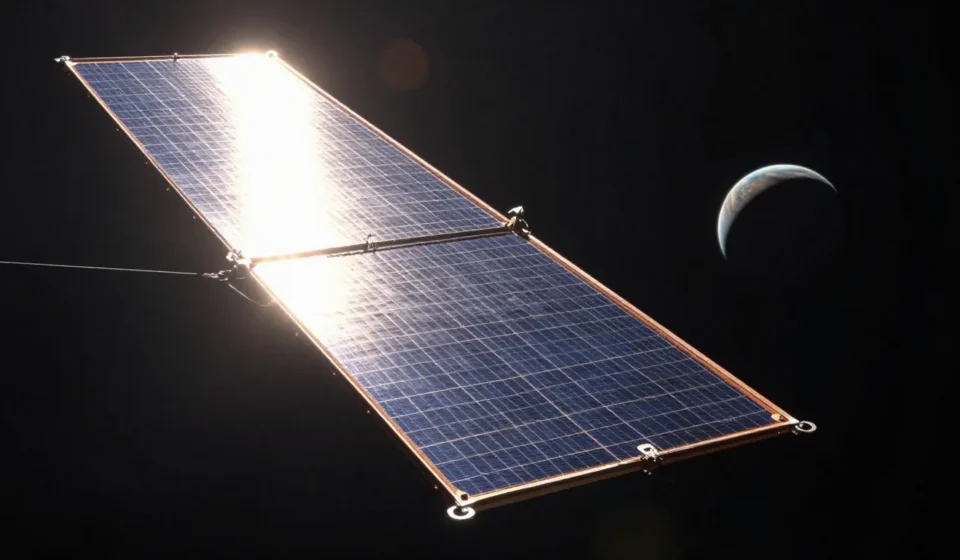
Imagine a spacecraft with no fuel tanks, no roaring engines—just a giant, mirror-like sheet catching sunlight. That’s the essence of how solar sails work. Instead of wind, they use the gentle push of photons—particles of light—to accelerate across space.
Photons have no mass, but they carry momentum. When they bounce off a reflective sail, they transfer a tiny kick.
Over time, millions of these kicks add up, allowing a sail to reach tremendous speeds without burning a drop of propellant. Understanding how solar sails work begins with this simple principle.
This concept isn’t science fiction. NASA’s NanoSail-D and The Planetary Society’s LightSail missions have already proven that sailing on sunlight is possible right now.
The Physics of Photon Momentum
To truly appreciate how solar sails work, we need to zoom into the quantum world. Light behaves as both a wave and a stream of particles called photons.
Each photon carries a tiny amount of momentum given by p = E/c, where E is energy and c is the speed of light.
When sunlight hits a mirrored sail, the photons reflect backward, doubling the momentum transfer. The sail experiences a minuscule force—about the weight of a paperclip per square kilometer.
But in the vacuum of space, with no friction, that constant push accelerates the craft over days and months. This is the core mechanism behind how solar sails work.
The sail's orientation matters too. By tilting the sail, we can steer the spacecraft, just like a sailor trims the sails of a boat.
This allows us to change orbit or even travel to other planets without carrying heavy propellant.
LightSail and Other Pioneering Missions
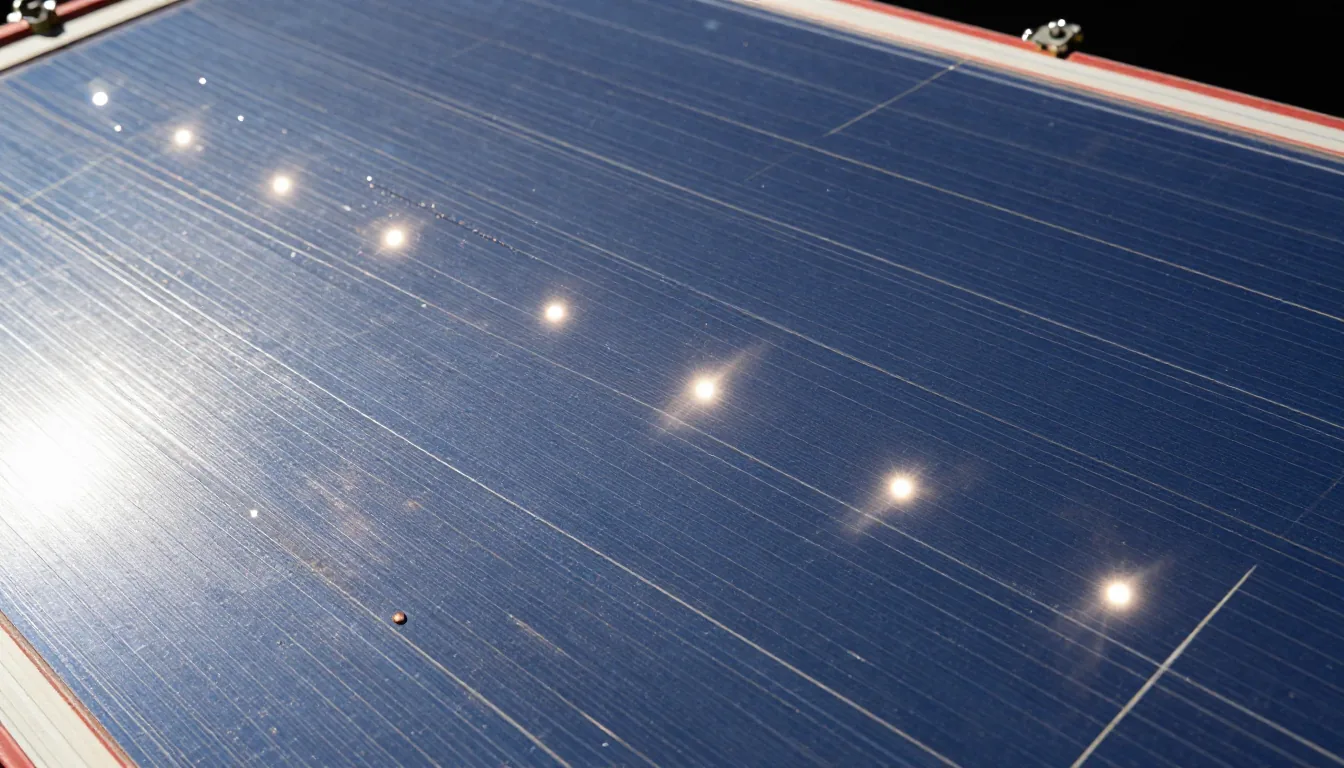
The most famous demonstration of this technology is the LightSail mission, led by The Planetary Society. LightSail 2, launched in 2019, deployed a 32-square-meter Mylar sail and successfully raised its orbit using only sunlight.
This real-world test confirmed how solar sails work in practice.
Another trailblazer is the Japan Aerospace Exploration Agency’s IKAROS, which in 2010 became the first interplanetary solar sail. It flew past Venus using a 20-meter-wide sail and even generated electricity via thin-film solar cells embedded in the fabric.
NASA’s upcoming Solar Cruiser aims to deploy an 18,000-square-foot sail, big enough to study the Sun up close. These missions show that light propulsion is not just a theory—it’s a practical tool for exploring the cosmos.
Advantages Over Traditional Rockets
Why use solar sails? The biggest advantage is fuel efficiency.
Rockets must carry their own propellant, which makes up most of their launch mass. A solar sail, by contrast, uses freely available sunlight, enabling much lighter spacecraft.
The elegance of how solar sails work is that they require no onboard fuel.
This opens up possibilities for long-duration missions. A solar sail could travel to the outer planets or even interstellar space without ever stopping for fuel.
The sail can keep accelerating as long as it gets light, reaching speeds that chemical rockets can't match.
Furthermore, solar sails are environmentally friendly—no toxic propellant, no exhaust. They could even be manufactured in space from thin films, reducing the cost of launching large structures from Earth.
Future Applications and Interstellar Dreams
The most thrilling prospect is sending probes to other star systems. The Breakthrough Starshot initiative envisions a fleet of tiny light sails, each just a few meters across, propelled by powerful ground-based lasers to 20% the speed of light.
They could reach Alpha Centauri in just 20 years. This project builds directly on how solar sails work with photon momentum.
For now, solar sails are being tested for near-Earth applications like space weather monitoring and debris removal. By slowly dragging a dead satellite out of orbit, a sail can help clean up the growing mess around our planet.
The science behind it—how solar sails work using photon momentum—is elegantly simple yet profoundly powerful. As we refine our ability to craft ultra-thin, reflective materials, these shimmering wings may become the standard for crossing the cosmic ocean.