
Why Does the Moon Have Phases? The Simple Science Behind the Lunar Cycle
Have you ever looked up at the night sky and wondered, why does the Moon have phases? It is one of the most common questions in astronomy, and the answer is beautifully straightforward.
The Moon does not produce its own light; it reflects sunlight. As the Moon orbits Earth, different portions of its sunlit side become visible to us, creating the familiar cycle from new to full and back again.
Imagine a ball held in front of a lamp. The half facing the lamp is bright, the other half dark.
As you walk around the ball, you see varying slices of the bright side. That is exactly what happens with the Moon.
Our perspective from Earth changes because the Moon is moving around us, while both are moving around the Sun.
Visualizing the Moon’s Orbit and Phases
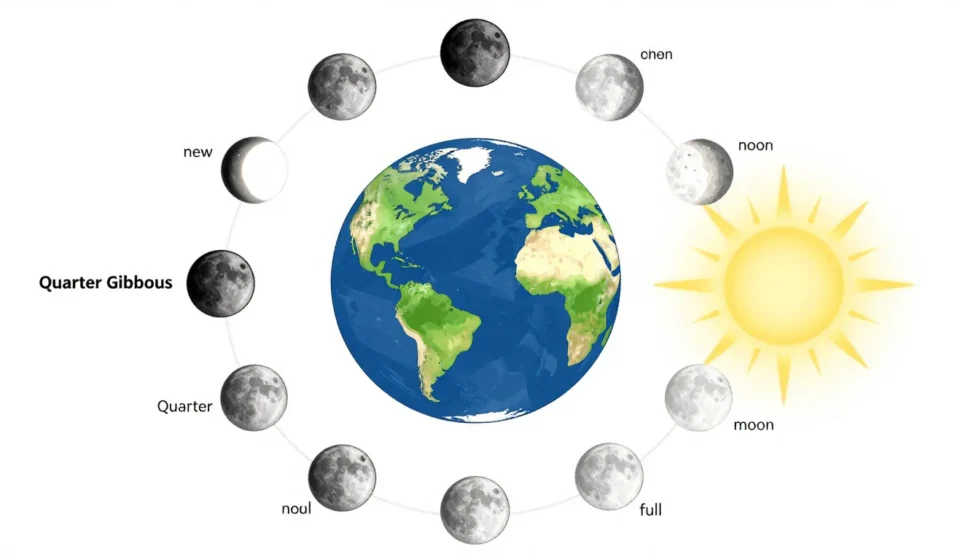
To truly grasp why does the Moon have phases, picture a simple diagram: Earth at the center, the Moon circling counterclockwise, and sunlight coming from one direction (say, the right). When the Moon lies between Earth and the Sun, the sunlit side faces away from us — that is the new Moon, invisible to our eyes.
As it moves a quarter of the way around, we see half of the bright side: first quarter phase. When the Moon is opposite the Sun, the entire near side is illuminated — full Moon.
Then it continues, passing through waning gibbous, last quarter, and waning crescent before returning to new. Each cycle takes about 29.5 days, known as a synodic month.
Common Misconceptions About Moon Phases
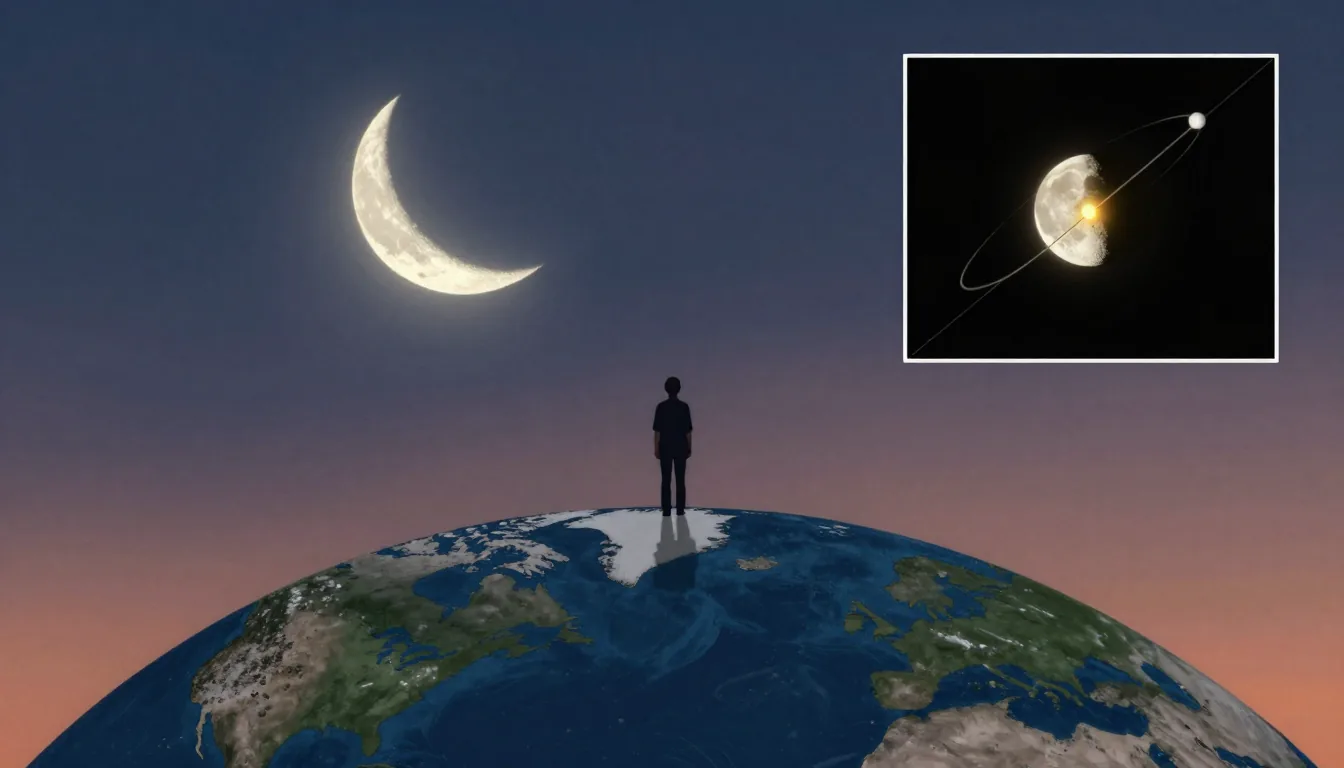
Many people think Earth’s shadow causes why does the Moon have phases, but that is only true for lunar eclipses. During a typical month, the Moon is usually above or below Earth’s shadow, so shading is from its own rotation and orbit, not our planet’s shadow.
Another mistake is believing the phase changes because the Moon rotates differently. Actually, the Moon rotates once per orbit (synchronous rotation), so we always see the same face — but that does not affect phases.
The phase is purely about the angle of sunlight reaching the lunar surface from our viewpoint.
From Crescent to Full: A Step-by-Step Walkthrough
Let us walk through a month with a handy mnemonic: DOC. When the crescent looks like a D, it is waxing (growing).
When it looks like a C, it is waning (shrinking).
The full Moon is an O. Waxing means more illuminated each night; waning means less.
- New Moon: Moon between Earth and Sun — invisible.
- Waxing Crescent: A sliver appears in the west after sunset.
- First Quarter: Half lit, visible in the afternoon and evening.
- Waxing Gibbous: More than half, leading to full.
- Full Moon: Entire face lit, rises at sunset, sets at sunrise.
- Waning Gibbous: Shrinking from full, visible late night.
- Last Quarter: Half lit, visible in the early morning.
- Waning Crescent: Thin sliver before dawn, then back to new.
By now, you should understand why does the Moon have phases and be able to recognize each phase in the night sky.
Why the Moon’s Phase Matters for Stargazing and Life
Knowing why does the Moon have phases affects your stargazing plans. A full Moon washes out faint stars and deep-sky objects, while a new Moon offers the darkest skies for observing galaxies and nebulae.
Moon phases also influence tides, animal behavior, and even cultural calendars. For a deeper dive into celestial phenomena, visit our Popular Science & Space category.
Understanding why does the Moon have phases is your first step to reading the sky like an ancient navigator. Next time you see a crescent, imagine the Sun lighting that thin edge, and know exactly where the Moon is in its graceful dance around Earth.
For more on lunar science, check out NASA’s Moon page or the educational resources at Time and Date. You can also explore Sky & Telescope’s guide for detailed diagrams.