
The Redshift Revolution: How Light Reveals Motion
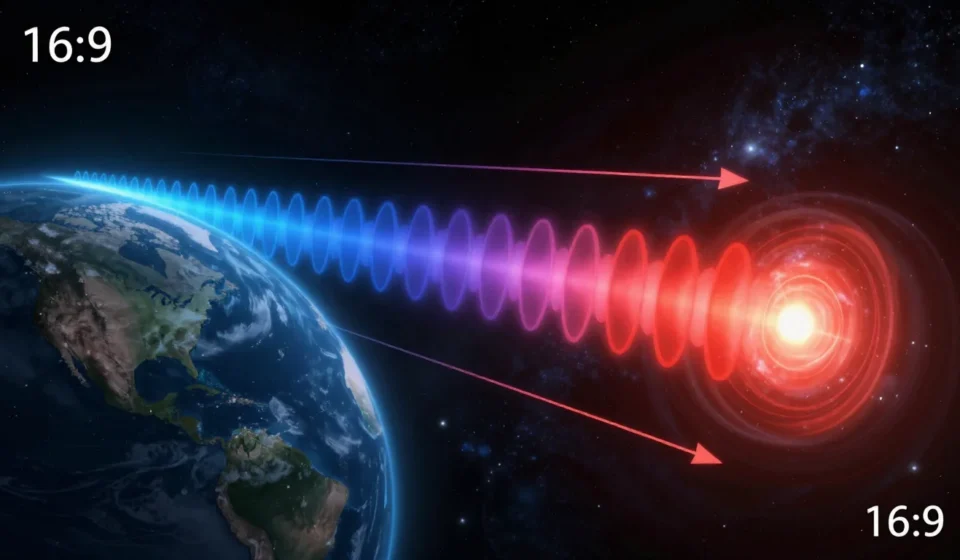
The cosmic expansion evidence begins with a simple observation: as the universe expands, light waves from distant galaxies stretch, becoming redder. This phenomenon, called redshift, is a cornerstone of that evidence.
In the 1920s, Edwin Hubble made a startling observation. He noticed that galaxies farther from Earth appeared redder than expected.
Their light was shifted toward longer wavelengths, meaning they were moving away from us. This wasn't random; the farther the galaxy, the faster it receded.
What does this tell us? The universe is not static.
Every galaxy outside our local group is rushing away, like dots on an inflating balloon. The redshift gives a direct measurement of this motion, and the relationship is now Hubble's law.
It states that recessional velocity is proportional to distance.
This simple law has profound implications. It suggests that the universe began from a single point and has been expanding ever since.
Without redshift, we would have no such direct proof. It remains one of the strongest pillars of cosmic expansion evidence.
Cosmic Microwave Background: Echo of the Big Bang
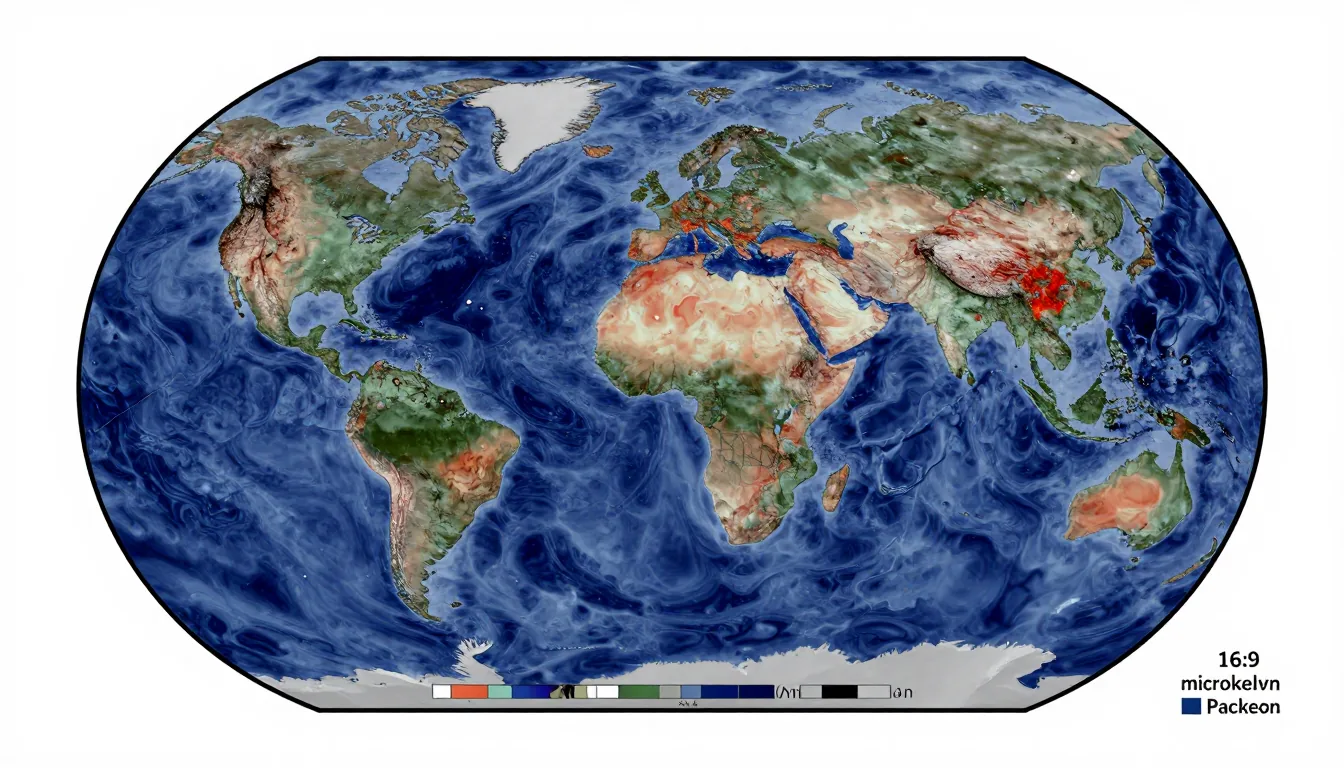
Another powerful piece of evidence is the cosmic microwave background (CMB). This faint glow fills the entire sky, left over from the Big Bang.
It's a snapshot of the universe when it was just 380,000 years old.
The CMB is remarkably uniform in all directions, but tiny fluctuations exist. These variations reveal the seeds of galaxies.
Its existence confirms that the universe was once hot and dense. As the universe expanded, it cooled, allowing the first light to travel freely.
Without expansion, we wouldn't see this ancient radiation. The CMB is a fossil that agrees perfectly with Big Bang predictions.
Detailed maps from missions like Planck show temperature variations of only one part in 100,000. These maps provide independent confirmation of the expansion model.
Moreover, the CMB's spectrum matches a blackbody curve at 2.7 Kelvin. This precise match leaves little room for alternative theories.
It strongly supports the idea that the universe has expanded from a hot, dense state.
Cosmic Expansion Evidence from Standard Candles
Type Ia supernovae serve as standard candles because they have consistent peak brightness. By measuring their apparent dimness, astronomers calculate distance.
Combining distance with redshift reveals that cosmic expansion is accelerating.
This surprising discovery led to the concept of dark energy. Dark energy is a mysterious force driving the acceleration.
The data from supernovae provide some of the strongest cosmic expansion evidence, confirming that the universe's growth is speeding up over time.
In 1998, two independent teams of astronomers found this acceleration. They used dozens of distant supernovae to trace expansion history.
The result was a Nobel Prize-winning breakthrough. It shows that about 70% of the universe's energy is dark energy.
This finding also implies that the universe will continue expanding forever. The rate of expansion may eventually tear galaxies apart.
Such a fate was unthinkable before these observations. Standard candles have thus reshaped our understanding of cosmology.
Other Pillars Supporting an Expanding Universe
Big Bang nucleosynthesis predicts specific abundances of light elements. These include hydrogen, helium, and lithium.
Observations match these predictions with high precision, supporting the expansion model.
Additionally, the large-scale structure of galaxies aligns with expansion theory. The web-like pattern we see today formed from initial quantum fluctuations.
These fluctuations were stretched by expansion, seeding galaxies and clusters.
Together, these lines of evidence paint a clear picture. The universe began in a singularity, has been expanding ever since, and continues to stretch at an accelerating rate. For more mind-bending insights, explore our Popular Science & Space category.
To dive deeper, check out NASA’s guide to redshift and the ESA’s Planck mission on the CMB. These resources offer additional cosmic expansion evidence from leading agencies.