
How to Boost NAD+ Naturally: Why Levels Decline
NAD+ (nicotinamide adenine dinucleotide) is a crucial coenzyme for cellular energy and DNA repair, but its levels drop by up to 50% between ages 20 and 60. In this guide, we explore evidence-based ways to boost NAD+ naturally, as Health & Wellness research increasingly points to lifestyle strategies that can slow this decline.
Understanding how to boost NAD+ naturally empowers you to support longevity without relying solely on supplements. Let’s explore the most effective, clinician-backed approaches.
1. Dietary Choices That Support NAD+ Synthesis
Nicotinamide-Rich Foods
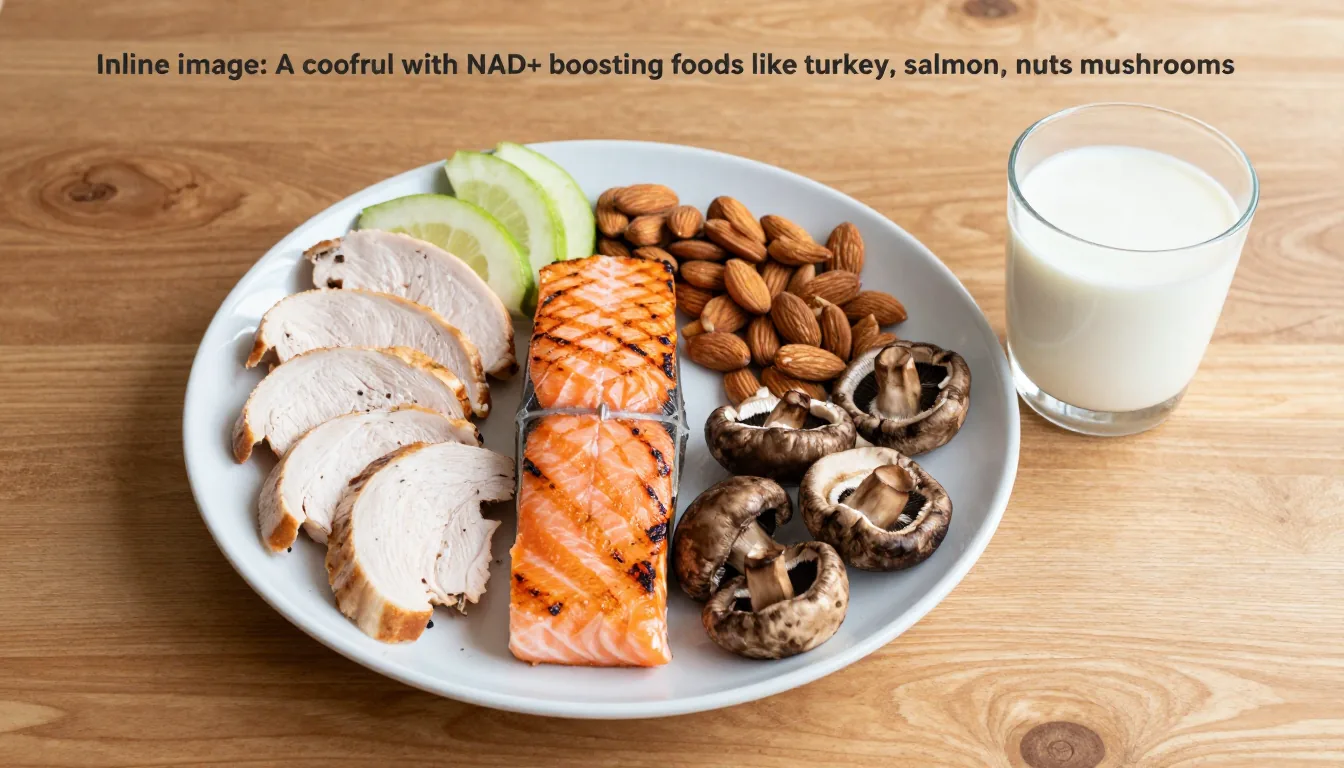
Foods like turkey, chicken, fish, nuts, and mushrooms provide niacin (vitamin B3), a direct NAD+ precursor. A single medium chicken breast delivers about 12 mg of niacin, contributing to daily needs.
Including these regularly in meals helps maintain baseline NAD+ production. Aim for a palm-sized serving of lean protein at least twice daily.
Milk and Dairy for NMN Precursors
Milk contains NMN (nicotinamide mononucleotide), though amounts are small. Fermented dairy like yogurt may offer additional NAD+ support through gut microbiome interactions.
A 2021 study found that dairy consumption correlated with higher NAD+ levels in older adults. Pair with prebiotic fiber like oats or bananas for optimal absorption.
2. Exercise: A Potent NAD+ Booster
High-Intensity Interval Training (HIIT)
To boost NAD+ naturally, HIIT is one of the most effective strategies. It activates AMPK and NAMPT, the rate-limiting enzyme for NAD+ production, and a 2020 trial showed that 12 weeks of HIIT raised NAD+ by 25% in middle-aged participants.
Try three 20-minute sessions per week: 30 seconds of all-out effort followed by 90 seconds of recovery. This protocol mimics the hormetic stress that triggers cellular repair.
Resistance Training
Weightlifting also stimulates NAD+ synthesis through muscle fiber activation. Compound lifts like squats and deadlifts engage large muscle groups, amplifying the effect.
Two to three sessions weekly with moderate weights (8–12 reps) suffice. Studies show consistent strength training preserves mitochondrial function, which relies on NAD+.
3. Caloric Restriction and Fasting
Fasting is a powerful way to boost NAD+ naturally. Limiting calorie intake by 20–30% or intermittent fasting (e.g., 16:8 or 5:2) boosts NAD+ by activating sirtuins and reducing NAD+ consumption.
A 2018 study found that alternate-day fasting increased NAD+ by 60% in animal models.
Start with a 14-hour overnight fast, then gradually extend. Even a modest 10% calorie reduction can yield benefits.
Always consult your doctor before making major dietary changes, especially if you have underlying health conditions.
4. Supplements: NMN and NR
NMN (nicotinamide mononucleotide) and NR (nicotinamide riboside) are well-studied NAD+ precursors. Human trials show NMN doses of 250–500 mg per day can raise NAD+ levels by 30–50%, helping you boost NAD+ naturally.
NR at 300–500 mg/day offers similar results.
Choose a product with third-party purity testing. For a deeper dive, read this review on NAD+ precursors. Start with a lower dose to assess tolerance.
5. Sunlight and Vitamin D
Moderate sun exposure (10–15 minutes daily) stimulates NAD+ production through vitamin D synthesis. A 2022 study linked higher vitamin D levels to improved NAD+ metabolism.
Be mindful of skin cancer risk; avoid burning. Supplement with 1000–2000 IU of vitamin D3 if sun exposure is limited.
6. Prioritize Sleep Quality
Deep sleep boosts NAD+ by reducing oxidative stress and inflammation. Chronic sleep deprivation depletes NAD+ by up to 30%.
Aim for 7–9 hours per night with consistent timing.
Improve sleep hygiene: keep the bedroom cool, dark, and quiet, and avoid screens an hour before bed. A 2020 study found that sleep extension increased NAD+ in sleep-deprived adults.
7. Avoid NAD+ Depleters
Chronic stress, excessive alcohol, and smoking accelerate NAD+ decline. Alcohol metabolism consumes NAD+, leading to depletion.
Limiting alcohol to one drink per day or less helps preserve levels.
Stress management through meditation or prayer reduces cortisol, which otherwise diverts NAD+ toward stress pathways. For more, see this research on lifestyle and NAD+.
Implementing these strategies can help you boost NAD+ naturally and support longevity. Start with one or two changes and build gradually.
Your body will thank you.