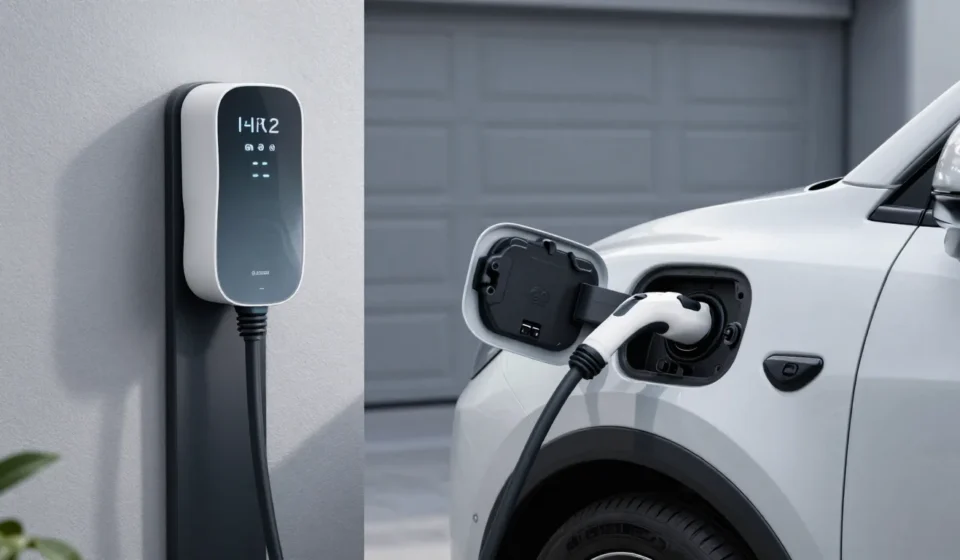

Why Your Home Charger Choice Matters
Selecting the right home charger is critical to your daily EV experience. An EV charger comparison reveals drastic differences in speed, installation complexity, and cost. Get it wrong, and you’ll either wait too long or pay too much.
This guide dissects Level 1, Level 2, and Level 3 charging from a mechanical and electrical standpoint. No fluff—just the data you need to decide.
Our EV charger comparison covers all the key factors for homeowners.
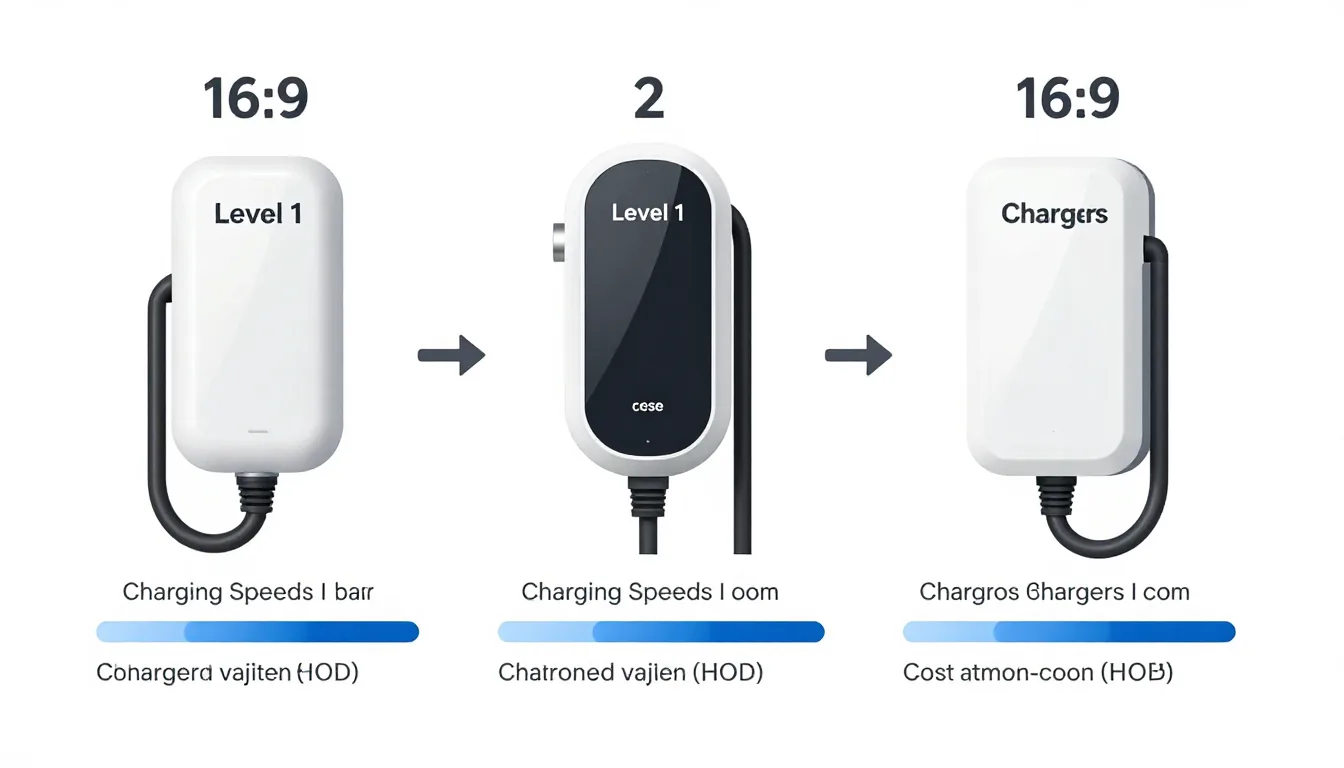
Level 1 Charging: The 120V Baseline
Level 1 uses a standard household outlet (120V in North America). It's the slowest option, adding about 3–5 miles of range per hour.
For a 60 kWh battery, expect a full charge in 40–50 hours.
Installation cost is $0 since you use an existing outlet. Equipment cost ranges from $200 to $600 for the included cable or an aftermarket unit.
Power output is 1.2–1.8 kW.
This level is only viable for plug-in hybrids or low-mileage drivers. It is not recommended for full EVs if you drive over 20 miles daily.
In an EV charger comparison, Level 1 is the cheapest but slowest option.
Level 2 Charging: The Gold Standard for Home
In an EV charger comparison, Level 2 stands out as the gold standard for home, operating on 240V—the same as your dryer or oven. It delivers 3–10 kW, adding 12–30 miles of range per hour.
A full charge takes 4–10 hours, ideal for overnight top-ups.
Installation requires a dedicated 240V circuit and a hardwired or plug-in charger. Expect to pay $500–$2,000 for electrical work plus $400–$1,200 for the unit. Blunt advice: If you own any full EV, install Level 2 as it’s the only practical solution for daily use.
Key Technical Specs
- Voltage: 208–240V
- Current: 16–48 amps (adjustable)
- Connector: J1772 (Tesla adapts)
- Efficiency: ~85–90% (wall to battery)
Level 3 DC Fast Charging: Overkill for Home
Level 3 (DC fast charging) uses 400–800V DC direct to the battery. Power ranges 50–350 kW, adding 100–200 miles in 15–30 minutes.
However, installation at home is impractical: requires three-phase power, permits, and a $10,000–$50,000 unit.
Homeowners almost never need Level 3. It stresses the battery more and accelerates degradation.
Reserve it for road trips. This EV charger comparison clearly shows Level 3 is not for home use.
EV charger comparison: Cost-Benefit Analysis
Calculate your daily mileage and charging window. A Level 2 charger pays for itself in convenience within months.
Example: 40-mile commute, 8 hours overnight → Level 1 may not fully recover; Level 2 does easily.
Total cost of ownership: Level 1 = $0–$600; Level 2 = $900–$3,200; Level 3 = $10,000+. For 99% of homeowners, Level 2 is the optimal balance according to our EV charger comparison.
Installation Considerations
Before buying, check your panel capacity. A 50-amp breaker is standard for Level 2.
Hire a licensed electrician.
Ensure the charger is outdoor-rated if mounted outside. Many utilities offer rebates for Level 2 installations—check Energy.gov.
Smart chargers with Wi-Fi allow scheduling during off-peak rates. This reduces electricity costs by $50–$150 annually.
This EV charger comparison highlights installation differences.
Some municipalities require permits for new circuits. Factor in a few hundred dollars for inspection fees. For more data on home charging, see Consumer Reports’ EV charging guide.
Charging Speed and Battery Health
Battery longevity is often overlooked when evaluating charging speeds. Level 2 charging is gentler on the battery than Level 3.
Slower charging generates less heat, preserving capacity over time.
Level 1 is even gentler, but impractically slow. For daily use, Level 2 balances speed and battery health.
Avoid frequent DC fast charging to extend battery life.
Lithium-ion cells degrade fastest at high temperatures and high charge rates. Level 2 keeps temperatures moderate, typically around 30–40°C, while Level 3 can spike to 50°C+.
A 2019 study showed 10% more capacity retention after 500 cycles with Level 2 vs Level 3. This EV charger comparison emphasizes battery health as a key factor.
Final Recommendation
For home use, Level 2 clearly wins in this EV charger comparison. Level 1 is a backup; Level 3 is irrelevant.
Pick a 40-amp, hardwired unit from a reputable brand (e.g., ChargePoint, JuiceBox, Grizzl-E). Avoid cheap no-name units—fire risk is real.
For more on automotive technology, visit our Automotive & Mobility section.