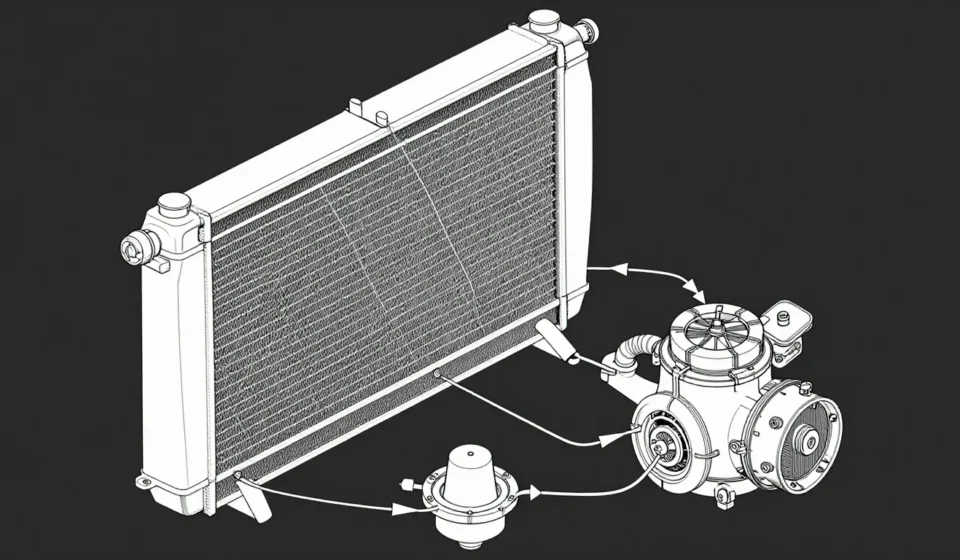

The Core Components: Radiator, Water Pump, and Thermostat
This engine cooling system guide covers how the radiator, water pump, and thermostat work together to keep your engine at optimal temperature. The radiator dissipates heat through fins and tubes.
The water pump circulates coolant, and the thermostat regulates flow.
The radiator is a heat exchanger that uses airflow to cool hot coolant passing through its tubes. Fins maximize surface area for efficient heat transfer.
A pressurized cap raises the boiling point, preventing coolant loss.
The water pump is typically a centrifugal pump driven by the serpentine belt. It forces coolant through the engine block, cylinder head, and radiator.
A failing pump leads to quick overheating.
The thermostat acts as a temperature-controlled valve that remains closed during cold starts to speed warm-up. It then opens at a set temperature—around 195°F—to allow coolant flow to the radiator.
This simple device is vital for efficient operation.
Coolant Flow Path: From Engine to Radiator and Back
Coolant enters the engine via the water pump, travels through passages around cylinders and combustion chambers, absorbing heat. It exits through the thermostat, which directs it to the radiator when hot.
In the radiator, coolant moves from the inlet tank to the outlet tank through small tubes, shedding heat to the air.
An electric or mechanical fan assists at low speeds or idle. The cooled fluid returns to the water pump inlet, completing the loop.
A bypass circuit allows circulation when the thermostat is closed.
This closed-loop design maintains consistent temperatures across varying loads. Understanding this flow is essential for effective cooling system analysis.
Following this engine cooling system guide will help you grasp the entire process.
Engine Cooling System Guide: Maintenance and Diagnostics
Regular maintenance extends the lifespan of the entire system. Check coolant level in the reservoir when the engine is cold.
A 50/50 mix of antifreeze and water prevents freezing, boiling, and corrosion.
Inspect hoses for cracks, bulges, or leaks. Radiator fins should be straight and free of debris.
Replace coolant every two to five years per manufacturer specifications.
Use a hydrometer or refractometer to verify freeze protection. For more detailed procedures, refer to Car and Driver’s cooling system tips. For diagnostics, monitor temperature gauge behavior.
A needle creeping into the red indicates trouble. Bleed air from the system after any component replacement.
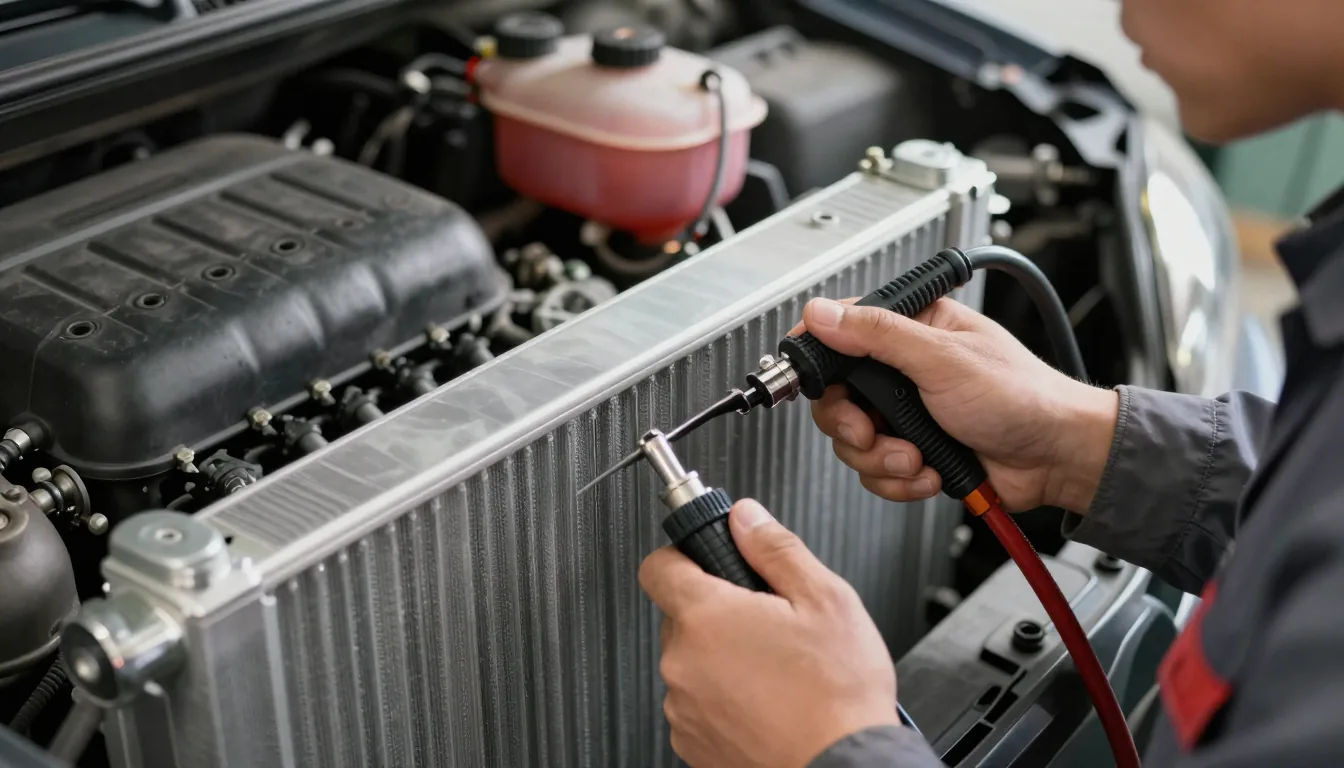
Air pockets cause hot spots and false sensor readings. Pressure testing can locate elusive leaks.
Common Failure Points and Symptoms
Water pump failure often manifests as whining noise, coolant dripping from the weep hole, or shaft play. Radiator leaks cause puddles under the car and low coolant levels.
A stuck thermostat triggers either slow warm-up (stuck open) or rapid overheating (stuck closed).
Head gasket failure is a severe consequence of chronic overheating. Look for white smoke from exhaust, milky oil, or persistent coolant loss.
Pressure test the system to locate leaks. Check fan clutch or electric fan operation if the car idles hot but cools at speed.
For additional guidance, see Hemmings’ cooling system diagnosis article. Recognizing these symptoms early can save you from costly repairs. This engine cooling system guide will help you identify issues quickly.
Preventing Overheating: Proactive Checks
Before long trips, inspect the entire cooling system. Verify belt tension for the water pump drive.
Clean radiator fins with compressed air or low-pressure water. Consider a coolant flush if fluid appears rusty or murky.
Upgrading to a high-flow thermostat or larger radiator can benefit modified or high-performance engines. For street cars, OEM parts are sufficient.
Always use the correct coolant type—mixing different chemistries can cause gelation.
Following this engine cooling system guide will help you avoid costly repairs. For more Automotive & Mobility insights, explore our other guides on vehicle maintenance and performance. Consistent checks ensure long-term reliability.