
The Science Behind the Scary-Looking Fun
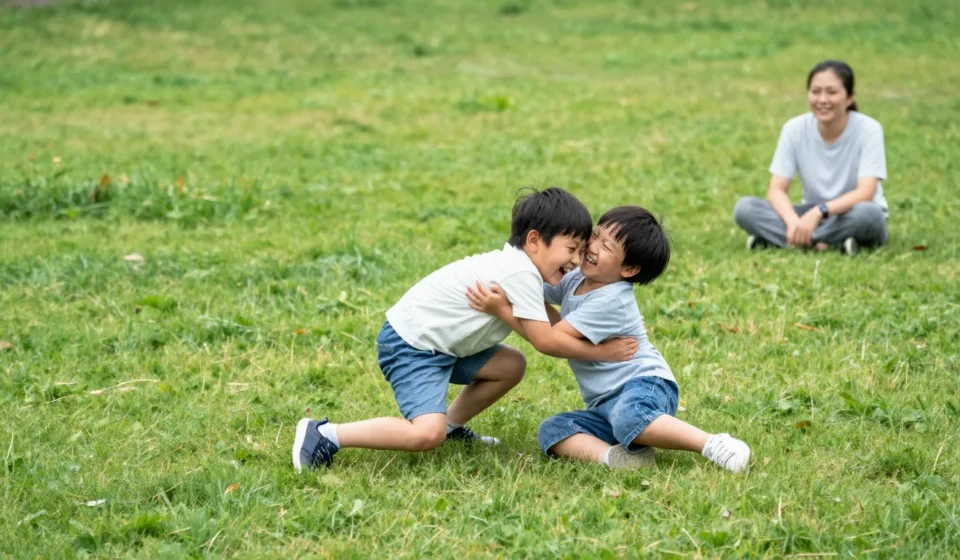
When your kids start rolling on the floor, growling like tiny dinosaurs, you might feel the urge to stop it. But rough and tumble play benefits are backed by decades of child development research. It’s not just chaos—it’s a workout for the brain and body.
Studies show this type of play activates the prefrontal cortex, helping kids practice self-regulation. They learn to read social cues, control their strength, and stop when a friend says “uncle.” It’s like a martial arts class mixed with a giggle fest.
Emotional Control and Empathy
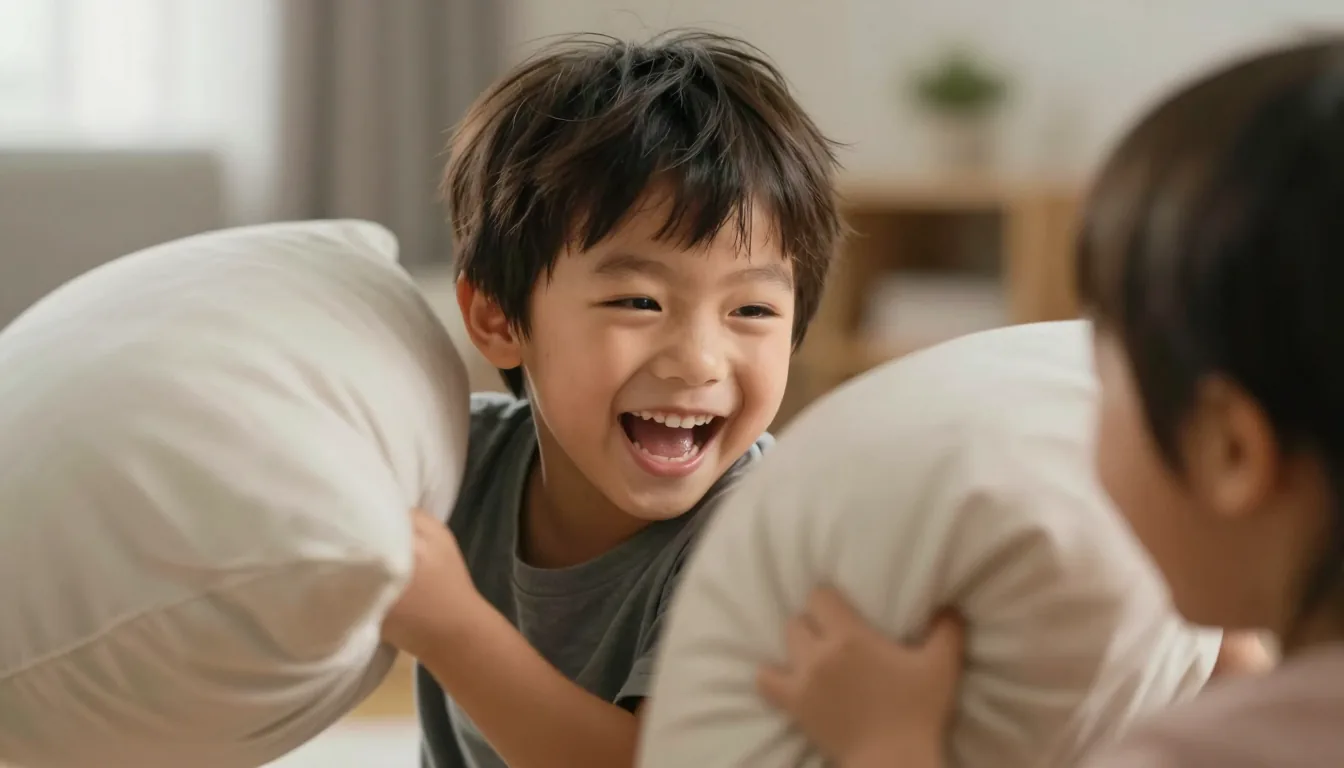
Roughhousing teaches kids to manage their own emotions. When they get too wild, they quickly realize their playmate stops laughing.
That feedback loop builds empathy and emotional intelligence.
Research from the University of Montreal found that kids who engage in rough play have better social competence. They’re less likely to be aggressive because they learn the difference between play and real fighting.
How to Supervise Without Being a Buzzkill
Set clear rules: no hitting, no choking, and stop when someone says stop. Stay close enough to intervene if things escalate, but resist the urge to micromanage.
Let them negotiate their own boundaries. If you hear “That's too hard!” they're learning to advocate for themselves.
That's a life skill right there.
Social Skills and Friendship Building
Rough play creates a unique social bond. Kids practice turn-taking, cooperation, and reading body language.
It's a living lab for social dynamics.
Children who wrestle together often become closer friends. They learn to trust each other and recover from conflicts quickly.
This builds a foundation for teamwork in school and later life.
Physical Rough and Tumble Play Benefits You Can See
Rough and tumble play benefits include better coordination, balance, and muscle strength. It’s high-intensity interval training for kids—no gym membership needed.
This kind of active play also helps prevent childhood obesity. A study from the American Academy of Pediatrics recommends at least 60 minutes of unstructured physical play daily.
Roughhousing counts!
Plus, it’s a fantastic way for parents to bond with their kids. Wrestling on the floor releases feel-good hormones and reduces stress for everyone.
Debunking the Safety Myth
Yes, kids get bumps and bruises. That's part of learning.
But serious injuries are rare when adults supervise.
According to the American Academy of Pediatrics, the benefits far outweigh the risks. Think of it like teaching your kid to ride a bike. They might fall, but you don’t ban bikes—you teach them to wear a helmet and watch for cars.
Building Resilience Through Play
When kids get knocked down (literally), they get back up. That builds grit.
They learn that failure—or falling—isn't the end of the world.
More importantly, they learn to trust their own bodies. That confidence carries over into the classroom and playground.
It also reduces anxiety, as kids become comfortable with physical challenges.
Cognitive Gains from Roughhousing
Believe it or not, rough and tumble play benefits also extend to thinking skills. The rapid decision-making during play sharpens problem-solving abilities and creativity.
Neuroscientists have found that physical play increases brain-derived neurotrophic factor (BDNF), which supports learning and memory. So that wrestling match might just boost math skills later.
What to Do if You’re Still Worried
Start small. Get down on the floor and wrestle gently with your child yourself.
Let them practice pinning you (supervised).
You’ll both laugh, and that bond is priceless. If you need more guidance, check out our Parenting & Family section for age-appropriate play tips.
Conclusion: Let Them Wrestle
The next time your kids are rolling around like puppies, take a breath. Remember all the physical rough and tumble play benefits: better emotional control, coordination, and resilience.
As long as you're nearby, it's safe—and it's actually what they need.
For more on child development, check out Psychology Today’s guide to play and the National Institute for Play.