
Why Apartment Composting Matters Even in Small Spaces
Living in an apartment doesn’t mean you can’t compost. Apartment composting is a practical way to reduce landfill waste and create nutrient-rich soil for houseplants or community gardens. Even without a backyard, compact methods make it possible.
Despite the challenges, apartment composting is achievable with the right setup. Food scraps make up about 30% of household waste.
By composting, you cut methane emissions from landfills and close the loop on organic matter.
Choosing the Right Composting Method
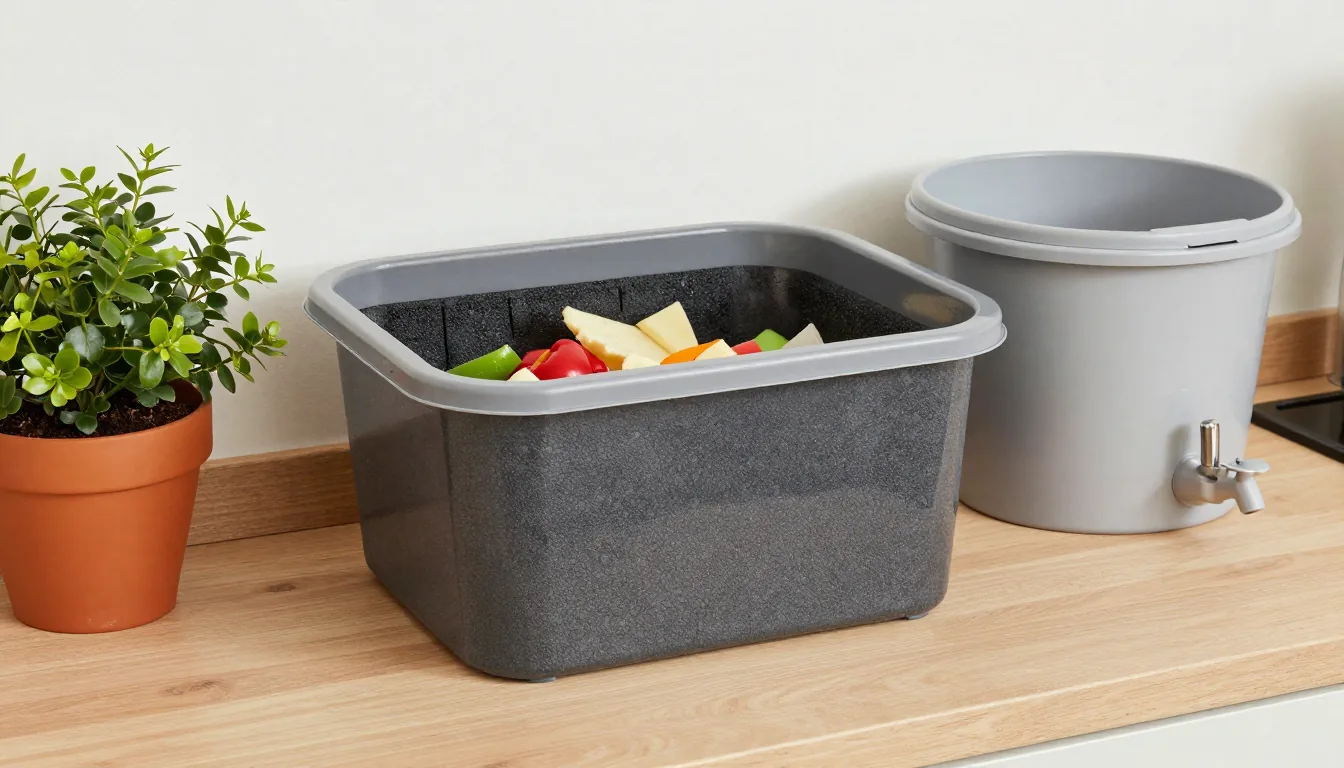
For apartment dwellers, three methods work best: vermicomposting (using worms), Bokashi (fermentation), or electric composters. Each has trade-offs in odor, speed, and space. Apartment composting works well with any of these methods.
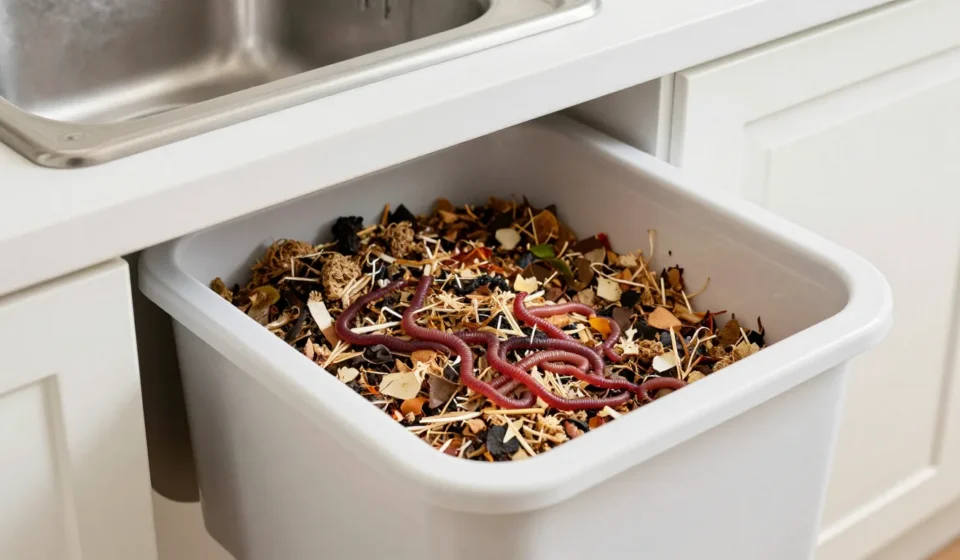
Vermicomposting uses red wigglers to break down scraps quickly. It produces worm castings, a potent fertilizer, and takes up just a few square feet.
What You Need to Get Started
Start with a bin (plastic or wood) with a lid and drainage holes. For worms, add bedding like shredded newspaper or coconut coir.
Keep the bin in a dark, cool spot like under the sink.
For Bokashi, you need a bucket with a spigot and bran inoculated with effective microorganisms. This method pickles waste and works well for meat and dairy, which worms dislike.
7 Proven Tips for Compact Composting
These strategies will help you succeed with indoor composting in a small footprint.
1. Control Odors Naturally
Layer food scraps with dry carbon-rich materials like leaves or paper. If it smells, add more browns and bury fresh scraps.
A tight-fitting lid also helps. Successful apartment composting relies on odor control.
Bokashi bins are airtight, making them nearly odor-free. With worms, avoid onions and citrus in large amounts.
2. Manage Moisture Levels
Your bin should feel like a wrung-out sponge. Too wet?
Add dry bedding. Too dry?
Mist with water. Proper moisture prevents mold and keeps worms happy.
Moisture management is key for apartment composting.
Electric composters dehydrate waste, so moisture isn’t an issue. But they use energy, so weigh the carbon cost.
3. Use Small Collection Containers
Keep a countertop bin with a charcoal filter for daily scraps. Empty it every 2-3 days into your main composter to avoid fruit flies.
Freeze scraps if you can’t transfer often—this kills fruit fly eggs and breaks down cell walls for faster composting.
4. Balance Greens and Browns
Greens (kitchen scraps, coffee grounds) provide nitrogen. Browns (paper, cardboard, dry leaves) provide carbon.
Aim for roughly 1:3 ratio by volume. A proper green-to-brown ratio is essential for apartment composting.
Too many greens cause odors; too many browns slow decomposition. Adjust as you go.
5. Harvest and Use Your Compost
With worms, harvest every 2-3 months by moving contents to one side and adding fresh bedding. Worms migrate, leaving castings behind.
Use them diluted in water as “compost tea” or mix into potting soil.
Bokashi compost needs to be buried in soil or a larger bin for 2 weeks after fermentation to finish breaking down. Electric composters output a dry, sterilized material ready to use directly.
6. Troubleshoot Common Issues
Fruit flies? Cover scraps with bedding or use a lid.
Worms escaping? Check moisture and avoid acidic foods.
Slow process? Chop scraps smaller and ensure temperatures are 55-80°F.
Troubleshooting is part of apartment composting.
Most problems are fixable. Don’t give up—your local extension office or online forums can help.
7. Connect with a Community Garden
If you can’t use all the compost, donate to a community garden. Some cities have compost drop-offs or pick-up services.
This turns your scraps into a local resource. Engaging with the apartment composting community helps.
Many Sustainability & Ecology advocates share tips online. Join a group to stay motivated.
Conclusion: Start Small, Stay Consistent
Apartment composting is a journey. Begin with one method, monitor conditions, and adjust.
Consistent apartment composting yields great results. Before long, you’ll turn waste into a resource and inspire neighbors to do the same.
For more on reducing waste, check out the EPA’s guide on home composting or explore Bokashi at Bokashi Living.