
Why Upfront Cost Shouldn’t Stop You
Many people assume green products are more expensive, but a closer look reveals the opposite. The right eco-friendly swaps actually reduce your bills over time.
This article breaks down the math behind ten popular switches, from LED lighting to energy-efficient appliances. These eco-friendly swaps are backed by years of data.
1. LED Light Bulbs: A Bright Investment
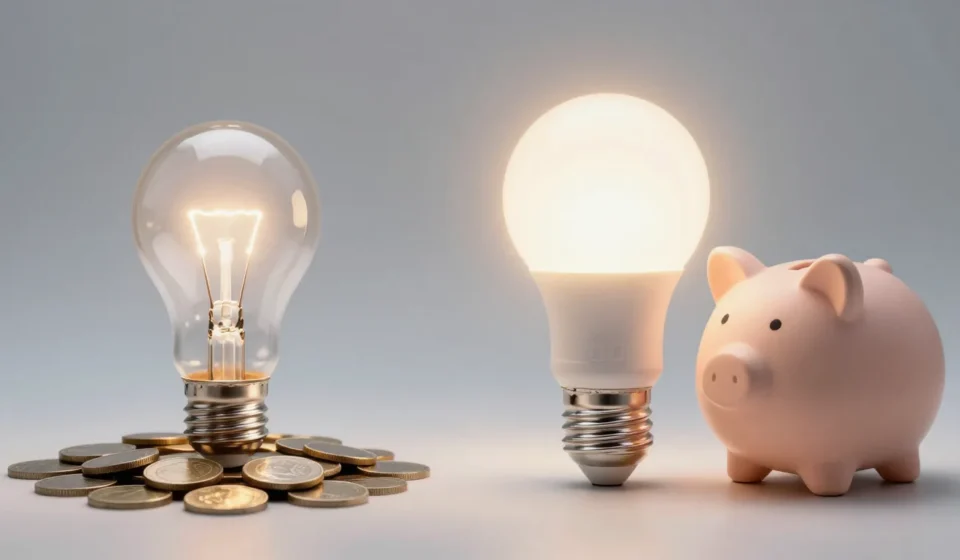
LEDs use 75% less energy than incandescent bulbs and last up to 25 times longer. A single LED bulb saves about $80 in electricity costs over its lifetime.
Replacing just five bulbs in high-use areas can save you $400. It’s one of the simplest eco-friendly swaps with immediate returns.
Moreover, LEDs produce less heat, reducing cooling costs in summer. They also come in various colors and dimmable options.
2. Reusable Water Bottles: Quench Thirst Sustainably
Buying bottled water costs roughly $1 per bottle on average. A reusable bottle costs $20 and lasts years, saving hundreds annually.
Plus, you avoid plastic waste—a win for your wallet and the environment. Stainless steel bottles keep drinks cold for hours.
Many brands offer lifetime warranties.
3. Reusable Shopping Bags: Ditch Single-Use
Many stores charge for plastic bags now. A reusable bag costs $1–2 and can be used thousands of times.
Over a year, a family can save $50–100 by bringing their own bags. Reusable bags are sturdier and carry more items, reducing trips.
They come in compact foldable designs.
4. Cloth Napkins: Table Savings
Paper napkins seem cheap, but they add up. A set of cloth napkins costs $15 and lasts years.
Replacing paper napkins saves $20–30 per year and reduces garbage. Cloth napkins add a touch of elegance to meals.
Simply toss them in the wash.
5. Rechargeable Batteries: Power That Pays Back
Disposable batteries cost $2–5 per pack and die quickly. Rechargeable batteries cost $10–20 initially but can be recharged 500 times.
Over a decade, you save $100 or more on batteries. Modern rechargeables hold their charge longer.
A simple charger powers many devices.
6. Energy-Efficient Appliances: Long-Term Gains
ENERGY STAR-rated appliances use 10–50% less energy. For example, an efficient refrigerator saves $100–200 per year compared to an old model.
The upfront premium is recovered within 2–3 years. Such eco-friendly swaps often come with rebates.
Many utilities offer rebates for upgrading. These appliances also have smart features.
7. Low-Flow Showerheads: Water Savings Flow
Standard showerheads use 2.5 gallons per minute; low-flow ones use 1.5 gpm. A family of four can save 40,000 gallons over a decade, cutting bills by $50–100 yearly.
Installation is simple—screw onto existing pipe. Some models have pause buttons.
8. Reusable Coffee Filters: Better Brew
Paper coffee filters are a recurring expense. A reusable metal filter costs $10 and eliminates disposable filters.
Over a year, you save $20–30. Metal filters allow more oils through for richer coffee.
They also reduce waste.
9. Cloth Diapers: Budget-Friendly Baby Care
Disposable diapers cost $500–800 per child per year. Cloth diapers cost $200–300 total.
Using cloth half the time saves $250–400 per year while reducing landfill waste. Modern cloth diapers feature snaps or Velcro.
They can be reused for subsequent children.
10. Programmable Thermostats: Smart Climate Control
A smart thermostat optimizes heating and cooling, saving 10–15% on energy bills. That's $100–150 yearly.
The device pays for itself in one season.
This eco-friendly swap offers convenience and savings. Most let you adjust settings via smartphone.
Some learn your habits and auto-adjust.
The Bottom Line: Smart Savings with Eco-Friendly Swaps
These ten swaps prove that going green doesn’t mean spending more. In fact, the average household can save over $1,000 annually by adopting just half of these changes.
These eco-friendly swaps are just the beginning. For more cost-saving tips, explore our Sustainability & Ecology archive. To calculate your potential savings, check resources like Energy.gov and ENERGY STAR.
Start small with one or two swaps, and watch your savings grow. Remember, every eco-friendly swap contributes to a healthier planet and bank account.