The Hidden Azulejo Alleys of Porto: A Tile Hunter’s Journey Through Forgotten Streets

Porto Tile Alleys: Whispers of Blue and White
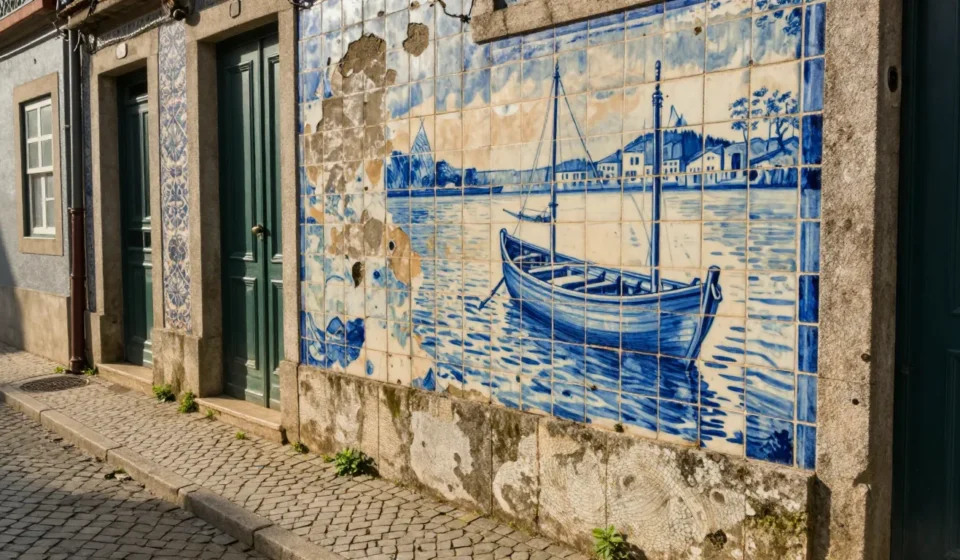
Porto tile alleys are not just in museums; they cling to crumbling walls in forgotten streets, telling tales of fishermen, saints, and revolution. I spent a week tracing these silent narrators through five hidden neighborhoods, each with its own rhythm and glaze.
This is not a checklist—it’s an invitation to wander. Leave the crowded Ribeira behind and let the tiles guide you into Porto’s soul.
1. Miragaia: The Fishermen’s Tiles
Start at the Cais da Estiva, where the Douro meets the Atlantic. In Miragaia, these Porto tile alleys are weathered by salt spray.
Look for the 18th-century panels on Rua da Senhora da Luz—they show boats and nets, as if the sea itself painted them.
Walk up Rua de Miragaia to Largo do Prior. A lesser-known chapel, Capela de São Pedro, hides a tile frieze of Saint Peter casting nets.
The blue against the peeling whitewash feels like a prayer.
Walking Route
Begin at the riverside, climb Rua de Miragaia, then loop through Beco do Bicalho. Pause at the Porto city guide for opening hours of the chapel. Allow 90 minutes.
2. Sé: Layers of Faith and Politics
The Sé neighborhood crowds around the cathedral, but its Porto tile alleys hide political murals. On Rua de São Domingos, a faded panel depicts the 1758 earthquake—a warning in cobalt.
Nearby, a 20th-century mural shows the Carnation Revolution, flowers blooming from rifle barrels.
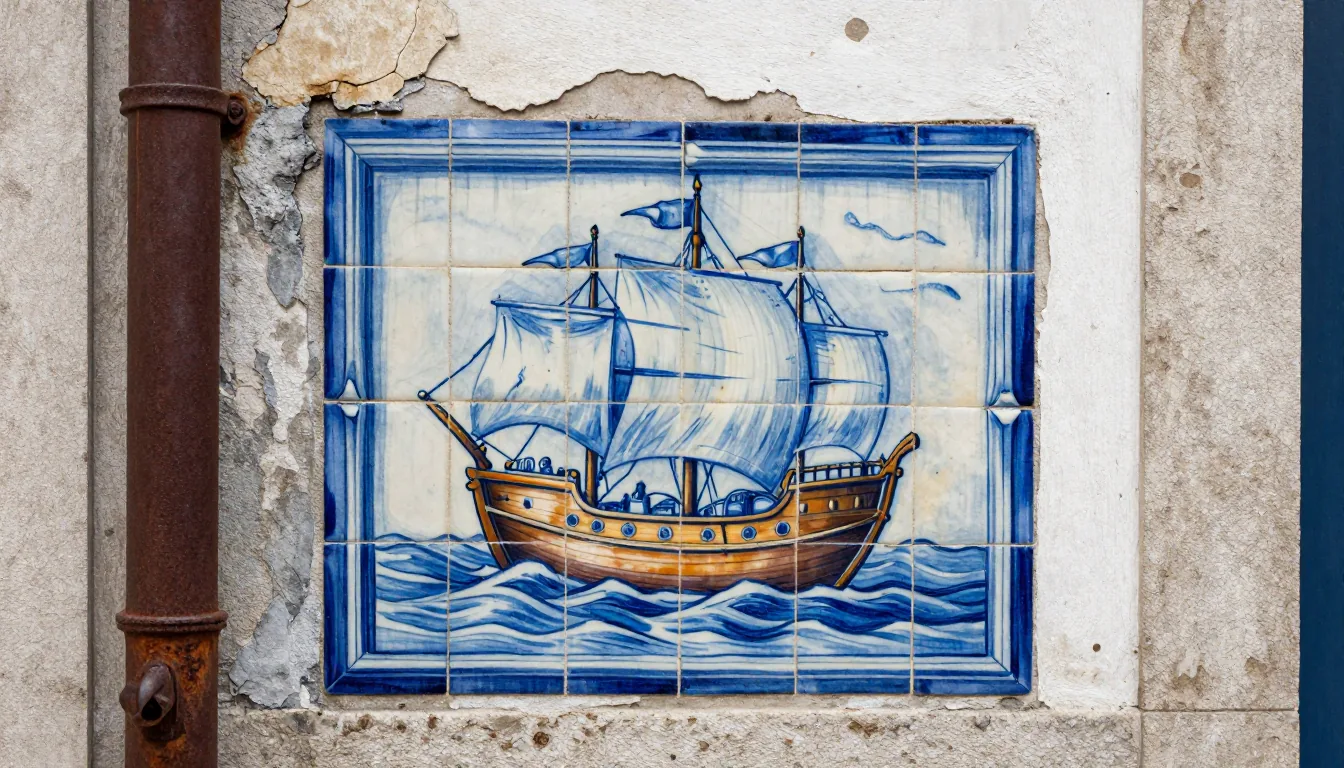
Don't miss the narrow Travessa de São Bento. A single blue tile fragment, hand-painted with a ship, peeks from behind a drainpipe.
It's a whisper of Porto's maritime past.
Walking Route
From the cathedral, descend Rua de São Domingos, then cut through Travessa de São Bento to Rua das Flores. Explore the Visit Porto site for guided tile tours. Allow 2 hours.
3. Bonfim: Industrial Azulejo
Bonfim's train station is famous, but its backstreets are overlooked. On Rua do Bonfim, a factory wall is covered in 19th-century tiles—geometric repeats in mustard and green.
In Bonfim, these Porto tile alleys reveal industrial history. They once advertised a textile mill.
Now, they frame a community garden.
Walk to Largo do Bonfim. The church's side entrance has a panel of St.
Anthony preaching to fish, but the humor is in the details—one fish wears a bishop's miter.
Walking Route
Start at Bonfim Station, walk up Rua do Bonfim, then circle back through Rua da Gesta. The Lonely Planet Porto guide offers more context. Allow 1 hour.
4. Fontaínhas: Tiles of the Poor
Fontaínhas clings to a steep hill above the Douro. Here, azulejos are humble—broken shards repurposed as street numbers, a mosaic of fragments on a corner shrine.
On Rua da Fontaínhas, a single tile of a rooster is embedded in a wall. Locals say it wards off evil.
The Porto tile alleys here tell stories of resilience.
Descend through Beco do Laranjal. The tiles here are newer, painted by residents in a community project.
They show the neighborhood's history: fountains, canaries, a woman selling sardines.
Walking Route
From the top of Rua da Fontaínhas, zigzag down the alleys. The descent is steep but rewarding.
Allow 1.5 hours.
5. Cedofeita: Modern Tile Art
Cedofeita is Porto's art district, but its back alleys hold contemporary azulejo. On Rua de Cedofeita, a gallery wall is clad in geometric tiles by a local artist.
But turn into Travessa de São Pedro—a hidden courtyard covered in hand-painted tiles depicting scenes from the poet Pessoa. In Cedofeita, the Porto tile alleys blend tradition with modern expression.
Nearby, Rua do Breiner has a mural where traditional blue tiles bleed into graffiti. It’s a conversation between centuries.
Walking Route
Start at the intersection of Rua de Cedofeita and Rua do Gólgota, explore the courtyard, then stroll down Rua do Breiner. Allow 1 hour.
These five Porto tile alleys offer a tile hunt that unfolds like a story. Each alley, each broken shard, holds a fragment of Porto's heart.
Walk slowly. Let the glaze speak.