

Stop Avoiding the Pull-Up Bar
You want your first unassisted pull-up—or maybe you’re stuck at 3 reps and can’t break through. Either way, this pull-up progression program will get you to 10 reps in 8 weeks.
No fluff, no gimmicks. Just smart regressions, proper frequency, and honest effort.
Most people fail because they train pull-ups too rarely or use the wrong regressions. You’ll fix both starting today.
Step 1: Master the Scapular Pull-Up
Before you pull your chin over the bar, you need to control your shoulder blades. Hang from the bar with straight arms, then pull your shoulders down and back without bending your elbows.
That's a scapular pull-up.
Do 3 sets of 10 reps every session for the first two weeks. This builds the foundation for your lats and prevents injury.
Step 2: Eccentric (Negative) Pull-Ups
Jump or step up to the top of a pull-up (chin over bar), then lower yourself as slowly as possible—aim for 5 seconds. That's one rep.
Use a box if needed to get to the top.
Do 4 sets of 3–5 negatives every other day. Rest 90 seconds between sets.
Once you can control the descent for 8 seconds, you're ready for the next step.
This negative phase is a key component of the pull-up progression program. It builds the strength you need for the concentric movement.
Follow this pull-up progression program closely during these foundation weeks.
Pick the Right Regression
Not all regressions are equal. Bands can help, but they give the most assistance at the bottom, where you need it least.
Instead, use an assisted pull-up machine or a partner holding your feet if you have access. If training at home, use a sturdy chair or resistance band looped under your knees.
Start with the lightest assistance that lets you complete 5–8 reps with good form.
Step 3: Inverted Rows (The Bridge)
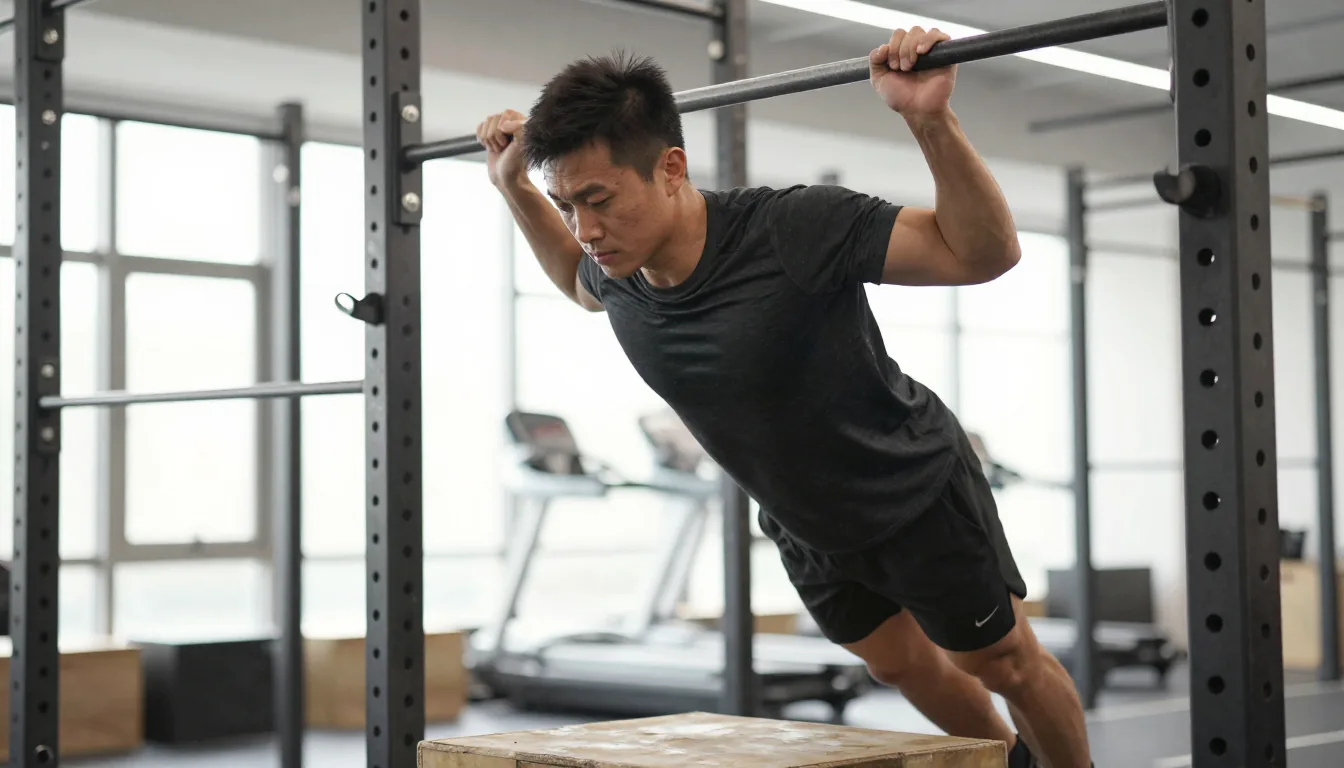
Inverted rows build the same pulling pattern with less load. Set a barbell in a rack at hip height, hang underneath, and pull your chest to the bar.
Keep your body straight.
Do 3 sets of 8–12 reps on your off days from pull-ups. This adds volume without taxing your shoulders. Research shows this transfers directly to pull-up strength.
Your Pull-Up Progression Program Weekly Schedule
You need to train pull-ups or their regressions at least 3 times per week. More is better as long as you manage fatigue.
Try Monday, Wednesday, Friday.
Each session: start with your main regression (negatives or assisted), then do inverted rows, then finish with scapular pulls. Keep total sets between 9 and 15.
Week 1–2: Foundation
- Session A: 3×10 scapular pulls + 3×5 negatives (5-sec lower)
- Session B: 3×10 scapular pulls + 3×8 inverted rows
- Session C: Same as Session A
Week 3–4: Build Volume
- Add one set to each exercise. Negatives: aim for 4×4 with 6-sec lower.
- Inverted rows: 4×10. Keep rest strict 90 seconds.
Week 5–6: Test the Pull-Up
Try 3 sets of as many unassisted reps as possible. If you get 1 rep, that's progress.
If zero, go back to negatives with 8-sec lowers.
Aim for 5 sets of 3 negatives.
On alternate days, do 4×8 inverted rows with a 2-second pause at the top.
Week 7–8: Push to 10
Do 5 sets of max reps every other day. After each set, rest 2 minutes.
Add one extra rep per set each workout.
If you stall, add 2–3 negatives at the end of your session.
By week 8, you should hit 10 reps in your first set. If not, deload for a week and repeat weeks 5–6.
Recover Like It Matters
Pull-ups hammer your elbows and shoulders. Sleep 7+ hours, eat enough protein (1.6 g/kg body weight), and avoid training through sharp pain.
If your elbows ache, back off and do more inverted rows. Stick with this pull-up progression program for 8 weeks and you’ll own that bar.
No shortcuts. Just consistent work.
As part of this pull-up progression program, recovery is crucial.
For more training strategies, visit our Fitness & Sports section. Need extra guidance? Check out this beginner pull-up guide for form checks and troubleshooting.