
Why Your Knees Cave In (And Why It’s Dangerous)
Knee valgus—when your knees collapse inward during squats or lunges—isn't just an eyesore. If you want to fix knee valgus, you need to target weak glute medius and retrain movement patterns.
It's a direct ticket to ACL tears, meniscus damage, and patellar tracking issues.
The culprit is weak glute medius, the small muscle on the side of your hip that keeps your knees aligned. When it's asleep, your adductors take over and drag your knees inward.
Fix that, and you fix the movement.
Ignoring the problem leads to chronic pain and power loss. That's why learning to fix knee valgus should be a priority for any lifter.
This guide provides the seven essential cues to correct it for good.
The 7 Cues to Fix Knee Valgus
1. Activate Your Glute Medius Before Every Set
Your glute medius needs a wake-up call. Do 10–15 banded side steps or clam shells before squatting.
No excuses if your glutes are dormant—your knees will collapse before you hit parallel.
Use a light band around your ankles or thighs. Keep tension, step laterally, and control the movement.
Feel the burn on the side of your hip? That's the target.
For lunges, do a banded monster walk for 20 steps each direction. Then hit your working sets.
2. Drive Your Knees Out—Hard
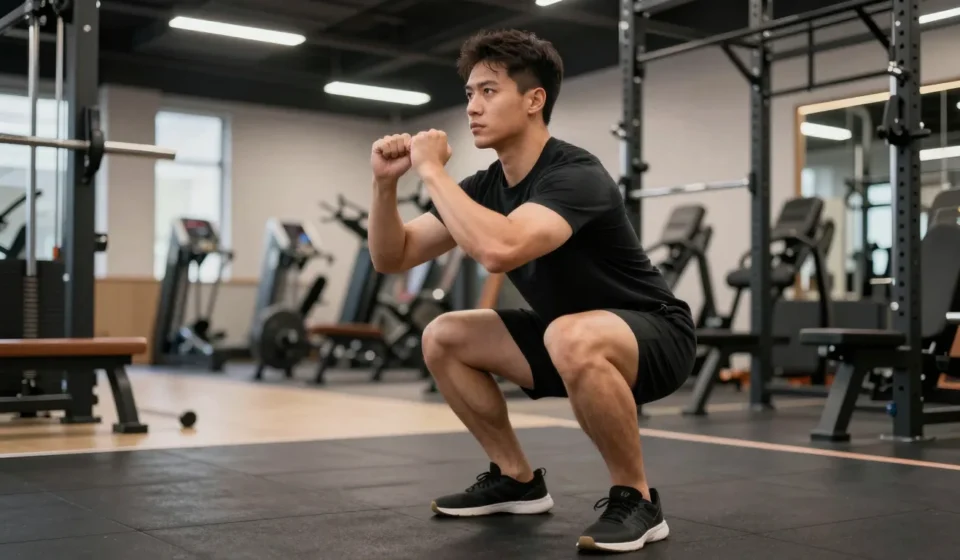
When you descend into a squat or lunge, actively push your knees outward. Imagine you're spreading the floor apart with your feet.
This is a conscious cue you must drill into every rep.
Most people think just spreading the floor is enough. It's not.
You must maintain that outward drive throughout the entire range of motion.
Record yourself and check the angle. If your knees still cave, go lighter and master the cue.
3. Strengthen Your Glute Medius with Isolation Work
Don't rely on compound lifts alone. Your glute medius needs specific, targeted training.
Add lateral raises, side-lying hip abduction, and single-leg bridges to your routine twice a week.
Example: 3 sets of 15 side-lying leg raises each side. Slow and controlled—no momentum.
Then 3 sets of 10 single-leg bridges per leg, focusing on driving through the heel.
Over eight weeks, you’ll see a measurable improvement in knee alignment. Pair this with the activation drills above for maximum carryover.
4. Fix Your Foot Positioning
Your feet are your foundation. If your toes are pointed too far forward or outward, you set yourself up for valgus.
Keep your foot angle between 15–30 degrees outward, with weight evenly distributed across the whole foot.
Imagine screwing your feet into the ground—externally rotate them slightly without moving your toes. This creates torque that helps keep your knees tracking over your second toe.
Proper foot placement is a simple yet effective way to fix knee valgus.
During lunges, avoid letting your front foot turn inward. Maintain that slight external rotation throughout the lunge.
5. Master the Brace Before You Move
Bracing isn't just for deadlifts. Before every squat or lunge, take a deep breath into your belly, tighten your core, and lock your ribcage down.
This creates intra-abdominal pressure that stabilizes your pelvis.
A stable pelvis means your hips can control your knees better. When your core is loose, your hips wobble, and your knees compensate by caving in.
Practice bracing while standing still. Then apply it to every rep.
No exceptions.
6. Use a Resistance Band for Immediate Feedback
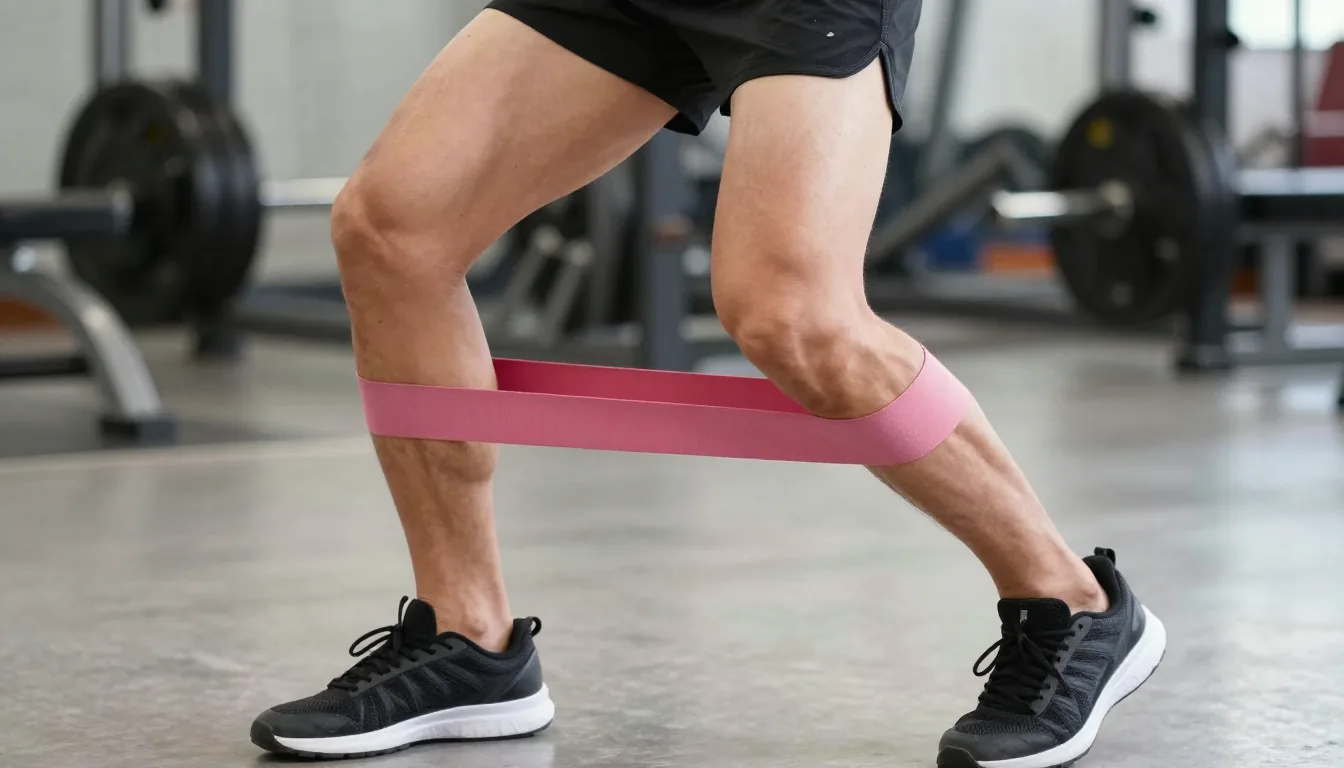
Loop a band just above your knees during warm-up sets. The band will tug your knees inward—resisting that pull teaches your glute medius to fire harder.
Do 5–10 bodyweight squats or lunges with the band before your working sets.
Don't use the band for heavy loads. It's a feedback tool, not a crutch.
Once you feel the correct pattern, remove the band and replicate it without assistance.
You can also do banded walks between sets to reinforce the neural pathway. This feedback method is a proven way to fix knee valgus quickly.
7. Slow Down Your Eccentric
Knee valgus often happens when you rush the descent. Going too fast bypasses your stabilizers.
Slow down the eccentric (lowering) phase to 3–4 seconds to give your glute medius time to engage.
For squats, count 3 seconds down, pause briefly at the bottom, then explode up. For lunges, lower over 3 seconds, then push back to start.
Controlled eccentrics build strength exactly where valgus is worst.
Putting It All Together: Sample Warm-Up and Workout
Warm-Up (10 minutes)
- Banded side steps: 2 sets of 15 steps each direction
- Clam shells: 2 sets of 15 each side
- Bodyweight squats with band above knees: 10 reps
- Walking lunges with band: 10 reps each leg
This warm-up is designed to fix knee valgus by activating the glutes and reinforcing proper movement. Perform it before every lower-body session.
Workout (Example)
- Goblet Squats: 3 sets of 10, focus on knees out and slow eccentric
- Bulgarian Split Squats: 3 sets of 8 each leg, front foot externally rotated
- Side-Lying Hip Abduction: 3 sets of 15 each side
- Single-Leg Bridge: 3 sets of 12 each side
Increase load only when you can maintain perfect form on every rep. No exceptions.
Consistency is key—if you stick with these exercises, you will fix knee valgus over time.
When to See a Professional
If you’ve tried consistent glute activation and cueing for 4–6 weeks with zero improvement, you may have structural or mobility limitations. A physiotherapist can assess hip capsule tightness, femoral anteversion, or other issues that require hands-on intervention.
But for 90% of lifters, these seven cues will fix knee valgus for good. Stay disciplined, record your sets, and hold yourself accountable.
For more on proper squat form, check out our Fitness & Sports archive. Also, read about hip stability from this study on glute medius activation and get additional drills from Verywell Fit’s guide.