
The Overlooked King of Upper Body Lifts
If you skip overhead pressing, you're leaving serious gains on the table because the overhead press benefits extend far beyond bigger shoulders. This movement hammers your delts, triceps, traps, and core like nothing else, yet most lifters bench press religiously and ignore pressing overhead.
That's a mistake.
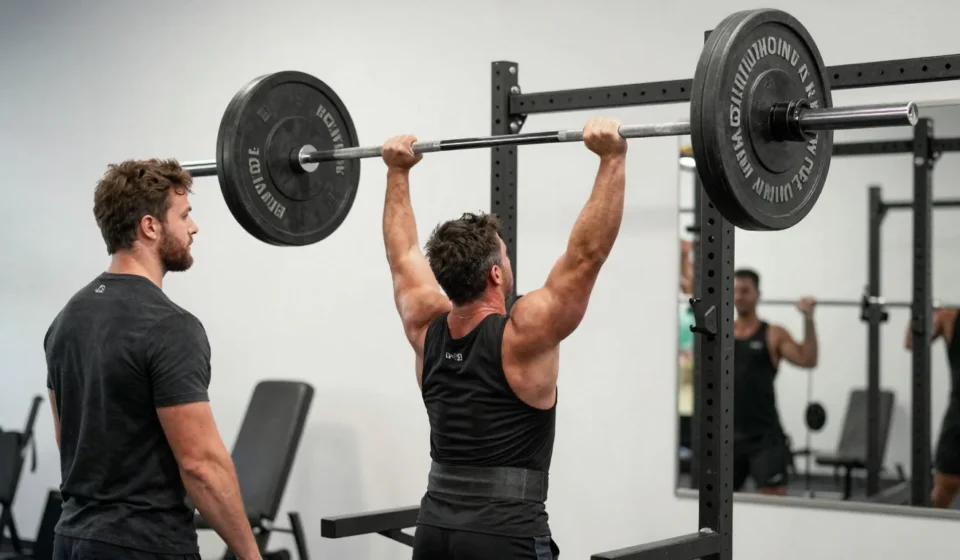
Pressing a barbell or dumbbells overhead challenges your entire kinetic chain from your feet driving into the floor to your grip locking out at the top. It's a full-body movement disguised as an isolation exercise that builds raw pressing power transferring to every other lift.
Stop treating overhead press as an accessory; it deserves main lift status in any balanced program.
Overhead Press Benefits: The Complete Breakdown
1. Shoulder Health and Stability
Contrary to the myth that overhead pressing wrecks shoulders, proper technique actually strengthens the rotator cuff and scapular stabilizers. When you press through a full range of motion, you build balanced strength around the glenohumeral joint.
This reduces injury risk from imbalances caused by too much benching.
Your shoulders need overhead work to maintain mobility and healthy joint mechanics. Avoiding it leads to tight anterior delts and weak external rotators.
Overhead pressing forces you to stabilize the weight through a vulnerable arc, building resilience over time.
2. Raw Strength and Power Output
Standing overhead press is arguably the purest test of upper body strength, as there's no leg drive or momentum—just you pressing a weight overhead from a dead stop. This builds explosive power in the delts and triceps that translates to better bench pressing and pushing movements.
Strong overhead press numbers correlate with overall pressing strength; if your standing press stalls, your bench press likely won't keep climbing.
The overhead press benefits for raw power are undeniable. Every rep forces your body to coordinate from the ground up, making it a true total-body strength builder.
Don't neglect this lift if you want to maximize upper body potential.
3. Postural Correction and Core Stability
Pressing overhead forces you to brace your core and maintain a neutral spine. Over time, this strengthens your deep stabilizers and counteracts the forward-rounded posture from sitting and benching.
You stand taller and breathe better.
Every rep demands tension through your glutes, abs, and lats—you can't cheat. The result is a stronger midline that improves every compound lift from squats to deadlifts.
These overhead press benefits for posture are often overlooked but critical for long-term health.
How to Program Overhead Press for Maximum Gains
Frequency and Volume
If you're after size, press 2–3 times per week with moderate volume. For strength, use 1–2 heavy sessions with lower reps.
A typical split includes heavy overhead press on push day, then lighter variations like dumbbell or Arnold presses later in the week.
Don't grind every set to failure; leave 1–2 reps in the tank on most sets. Technical breakdown under fatigue is the fastest way to injure a shoulder.
Proper management of volume ensures you reap the overhead press benefits without overtraining.
Technique Cues That Actually Work
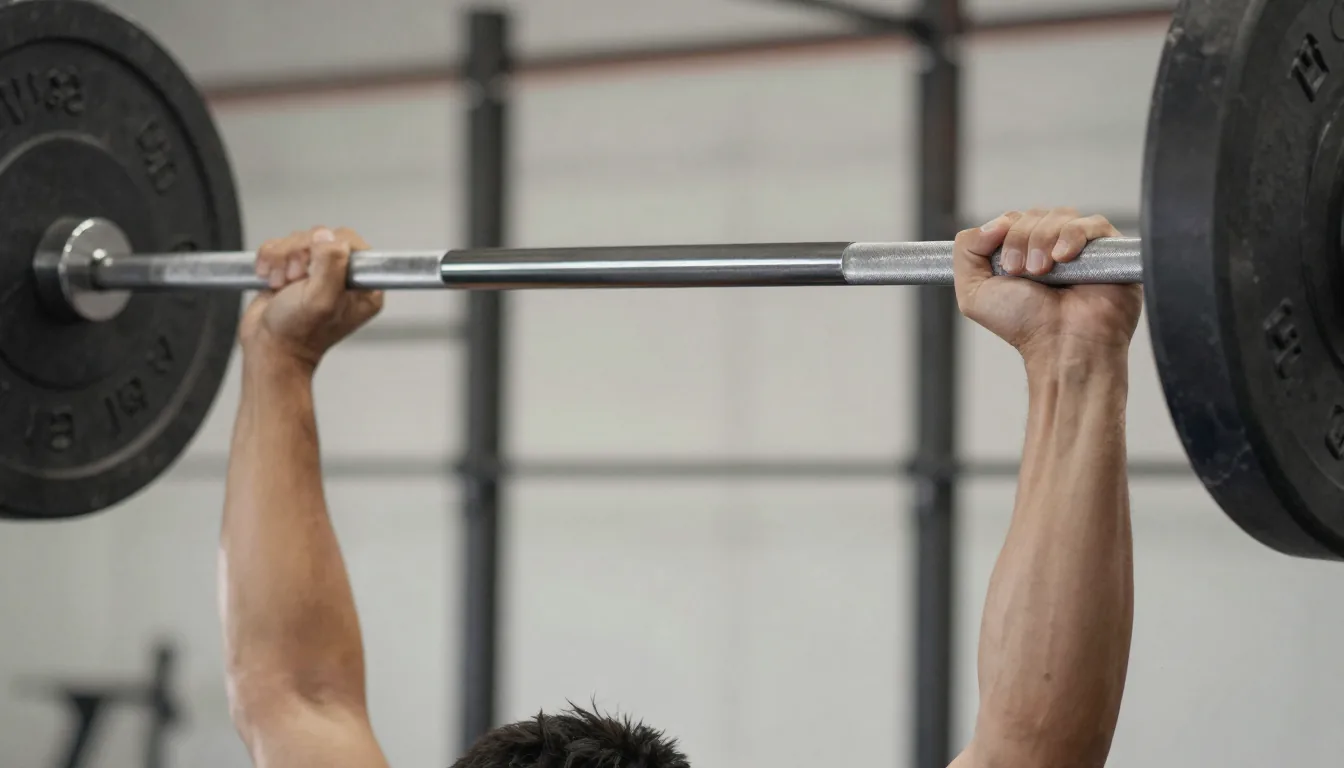
- Grip the bar hard and squeeze it like you’re crushing a can to create whole-arm tension.
- Shove your head through as the bar passes your nose—drive your forehead back and press.
- Brace your ribs down to prevent arching and keep your ribcage locked in neutral.
- Lock your glutes at the bottom and hold that tension through the entire rep.
Watch your bar path; it should travel in a slight curve, not straight up. The bar starts at your collarbone, moves slightly back as you pass your face, then finishes directly overhead.
A straight vertical path leads to shoulder impingement.
Mastering technique maximizes overhead press benefits and keeps your shoulders healthy. Practice these cues with light weight before going heavy.
Variations to Build a Well-Rounded Press
Don't just do barbell; mix in dumbbell presses for unilateral work and greater range of motion. Seated dumbbell presses isolate the delts better but don't require as much core stability.
Use them as accessories, not primary movers.
Z presses (sitting on the floor) eliminate leg drive entirely and force pure shoulder strength. Push presses build explosive power and can overload your nervous system with heavier weights; use them sparingly.
For hypertrophy, try Arnold presses or single-arm landmine presses to hit different angles and stress the shoulders through varied planes of motion.
The Takeaway: Stop Benching and Start Pressing
Overhead press is non-negotiable for anyone serious about upper body development because the overhead press benefits—shoulder health, posture, raw strength—are too valuable to ignore. Add it to your routine this week, starting with 3 sets of 5 on a heavy day or 3 sets of 8–12 for size.
Your shoulders will thank you.
For more training insights, explore our Fitness & Sports content. And if you want to dive deeper into pressing mechanics, check out this detailed guide from Stronger by Science or learn about proper technique from T Nation.