
Key Solar vs Lunar Eclipse Differences
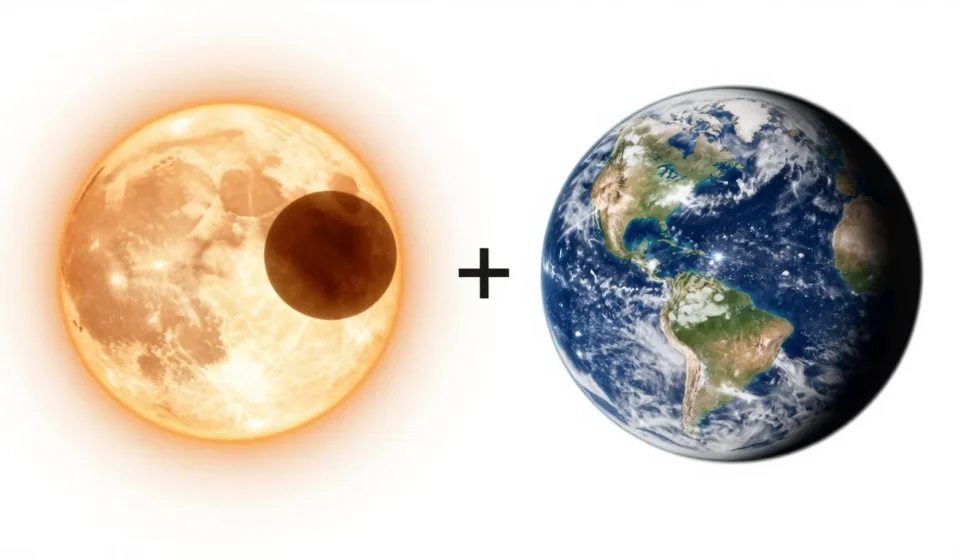
Understanding the solar vs lunar eclipse differences starts with basic geometry. A solar eclipse occurs when the Moon passes between Earth and the Sun, blocking sunlight. A lunar eclipse happens when Earth comes between the Sun and the Moon, casting a shadow on the Moon.
These different alignments create very different viewing experiences. Solar eclipses are rarer for any given location because the Moon's shadow is narrow—only about 100 miles wide on Earth.
You must be in that path to see a total solar eclipse.
Lunar eclipses are visible from anywhere on the night side of Earth. They often span entire continents, making them more accessible.
Why Solar Eclipses Demand Special Glasses
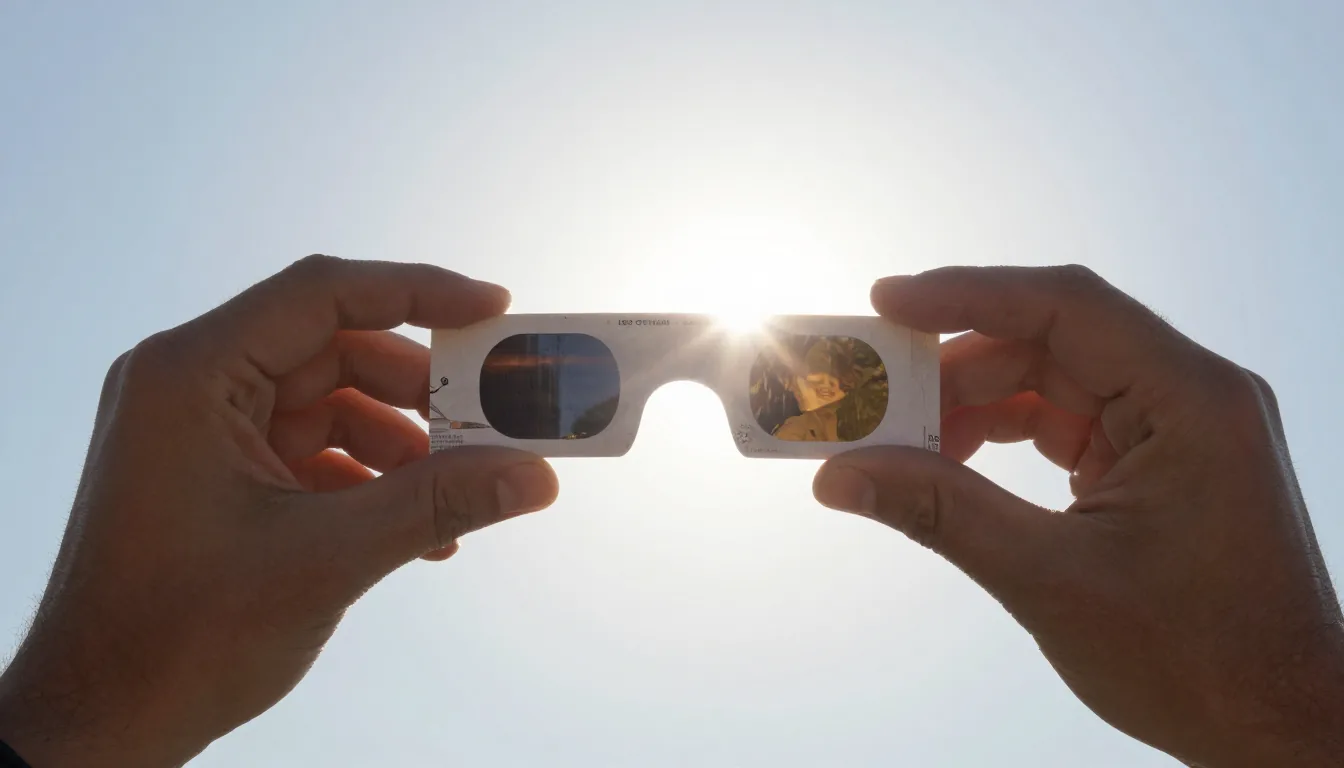
Looking directly at a solar eclipse without protection can cause permanent eye damage. The Sun’s intense visible and ultraviolet light can burn retinal cells.
Even a thin crescent of Sun is dangerous.
Safe solar eclipse viewing requires certified ISO 12312-2 filters. Regular sunglasses, even very dark ones, block only visible light.
They do not block harmful UV or IR radiation.
These safety rules highlight one of the key solar vs lunar eclipse differences: eye protection is mandatory for solar but unnecessary for lunar. The only safe time to view without glasses is the fleeting seconds of totality during a total solar eclipse.
When totality ends, you must immediately put glasses back on.
Lunar eclipses are perfectly safe to view with the naked eye. Earth's shadow on the Moon dims it, but there’s no harmful radiation.
You can enjoy the reddish “blood moon” hue comfortably.
Frequency and Visibility Patterns
On average, there are 2–5 solar eclipses per year. Total solar eclipses occur only about once every 18 months globally.
For a specific spot, a total solar eclipse might happen every 375 years.
Lunar eclipses happen about twice a year. They are visible over half the planet each time.
Frequency is another aspect of solar vs lunar eclipse differences. Another solar vs lunar eclipse difference is their visibility: solar eclipses follow a narrow path, while lunar eclipses are visible across entire hemispheres.
Why the Moon Turns Red During a Lunar Eclipse
When sunlight passes through Earth’s atmosphere, shorter blue wavelengths scatter away. Longer red wavelengths bend toward the Moon.
This Rayleigh scattering is why our sky is blue and why the Moon appears coppery red during totality.
This phenomenon, called a “blood moon,” has no equivalent in solar eclipses. During a solar eclipse, the sky grows dark, birds may roost, and the Sun’s corona becomes visible.
The color change is a striking solar vs lunar eclipse difference.
Types of Each Eclipse
Solar eclipses come in four types: partial, total, annular, and hybrid. Annular eclipses happen when the Moon is farther away, leaving a “ring of fire.” Hybrid eclipses shift between annular and total along the path.
Lunar eclipses also have three types: penumbral, partial, and total. In a penumbral eclipse, the Moon only passes through Earth’s faint outer shadow, barely dimming it.
A partial lunar eclipse paints a darker stripe across the Moon’s face. The variety of eclipse types is another of the many solar vs lunar eclipse differences.
What You’ll See and Feel
During a solar eclipse, the temperature can drop several degrees as sunlight is blocked. Animals may behave as if dusk is falling.
The horizon glows orange, and stars become visible in the daytime sky.
A lunar eclipse is subtler: the Moon slowly dims and changes color over hours. No temperature change occurs, and the sky remains dark.
It’s a serene, leisurely event perfect for backyard observation. These sensory differences are part of the solar vs lunar eclipse differences that make each unique.
Cultural and Mythological Perspectives
Ancient cultures often feared eclipses, interpreting them as omens. In Norse mythology, a solar eclipse meant wolves were devouring the Sun.
Lunar eclipses were seen as the Moon being swallowed by a dragon in some Asian traditions. Throughout history, the solar vs lunar eclipse differences were interpreted differently by various cultures.
Today, we understand the mechanics, but the awe remains. Total solar eclipses attract tourists and scientists worldwide, while lunar eclipses are cozy, shareable experiences.
Summary of Key Differences
To recap the key solar vs lunar eclipse differences, here’s a quick overview.
- Types: Solar – partial, total, annular, hybrid; Lunar – penumbral, partial, total.
- Safety: Solar requires ISO glasses; lunar is safe to view without protection.
- Visibility: Solar visible from narrow path; lunar from entire night side of Earth.
- Duration: Solar totality up to 7.5 minutes; lunar totality up to 1 hour.
- Appearance: Solar – Sun blocked, corona visible; Lunar – Moon turns red.
For more celestial wonders, explore our Popular Science & Space category. Also, check out NASA’s Eclipse Website for upcoming dates and Time and Date’s Eclipse Guide for global visibility maps.