
1. The CMB: Cosmic Afterglow That Confirmed the Big Bang
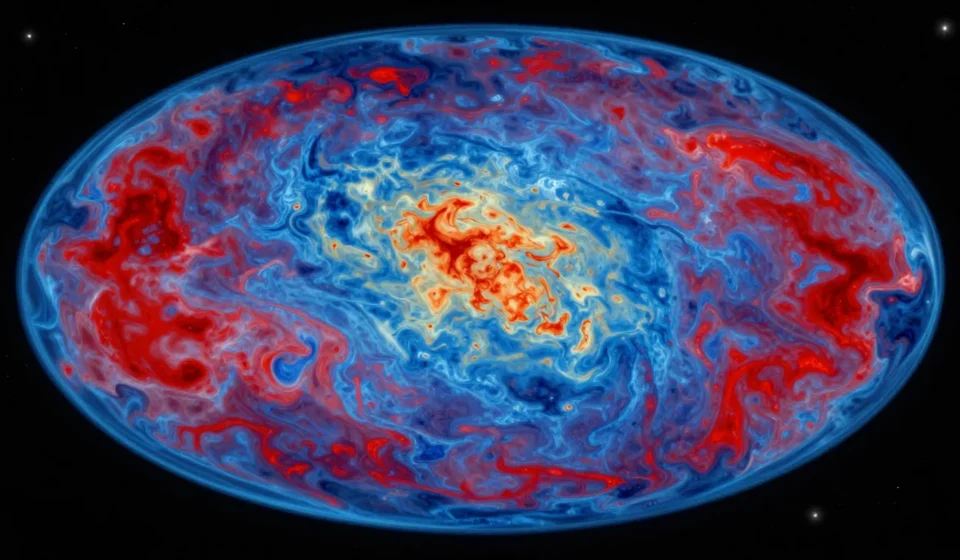
One of the most profound space discoveries that changed the universe was made in 1965 by Arno Penzias and Robert Wilson. They stumbled upon a faint hiss in their radio antenna—the cosmic microwave background (CMB), the afterglow of the Big Bang.
This discovery provided the first direct evidence that our universe began in a hot, dense state nearly 13.8 billion years ago.
The CMB is a snapshot of the infant universe, just 380,000 years old. It revealed that the cosmos is homogeneous and isotropic on large scales, confirming the Big Bang model.
2. Exoplanets: Worlds Beyond Our Solar System
The first confirmed exoplanet orbiting a sun-like star, 51 Pegasi b, was found in 1995 by Michel Mayor and Didier Queloz. This hot Jupiter forever changed astronomy, proving planets exist around other stars.
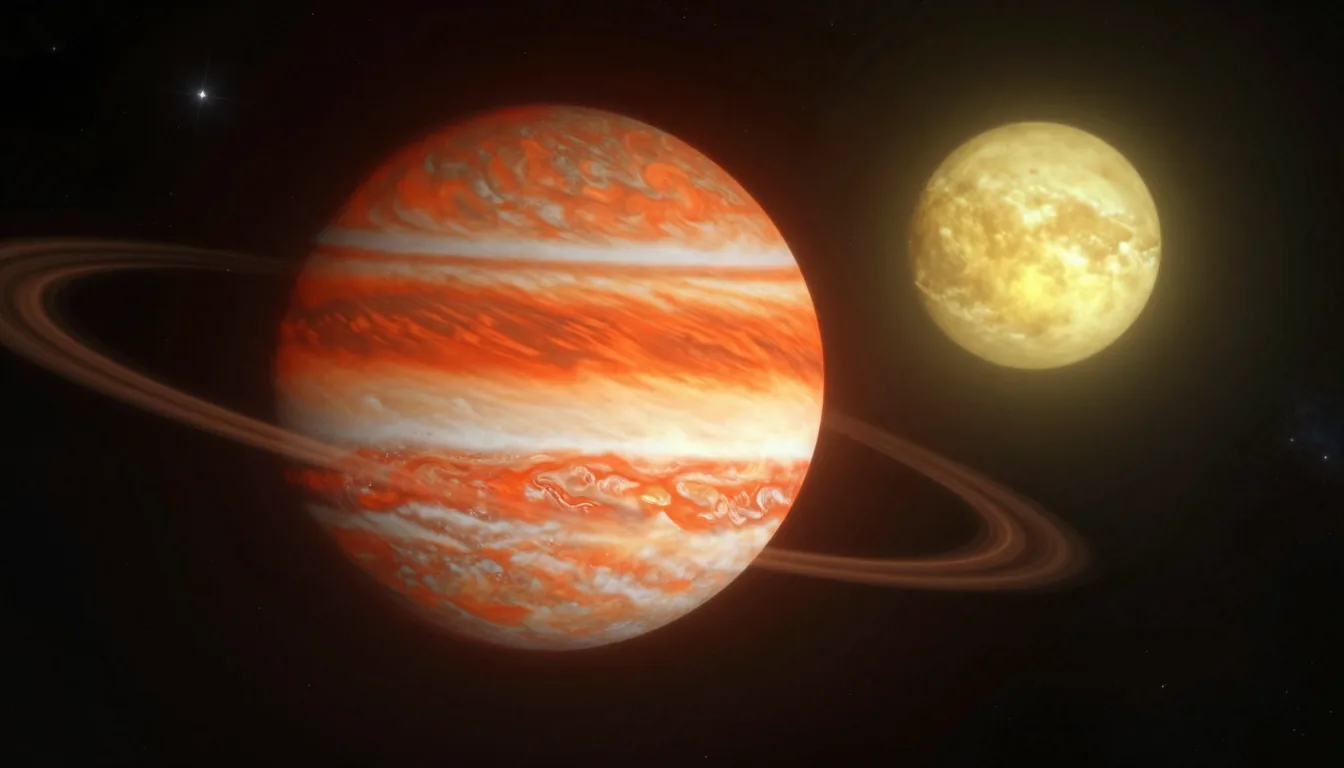
Since then, thousands of exoplanets have been cataloged, many in habitable zones. These alien worlds challenge our ideas about planetary formation and the potential for life elsewhere.
Missions like Kepler and TESS continue to find diverse worlds, from scorching gas giants to rocky Earth-like planets. Each discovery fuels our search for cosmic neighbors.
3. Expanding Universe: Hubble’s Law and Dark Energy
In 1929, Edwin Hubble observed that galaxies are moving away from us—the farther, the faster. This expansion led to the Big Bang theory and the concept of an evolving universe.
Decades later, in 1998, two teams studying supernovae found that the expansion is accelerating. This acceleration implies a mysterious force called dark energy, which makes up about 68% of the universe.
The discovery earned a Nobel Prize and revolutionized cosmology, forcing us to reconsider the fate of the cosmos. The universe isn’t just expanding; it’s speeding up.
4. Gravitational Waves: Ripples in Spacetime
Predicted by Einstein in 1916, gravitational waves were finally detected in 2015 by LIGO. These ripples from merging black holes confirmed a key prediction of general relativity and opened a new window to the universe.
Since then, multiple events have been detected, including neutron star mergers that produce gold and platinum. This discovery earned a Nobel Prize and has become a routine tool, offering a new sense to explore the cosmos.
5. Dark Matter: The Invisible Scaffold of Galaxies
In the 1970s, Vera Rubin noticed that stars at the edges of galaxies orbit just as fast as those near the center. This implied an unseen mass—dark matter—providing extra gravity.
Today, we know dark matter makes up about 27% of the universe, yet it doesn’t emit or absorb light. It shapes galaxies and galaxy clusters, acting as a cosmic scaffold.
While its nature remains unknown, experiments like the Large Hadron Collider and underground detectors seek to identify it. This invisible substance fundamentally changed our understanding of what the universe is made of.
6. Hubble Deep Field: A Peek into the Early Universe
In 1995, the Hubble Space Telescope stared at a tiny, seemingly empty patch of sky for ten days. The resulting Hubble Deep Field image revealed thousands of galaxies, some over 13 billion light-years away.
It showed that the early universe was filled with chaotic, irregular galaxies. This image transformed our view of cosmic history, demonstrating how galaxies evolve over time.
It also highlighted the power of deep observations and inspired subsequent surveys like the Hubble Ultra Deep Field, pushing the cosmic frontier further.
7. Helioseismology: Peering Inside the Sun
By studying solar oscillations, scientists can map the Sun’s interior—a field called helioseismology. Pioneered in the 1970s and 1980s, this technique revealed the Sun’s internal rotation, structure, and magnetic dynamo.
It also helped solve the solar neutrino problem, confirming our understanding of nuclear fusion. Helioseismology proved that the Sun is constantly vibrating due to sound waves, similar to ringing a bell.
These insights have improved space weather predictions and deepened our knowledge of stars, affecting everything from climate to satellite safety.
8. Voyager Golden Record: Humanity’s Message to the Cosmos
Launched in 1977, the Voyager spacecraft carried a golden record containing sounds, images, and music from Earth. While not a scientific discovery per se, this message-in-a-bottle represents our first intentional contact with extraterrestrial intelligence.
Voyager 1 entered interstellar space in 2012, providing data on the heliosphere’s boundary. The Golden Record symbolizes our curiosity and hope.
It has become a cultural icon, reminding us that exploration is part of being human. Its journey continues, a testament to our desire to understand and be understood.
9. Asteroid Sample Return: OSIRIS-REx and Hayabusa2
Recent missions like Japan’s Hayabusa2 and NASA’s OSIRIS-REx have returned samples from asteroids Ryugu and Bennu. These pristine materials contain organic molecules and water-bearing minerals, offering clues to the solar system’s formation and the origin of life on Earth.
Analysis of these samples suggests that asteroids may have delivered the building blocks for life. This discovery bridges astronomy and biology, showing that the ingredients for life are widespread in the cosmos.
Sample return is a new frontier for planetary science.
10. The Hubble–Lemaître Law: Foundation of Modern Cosmology
In 1927, Georges Lemaître independently derived the expansion of the universe, linking it to Einstein’s general relativity. His work, later confirmed by Hubble, laid the groundwork for the Big Bang theory.
In 2018, the IAU renamed Hubble’s law to Hubble–Lemaître law to honor both pioneers. This discovery underpins all modern cosmology—from dark energy to the age of the universe.
It reminds us that science is a collaborative, evolving effort. As we look deeper, we uncover more mysteries, each revelation bringing us closer to the cosmos’s grand story.
Want more mind-expanding content? Check out our Popular Science & Space archive for more cosmic wonders. For further reading, see NASA’s official website and Space.com.