
Why Proper Lens Care Matters
Your telescope is a window to the universe. To keep that view clear, you must learn to clean telescope lenses without damaging their delicate coatings. Even a tiny smudge or dust speck can scatter light, turning crisp star clusters into fuzzy blobs.
Dirt isn't just unsightly—it can degrade contrast and resolution over time. But rushing to wipe a lens is the #1 cause of permanent scratches.
Let's explore safe, effective methods that preserve your optics for years.
How to Clean Telescope Lenses Without Damaging Them
Think of your lens as a sleeping cat: gentle, slow, and no sudden moves. The first rule is patience. Never use household cleaners, paper towels, or your shirt—these materials are abrasive and can strip anti-reflective coatings.
Second rule: remove loose particles first. Any grit that you rub into the glass acts like sandpaper.
Always start with air or a soft brush. This step alone can prevent most scratches.
Essential Tools for Safe Optics Cleaning
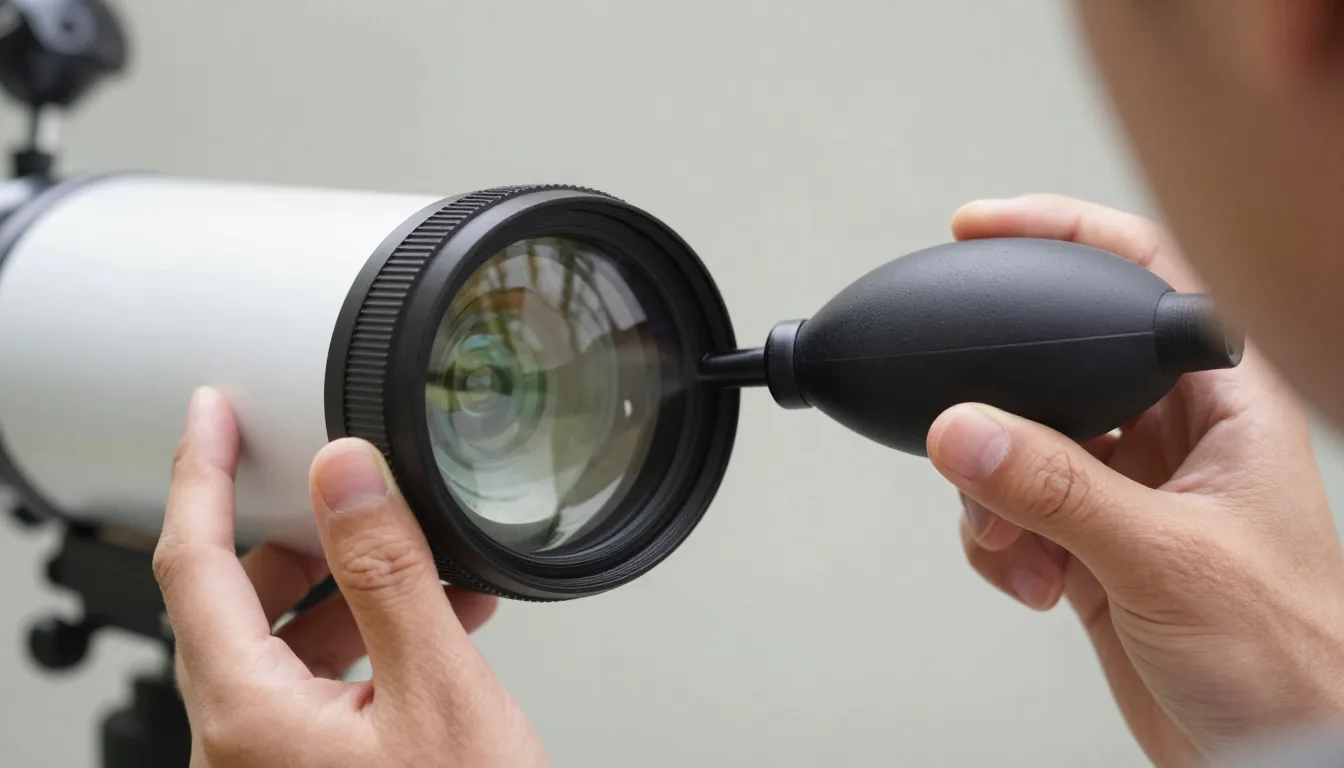
Invest in a quality lens cleaning kit. Essential items include a blower bulb (not compressed air cans), a camel-hair brush, microfiber cloths, and lens cleaning solution designed for coated optics.
These tools are cheap compared to a ruined telescope.
Your fingers are the enemy: skin oils attract more dirt and can etch coatings. If you must handle the lens, use soft, lint-free gloves.
A proper kit ensures you can clean telescope lenses without damaging the glass.
Blow Away Loose Dust First
Hold the telescope so dust falls away—point the lens slightly downward. Squeeze the blower bulb a few times to dislodge dust.
For stubborn spots, use the brush with gentle sweeping motions. This step removes 90% of debris without any contact.
If you live in a dry, dusty area, repeat this before every observing session. Prevention beats cleaning every time.
Regularly blowing off dust reduces the need for wet cleaning.
Step-by-Step Safe Cleaning Method
When blowing doesn’t cut it, follow this procedure. First, breathe on the lens to create a thin fog (your breath is pure water vapor).
Then, take a clean microfiber cloth and wipe gently in a spiral from center to edge. No pressure—let the cloth do the work.
This method is ideal for removing light smudges.
For greasy smudges, apply one drop of lens solution to the cloth (never directly on the lens). Wipe as before.
Repeat with a dry section of cloth to remove any residue.
Check under a bright light; if streaks remain, the cloth may be dirty—use a fresh one. Always inspect your work to ensure you didn't miss spots.
Remember, the goal is to clean your optics without damaging the delicate coatings.
Common Mistakes That Damage Lenses
Using cleaning wipes meant for eyeglasses? They often have chemicals that eat away coatings.
Avoid alcohol-based solutions unless specifically labeled for telescope optics.
Also, never use a cloth that’s been washed with fabric softener—the residue smears and scratches. Another mistake: cleaning too often.
Lenses only need cleaning when you see visible dirt or fog. Over-cleaning risks micro-scratches.
Store your telescope with dust caps on, and you'll rarely need a full clean.
Avoid rubbing aggressively. If a smudge doesn't come off, try a second breath or an additional drop of solution.
Harsh rubbing can permanently damage the coatings.
Best Practices for Long-Term Storage
Proper storage reduces cleaning frequency. Always replace dust caps after use.
For long storage, place the telescope in a dry, temperature-stable environment with silica gel packets to absorb moisture.
Consider a protective case or cover to prevent dust accumulation. If you keep your optics in a basement, monitor humidity to avoid mold.
These habits help you avoid frequent deep cleaning.
For more insights on preserving your gear, check out this expert guide at Sky & Telescope. Another great resource is Cloudy Nights. Both emphasize safe cleaning techniques to protect your optics.
When to Seek Professional Help
If you've tried these methods and still see haze, or if your lens has internal mold or fungus, it's time for a pro. A trained technician can disassemble and clean internal elements safely.
This is especially true for expensive refractors or catadioptric scopes.
Remember, proper lens cleaning is a skill that protects your investment. Treat your optics like the precision instruments they are, and they’ll reward you with clear, stunning views of the cosmos.
For more stargazing tips, visit our Popular Science & Space archive. And always check your lens before heading out—clear skies await!