
What Is This Plant-Derived Antioxidant?
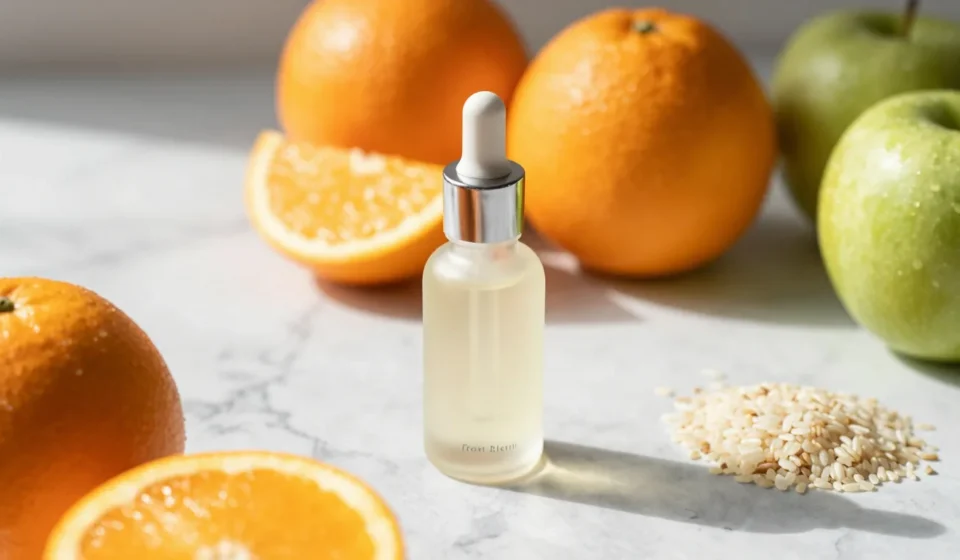
Ferulic acid is a plant-derived antioxidant found in rice bran, oats, and apples. It is a phenolic compound that neutralizes free radicals and enhances the stability of other antioxidants.
In skincare, it is renowned for its ability to boost the efficacy of vitamins C and E.
When combined, these three ingredients create a powerful photoprotective cocktail. This antioxidant doubles the photoprotection of vitamins C and E, making it a cornerstone of daytime serums.
The Synergy Mechanism: How Ferulic Acid Boosts Vitamins C and E
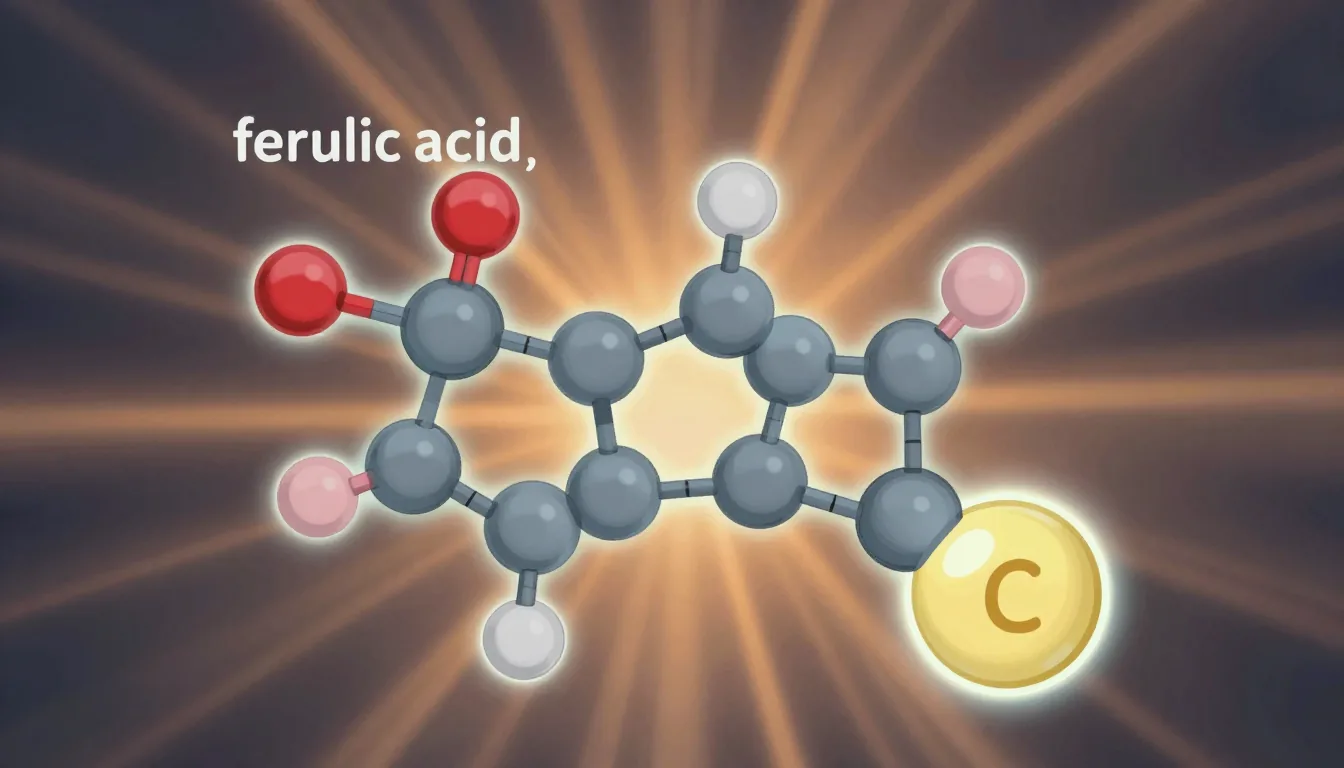
This compound works by stabilizing the vitamin C molecule (L-ascorbic acid) and recycling oxidized vitamin E. This synergistic effect increases the antioxidant capacity of the formula by up to eight times.
Studies show that a combination of 15% L-ascorbic acid, 1% alpha-tocopherol, and 0.5% ferulic acid significantly reduces UV-induced erythema and DNA damage. The synergy creates a network that both prevents oxidation and repairs damage.
Why Stability Matters
Vitamin C is notoriously unstable, degrading quickly when exposed to air, light, or water. It helps by lowering the pH of the formulation and chelating metal ions that catalyze oxidation.
This preserves the efficacy of the serum for longer.
Without ferulic acid, many vitamin C serums lose potency within weeks. With it, they can remain effective for months, especially when packaged in opaque, airless containers.
How to Choose a Stable Serum for Daytime Protection
Look for serums that list ferulic acid along with vitamin C (ideally L-ascorbic acid) and vitamin E (tocopherol). The classic formulation contains 15% L-ascorbic acid, 1% alpha-tocopherol, and 0.5% ferulic acid.
Check the packaging: dark glass bottles or airless pumps protect ingredients from light and air. Avoid serums with added fragrances or essential oils, as these can degrade the formula.
Also, verify the pH—optimal range is around 3.0 to 3.5 for L-ascorbic acid stability.
Brand Examples and Formulation Types
Many reputable brands offer this combination; for example, SkinCeuticals CE Ferulic is a clinical gold standard. Other options include Paula’s Choice C15 Super Booster and Drunk Elephant C-Firma, while formulations vary, the core synergy remains consistent.
When incorporating this trio into your routine, start with a lower concentration if you have reactive skin. Patch testing is advisable, especially if you are also using exfoliating acids or retinoids at night.
The combination is generally well-tolerated, but some may experience tingling initially.
If you have sensitive skin, look for lower concentrations (10% vitamin C) or derivatives like ascorbyl glucoside. However, the compound’s stabilizing effect works best with L-ascorbic acid for maximum potency.
Application Tips for Maximum Efficacy
For maximum absorption, apply the serum on damp skin or after a hydrating toner. This helps the active ingredients penetrate more effectively.
Apply the serum in the morning after cleansing and before sunscreen. Use 3–5 drops on dry skin, allowing it to absorb for 2–3 minutes before layering moisturizer and SPF 30+.
Ferulic acid is not only for daytime—it can be used in PM routines too, but its photoprotective synergy shines in the AM. Pair it with a broad-spectrum chemical or mineral sunscreen for comprehensive defense against UV and blue light. For more on building a protective routine, explore our Beauty & Skincare guides.
Key Takeaways
- Ferulic acid stabilizes and boosts vitamins C and E, enhancing their antioxidant effects.
- Look for formulations with L-ascorbic acid, tocopherol, and ferulic acid at correct pH levels.
- Choose opaque, airless packaging to maintain stability.
- Use daily in the AM under sunscreen for optimal photoprotection.
Research continues to unveil more benefits. A 2019 study found that ferulic acid can also inhibit melanin synthesis, offering additional brightening effects. Read the study here.
Ultimately, this antioxidant is a non-negotiable ally for anyone serious about anti-aging and sun protection. Its synergy with vitamins C and E is one of the most evidence-based combinations in dermatology.