

Your Effort Is Probably Lying to You
You think you train hard. But are you actually crossing intensity thresholds for growth? Most lifters aren’t.
You leave the gym sweaty, sore, and proud. But that middle ground—never easy, never truly hard—is where gains go to die.
Muscle growth demands a specific stimulus. You must push past a minimum effort barrier.
If you're not flirting with failure on your last reps, you're just exercising.
Stop exercising. Start training.
The Science Behind Intensity Thresholds for Growth
Research shows muscles require a certain level of tension to trigger hypertrophy. This is your intensity thresholds for growth.
Fall below it, and you get no response. Think of it like a light switch.
Dim light doesn't turn on the bulb.
You need full voltage. Similarly, your sets need to hit a critical intensity level to activate growth pathways.
Studies indicate that working sets taken within 0–3 reps of failure provide the strongest stimulus. That means you must regularly approach or hit momentary muscular failure.
What Progressive Overload Actually Means
Progressive overload isn't just adding weight every week. It's forcing your muscles to adapt to increasing tension.
Adding 5 pounds to the bar is one way.
But you can also add reps, reduce rest, or increase time under tension. The key is the overload principle: your body only changes when demand exceeds current capacity.
If you’re not deliberately making each set harder than last time, you’re maintaining, not growing. Track your lifts and aim for small improvements each session.
The Failure Zone You’re Avoiding
Sets taken within 0–3 reps of failure stimulate the most growth. That means your last few reps should be a grind.
If you're stopping because it burns, you're quitting too early.
Hitting your intensity thresholds for growth consistently is non-negotiable. But don't confuse intensity with recklessness.
Form breaks, you're done.
Smart intensity means pushing to technical failure, not absolute collapse.
How to Measure Your Real Effort
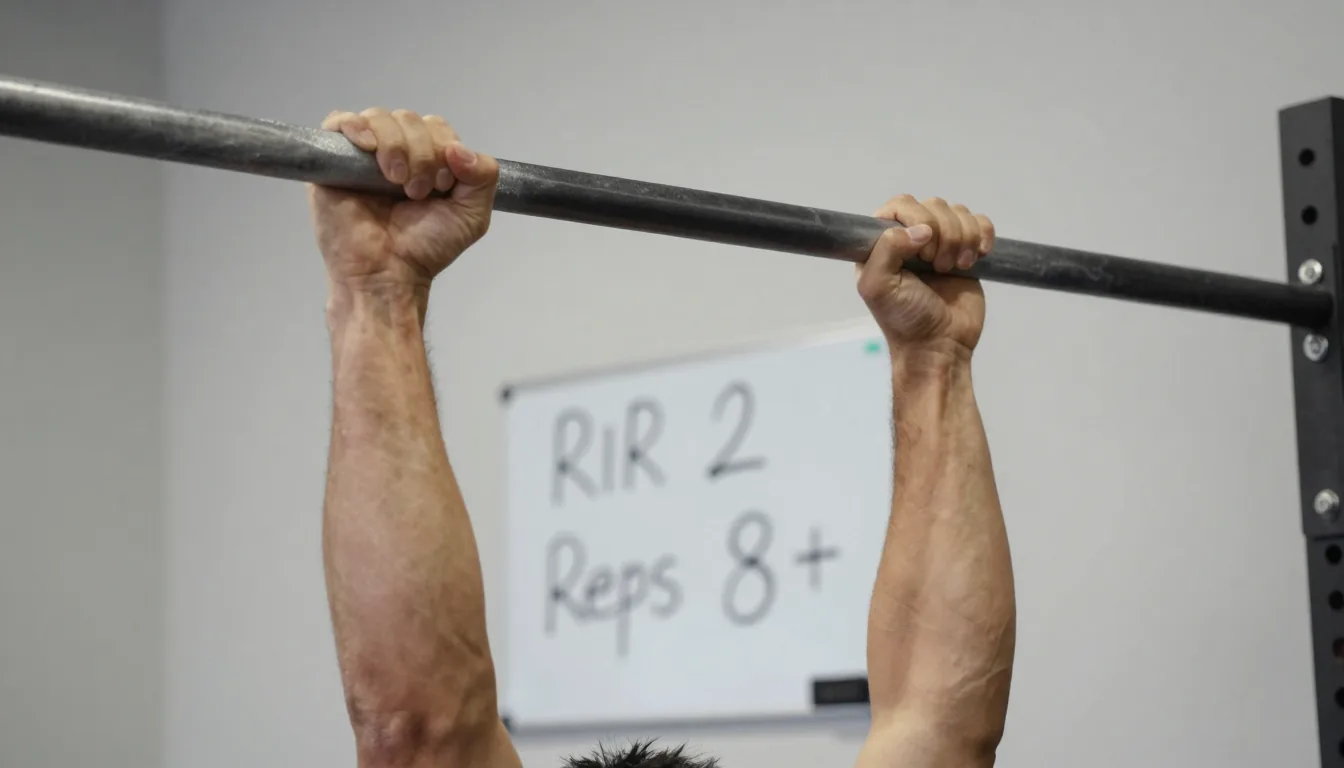
Forget how you feel. Use reps in reserve (RIR). If you can do 3 more reps after you stop, you’re not close enough.
Aim for 1–2 RIR on your hardest sets. Another metric: rate of perceived exertion (RPE).
A set of 9 or 10 RPE means you couldn't do another rep with perfect form.
Anything below 8 isn't triggering adaptation. Track your lifts.
If your top sets don't feel like a battle, you're coasting.
Check our Fitness & Sports archives for more training tactics.
The Volume–Intensity Trade-off
You can't max out on every set. That's a fast track to burnout.
But you need a few working sets per muscle group that hit that intensity zone.
Typically 6–12 hard sets per week, per muscle, performed near failure. Spread them across the week.
Two sessions with 4 high-effort sets are better than one session with 8 mediocre sets.
Why Most Programs Fail
They're written for generic humans. They assume you'll push hard, but they don't enforce it.
You need a system that forces intensity: AMRAP sets, cluster sets, or drop sets.
Pick one exercise per workout and go all out. For example, your last set of bench press: max reps with a weight you can handle for 6–8 reps.
Write down the number. Beat it next time.
External resources: This study confirms that training to failure boosts hypertrophy more than stopping short. Stronger by Science’s RIR guide is also worth reading.
The Mental Shift You Need
Stop treating the gym like a social event. You're there to break muscle fibers.
That requires discomfort.
Embrace the burn, the shake, the gasping for air. That's the signal you're close.
If you finish a set and can immediately talk normally, it wasn't hard enough.
If you have to pace around for 90 seconds before your next set, you’re on the right track. Remember: intensity thresholds for growth aren’t optional. They’re the price of admission.
Either pay up or stay small.