
When it comes to furniture layout tips, the arrangement of your room can make or break the entire space. Have you ever walked into a room and felt instantly uneasy?
Chances are, the layout was off.
Good furniture layout tips transform how a room feels and functions. You move freely without bumping into corners, and every piece serves a purpose.
I'm sharing my favorite strategies to help you create a room that works for real life.
Furniture Layout Tips: Why Room Arrangement Matters More Than You Think
Many people overlook the impact of furniture placement. A well-arranged room feels welcoming and spacious, while a poorly placed sofa can block natural light and make the space feel cramped.
Simple furniture layout tips can solve these problems. When you arrange pieces thoughtfully, you improve traffic flow and create inviting conversation zones.
Let's dive into how to achieve this.
Start with Your Room’s Natural Traffic Patterns
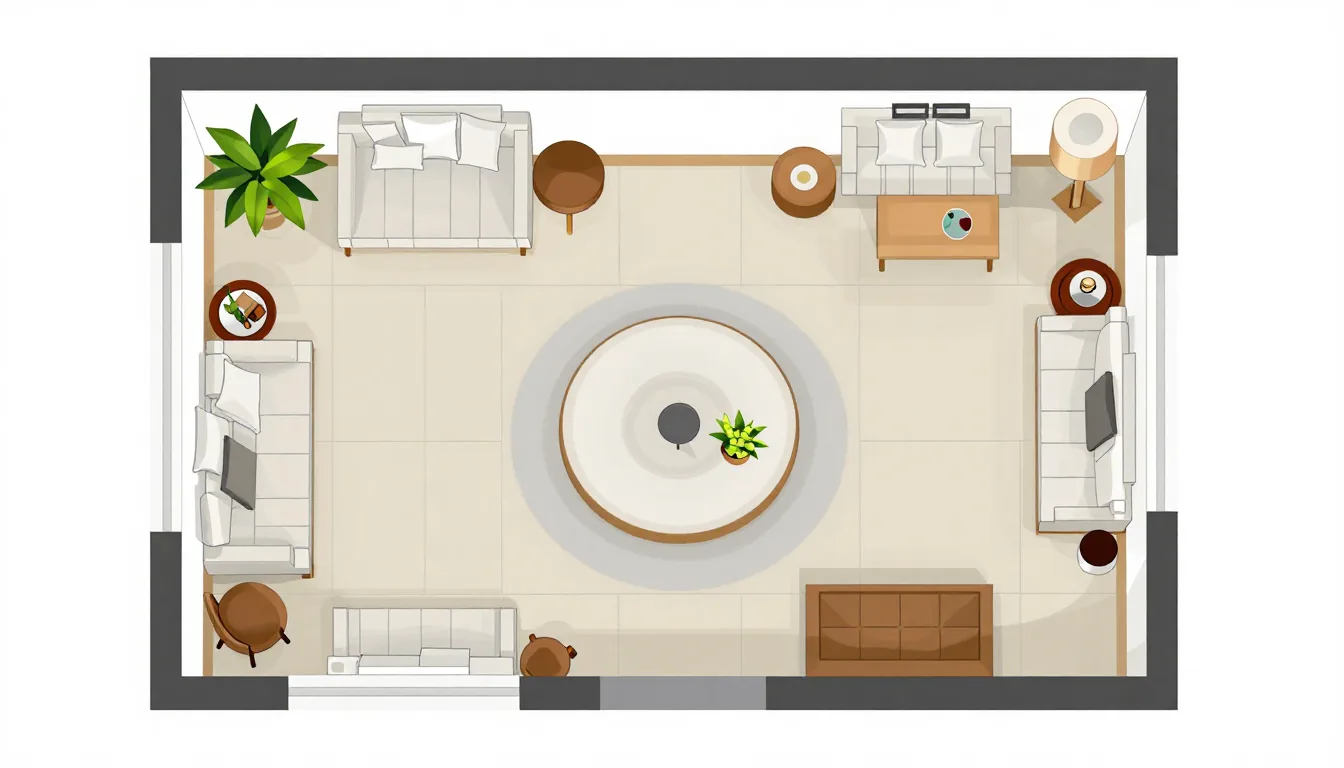
Before moving a single sofa, observe how people naturally walk through the room. Identify the main pathways from door to window or kitchen to living area.
These paths should be at least 36 inches wide for comfortable passage.
If a large sectional blocks the route, consider splitting it into smaller pieces. Alternatively, angle furniture to encourage a gentle, curving flow instead of a straight line.
These furniture layout tips begin with understanding traffic.
Create Clear Zones Without Blocking Walkways
Use area rugs to define conversation zones, but keep them out of direct walkways. Pull furniture away from walls by 12–18 inches to give the room breathing room.
This trick instantly makes the space feel larger.
Another pro move: place the longest piece of furniture opposite the main entrance. This creates a welcoming focal point and guides visitors into the room naturally.
Choose a Strong Focal Point to Anchor the Room
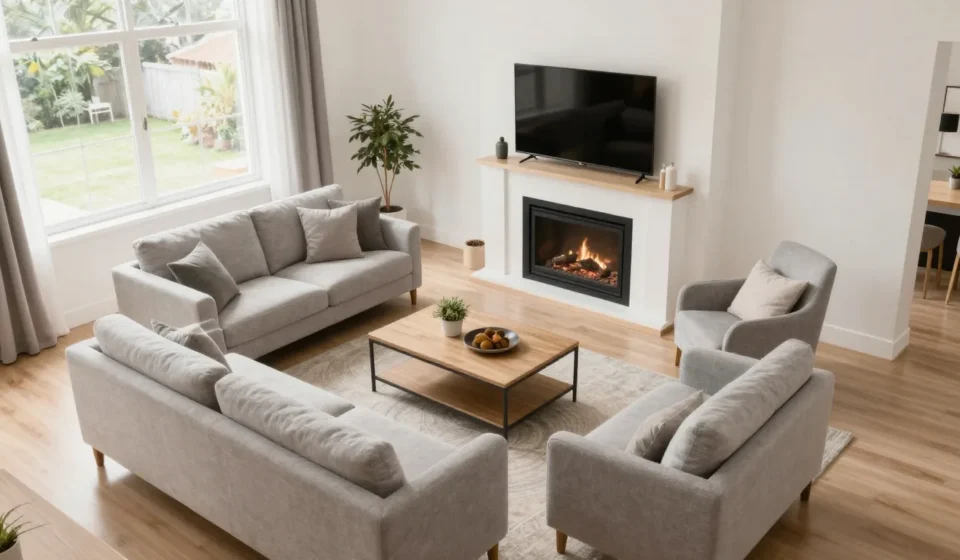
Every room needs a hero—a fireplace, large window, art piece, or media console. Arrange your main seating to face this focal point.
For example, angle two armchairs toward the sofa to create a cozy conversation area.
If your room lacks a natural focal point, create one with a bold accent wall or dramatic furniture. This gives the eye a resting place and makes the layout feel intentional.
Balance Symmetry and Asymmetry for Visual Interest
Symmetry feels calm and formal, while asymmetry feels modern and dynamic. Pair a large sofa on one side with two chairs on the other for a relaxed look.
Balance visual weight with a tall lamp on the lighter side.
Don’t be afraid to float furniture away from walls. A sofa positioned a few feet from the wall with a console table behind it creates a stylish buffer zone.
Design Conversation Zones That Feel Intimate
The goal of any living area is connection. Arrange seats so no two people are more than 8 feet apart.
Place coffee tables within 16–18 inches of the sofa for easy reach. Round or oval tables work wonders for flow.
If you host often, create multiple conversation clusters: a main group around the fireplace and a smaller nook near a window. This encourages guests to mingle naturally.
Use the “Traffic Triangle” Rule for High-Traffic Areas
In open-plan rooms, imagine a triangle between the three most-used points (sofa, TV, entry). Keep these points clear of obstacles.
Arrange furniture so you can walk through the triangle without zigzagging.
Offset the coffee table from the direct line between sofa and TV to prevent stubbed toes and keep the visual line clean.
Consider Scale and Proportion
Oversized furniture can overwhelm a small room, while tiny pieces get lost in a large space. Measure your room before shopping.
A good rule of thumb: leave at least 30 inches of walking space around each piece.
In a small living room, choose a loveseat instead of a full sofa. In a large room, group furniture into zones with area rugs to define each area.
These furniture layout tips help you pick the right sizes.
Lighting to Enhance Flow
Lighting guides the eye and creates mood. Use a mix of overhead, task, and accent lighting.
Place floor lamps near seating areas to make them feel cozy and functional.
Avoid placing lamps in walkways. Instead, use wall sconces or table lamps on consoles to keep traffic paths clear and bright.
Test Your Layout Before Committing
Use painter's tape on the floor to outline furniture pieces before moving them. This saves your back and lets you see the flow in real time.
Walk the paths, sit in each seat, and ask: Does this feel easy? Does it invite conversation?
Adjust as needed—try a completely new arrangement. Sometimes turning a sofa 90 degrees unlocks a new sense of spaciousness.
These furniture layout tips are easy to test with tape.
For more inspiration, check out our Home Decor & DIY section. For expert advice, visit The Spruce’s furniture arrangement guide or Apartment Therapy’s layout ideas.