Space Farming Without Dirt: The Incredible Science of Growing Plants in Microgravity

Why Soil Is Optional in Orbit
Aeroponics in space allows astronauts to tend gardens where roots float freely, nourished by a fine mist. That’s the reality aboard the International Space Station (ISS).
Traditional soil is heavy, messy, and behaves unpredictably in microgravity. Instead, researchers have pioneered aeroponics in space—a technique that delivers nutrients directly to plant roots via a fog-like spray.
This method is a game-changer for long-duration missions. Without the need for dirt, spacecraft save precious weight and volume.
But how exactly does a plant thrive when its roots have nothing to grab onto? The answer lies in understanding the three core soilless systems adapted for space.
Aeroponics in Space: A Mist Revolution
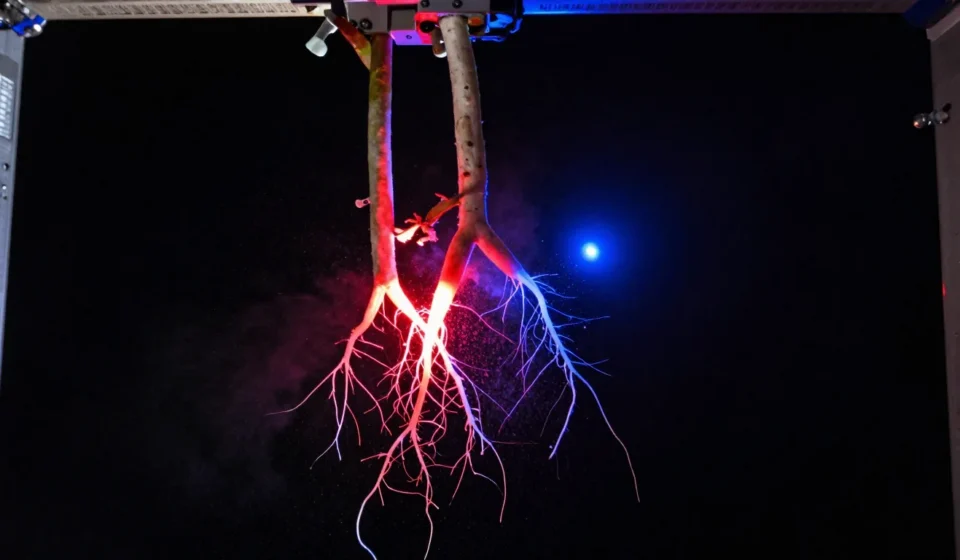
Here’s where things get futuristic. Aeroponics in space suspends plant roots in a dark chamber while nozzles spray a fine mist of nutrient solution.
The mist is so fine that it stays suspended, coating every root hair. This maximizes oxygen exposure, leading to faster growth.
The European Space Agency tested aeroponics in parabolic flights. Roots grew 30% faster than soil controls.
For a Mars mission, aeroponics could recycle water with near-100% efficiency—critical when every drop counts. The absence of soil also eliminates microbial contamination risks.
Key Advantages Over Hydroponics
- Less water use: Mist uses 95% less water than traditional irrigation.
- Higher oxygen: Roots breathe easier, boosting nutrient uptake.
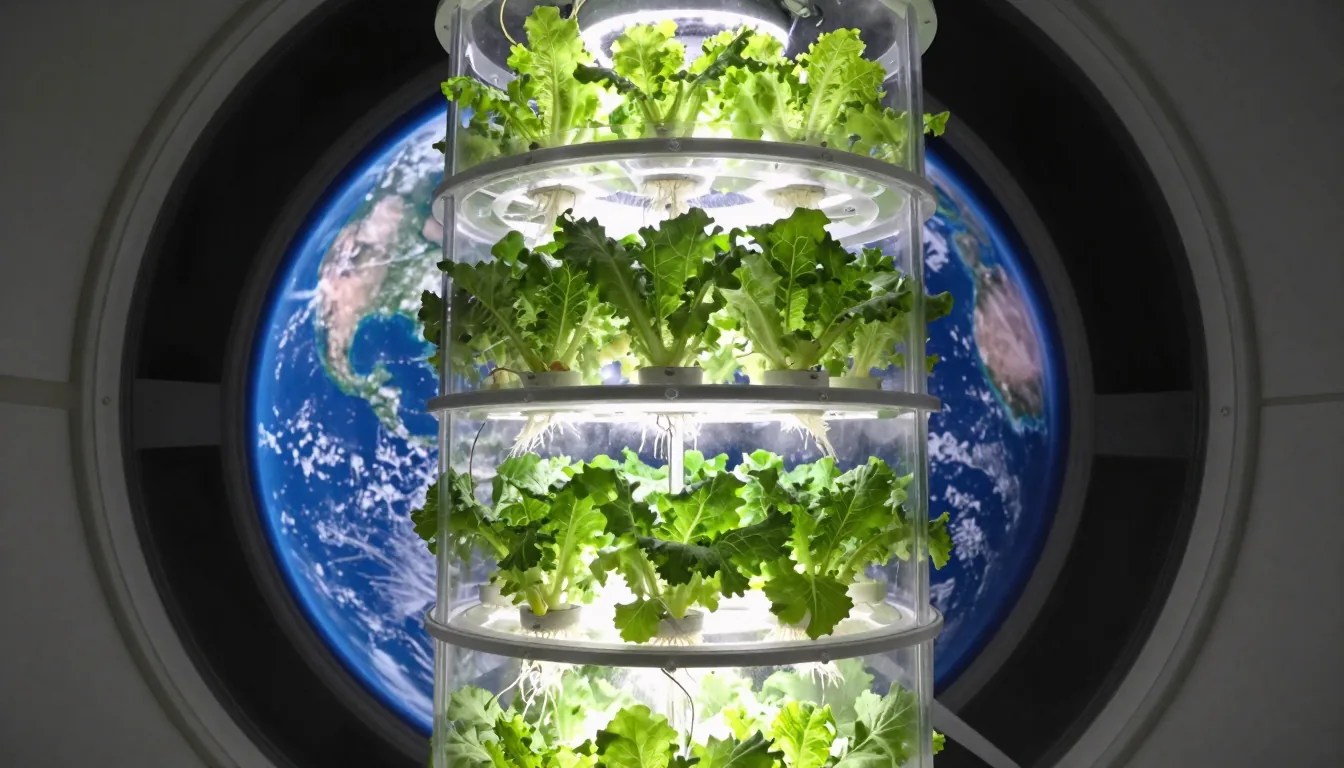
- Compact design: Towers stack vertically, fitting more plants per cubic foot.
These benefits make aeroponics ideal for spacecraft. NASA’s Veggie system has already grown lettuce and radishes in orbit using similar principles.
Researchers are also experimenting with aeroponic towers that rotate to simulate gravity. This could help root orientation and nutrient distribution.
While hydroponics—growing plants in nutrient-rich water—is also used on the ISS, aeroponics offers superior oxygen exposure. This can lead to faster growth rates in microgravity.
Moreover, plants play a crucial role in recycling air and water. Through photosynthesis, they convert carbon dioxide into oxygen, and transpiration helps purify water vapor in a closed-loop life support system.
Experiments on the ISS have shown that aeroponic gardens can sustain leafy greens with minimal water waste. This is essential for long-duration missions where resupply is impossible.
Growing Challenges in Microgravity
Despite the successes of aeroponics in space, challenges remain. Gravity shapes every aspect of plant biology on Earth.
In orbit, roots don’t sense which way is down. Plants rely on other cues—light direction (phototropism) and moisture gradients.
Astronauts use red and blue LEDs to guide growth upward. Another hurdle is pollination: without insects or wind, astronauts must hand-pollinate flowering crops like tomatoes.
Genetic modification may produce self-pollinating variants. These adaptations are vital for crops like lettuce, radishes, and peppers already grown on the ISS.
Additionally, nutrient solution must be carefully balanced. In microgravity, fluids can collect in pockets instead of evenly coating roots.
Engineers design mist nozzles with precision to avoid this.
Future Missions: Fresh Food for Mars
As we look toward Mars, soilless farming becomes non-negotiable. A round trip takes three years; resupply rockets are impractical.
Aeroponics in space will likely form the backbone of Martian greenhouses. Systems like NASA’s eXposed Root On-Orbit Test System (XROOTS) are testing these exact technologies.
By growing kale, strawberries, and even dwarf wheat, astronauts could supplement their freeze-dried diets. The psychological boost of tending green life in a sterile metal can is equally important.
For deeper insight, check out Popular Science & Space for more on habitat technologies. External resources like NASA’s Veggie page and ESA’s plant research provide deeper dives.
Soilless gardening isn’t just a novelty—it’s a survival strategy. With each successful harvest in orbit, we inch closer to becoming a multi-planetary species.
The next time you bite into a lettuce leaf, remember: it might one day be grown in Martian dust, or more likely, in a mist-filled chamber with no soil at all.