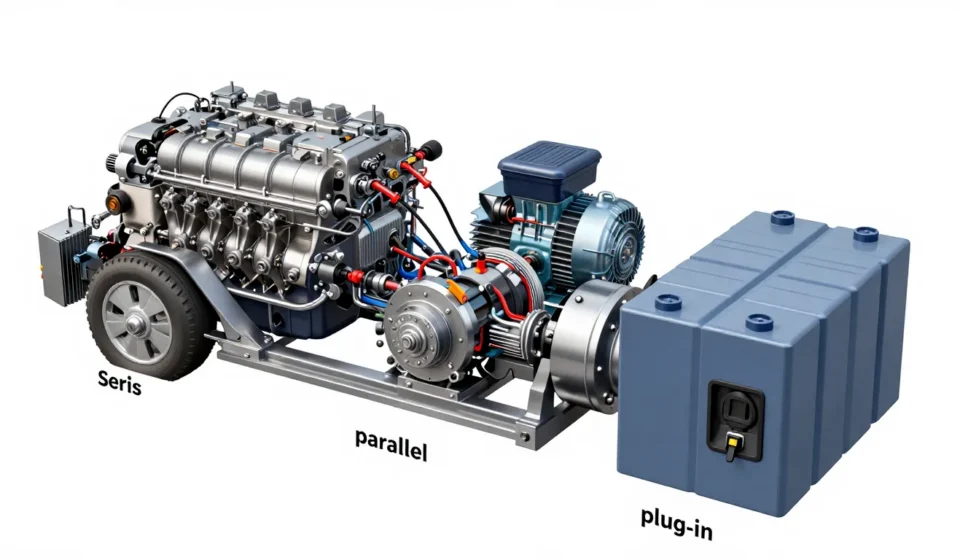

Hybrid Powertrain Comparison: Understanding the Three Architectures
The hybrid powertrain comparison between series, parallel, and plug-in designs boils down to how the internal combustion engine (ICE) and electric motor cooperate. This comparison is essential for making an informed decision.
Each layout trades off efficiency, driving character, and service complexity. Let’s break them down with engineering precision.
Before diving in, note that all hybrids capture energy via regenerative braking, but how they deploy that energy differs fundamentally. The choice impacts real-world MPG, throttle response, and long-term ownership costs.
Series Hybrid: Electric-Dominant Simplicity
In a series hybrid, the ICE acts solely as a generator. It never directly drives the wheels.
Instead, it charges the battery or feeds an electric motor, which propels the car.
This decouples engine speed from road speed, allowing the ICE to run at its most efficient rpm constantly. The result is a pure electric driving feel with no gear shifts.
To start this hybrid powertrain comparison, we consider the series design. Efficiency: Excellent in stop-and-go traffic because the ICE can stay in its sweet spot. On highways, however, multiple energy conversions introduce roughly 15-20% losses, reducing gains.
Driving Feel: Purely electric. Instant torque, silent operation until the ICE kicks in for charging. No gear shifts, linear acceleration.
Maintenance: Simpler because no complex coupling, but the generator and battery cooling systems add components. Expect similar ICE maintenance intervals plus battery health checks.
Parallel Hybrid: Mechanical Directness
A parallel hybrid connects both the ICE and electric motor to the transmission. They can power the wheels together or independently.
This mechanical coupling means the ICE can drive the wheels directly at higher speeds, avoiding conversion losses. The parallel design is another key player in the hybrid powertrain comparison.
Efficiency: Superior on highways, where the ICE glues to the wheels. In city driving, the electric motor assists under acceleration, but the ICE often runs inefficiently during low-load cruising.
Driving Feel: More conventional. Transitions between power sources can cause slight hesitations. The electric motor smooths out low-end torque, but you still feel the ICE engagement.
Maintenance: More complex due to clutches, motor-integrated transmission, and control electronics. More parts that can fail; inspect the hybrid battery and motor seals regularly.
Plug-In Hybrid: The Best of Both Worlds?
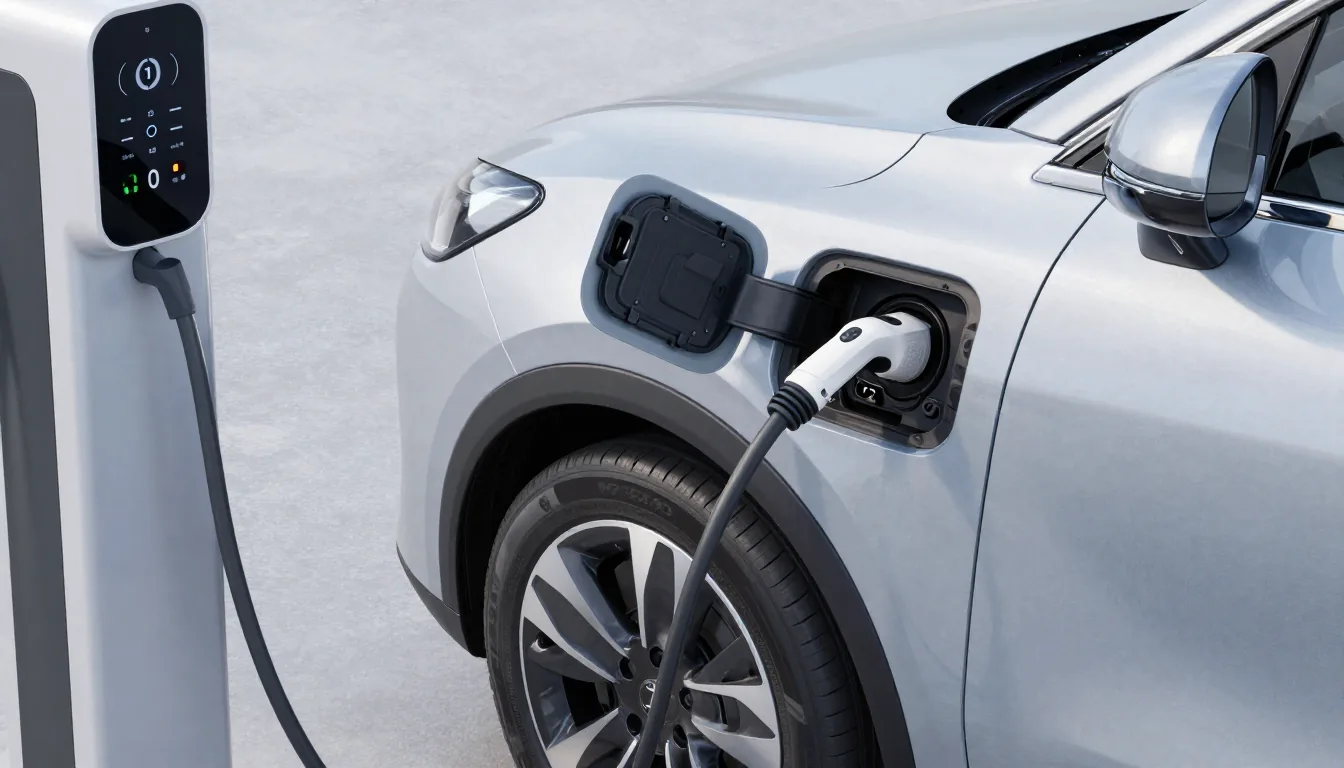
Plug-in hybrids (PHEVs) extend the series or parallel concept with a larger battery that can be charged from an external source. They offer a dedicated electric-only range (typically 20-50 miles) and then operate as a conventional hybrid afterwards.
Plug-in hybrids are the most versatile option in this hybrid powertrain comparison.
Efficiency: Phenomenal if you charge daily and drive short commutes—you can effectively use zero gasoline. Once the battery depletes, efficiency drops because you’re carrying heavy batteries. Over a long trip, a non-plug-in hybrid may match or beat a PHEV’s overall MPG.
Driving Feel: Initially silent and electric, but once the ICE starts you feel the transition. The added battery weight (~150-200 kg) can dull handling, and regen braking can feel less linear due to larger capacity.
Maintenance: All the complexity of a parallel hybrid plus a high-voltage battery thermal management system. Battery degradation is a concern over 8-10 years; replacement costs remain high.
Efficiency and Driving Feel Comparison
- City MPG: Series > PHEV > Parallel
- Highway MPG: Parallel > Series > PHEV (when depleted)
- Throttle Response: Series and PHEV (electric) > Parallel
- Engine NVH: Series is quietest; Parallel and PHEV have more ICE noise
Maintenance and Longevity
All three architectures require cooling system maintenance, high-voltage cable checks, and battery degradation monitoring. Series hybrids have fewer mechanical links, reducing transmission and clutch failures; parallel hybrids have more moving parts.
PHEVs demand battery coolant replacement every 5 years or 60,000 miles.
Based on this hybrid powertrain comparison, my blunt advice: If you mostly drive city traffic, a series hybrid (like a BMW i3 REx) offers the best efficiency and driving feel. For mixed driving with regular highway trips, a parallel hybrid (Toyota Prius) is the proven workhorse.
If you have a short commute and access to charging, a PHEV (Honda Clarity) can save fuel, but accept higher upfront cost and weight.
For further reading on this hybrid powertrain comparison, check out our Automotive & Mobility category. Also, Car and Driver’s hybrid explainer and Energy.gov’s hybrid overview provide additional data.