
Which Work Model Actually Boosts Productivity? Remote, Hybrid, or In-Office?

The Great Workplace Experiment
The debate over work model productivity has intensified as companies decide on post-pandemic strategies. Remote, hybrid, and in-office each offer distinct advantages and drawbacks for team output.
Leaders must weigh autonomy against collaboration, flexibility against culture. This article examines data and real-world cases to guide your decision on optimal work model productivity.
Remote Work: Autonomy vs. Isolation
Remote work eliminates commuting and allows deep focus, often boosting individual output. A Stanford study found a 13% increase in productivity among remote workers.
Many employees report higher satisfaction due to flexible schedules.
However, collaboration suffers without spontaneous interactions. New hires may struggle with onboarding, and burnout can rise due to blurred boundaries.
Remote works best for tasks requiring concentration and minimal handoffs.
Key Benefits and Risks
- Pros: Flexible hours, reduced overhead, access to global talent.
- Cons: Isolation, communication gaps, difficulty maintaining company culture.
For example, tech giants like GitLab operate fully remote with high efficiency. They prioritize asynchronous communication and detailed documentation to keep teams aligned.
But other firms report challenges with mentorship and innovation. A Microsoft survey found that remote workers felt less connected to their team’s mission, leading to lower engagement.
Hybrid Work: Flexibility with Coordination Costs
Hybrid models aim to combine the best aspects of each work model productivity approach. They offer flexibility but require intentional scheduling.
Teams might meet in-office 2–3 days per week for collaboration, then work remotely for focused tasks. This balance can boost morale and productivity.
Coordination complexity is the main drawback. Without clear policies, hybrid can create inequity: remote employees may miss informal networking and career opportunities.
Success depends on asynchronous communication tools and transparent norms.
Making Hybrid Work
- Define core hours and mandatory in-office days for team alignment.
- Invest in collaboration software (e.g., Slack, Zoom, Notion) to bridge gaps.
- Train managers on leading distributed teams effectively.
Companies like Spotify use a “flexible first” approach, letting teams decide their own schedules. This boosts autonomy while preserving in-person ties for key meetings.
However, a 2023 Gartner survey warned that poorly designed hybrid models reduce productivity by 15%. Clear guidelines and regular feedback are essential to avoid pitfalls.
In-Office: Collaboration but Commute
In-office work fosters spontaneous brainstorming, mentorship, and strong culture. It works well for roles requiring real-time teamwork or hands-on activities like design sprints.
The major downside is commute time and costs, which can lower overall satisfaction. Office distractions can also hinder deep work, especially in open-plan layouts.
According to Harvard Business Review, fully in-office firms report similar productivity to hybrid ones when designed well.
For instance, Apple’s return-to-office mandate sparked resistance, but the company argued it encourages innovation. Yet many employees prefer flexibility, leading to talent retention issues.
A 2022 Bloomberg study found that in-office workers spent 25% more in meetings but completed fewer focused tasks. So the trade-off is clear: collaboration comes at the cost of individual concentration.
Work Model Productivity: Key Metrics to Consider
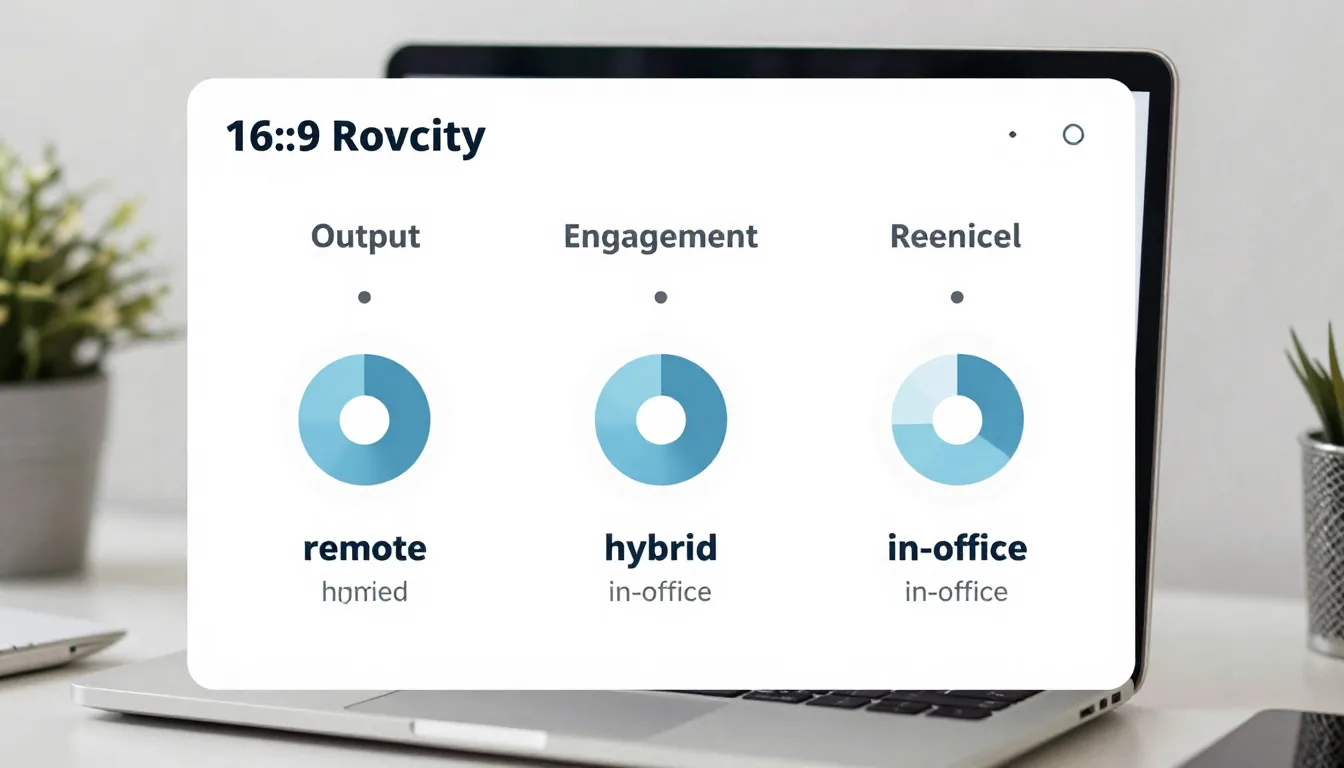
To measure work model productivity, track output per employee, employee engagement scores, and retention rates. A 2023 McKinsey survey found that hybrid teams had 20% higher satisfaction without sacrificing performance.
Remember that one size does not fit all. Tech companies may thrive remote, while manufacturing needs on-site presence.
Test and iterate based on your specific context and team dynamics.
Also consider qualitative feedback through pulse surveys and stay interviews. Regularly review metrics to avoid assumptions and adapt to changing needs.
Choosing the Right Model for Your Team
Survey your employees to understand preferences and constraints. Pilot a hybrid schedule with clear goals, then adjust based on data.
The goal is to maximize work model productivity for your unique situation.
Whatever model you choose, invest in communication infrastructure and manager training. By focusing on outcomes rather than presence, you can unlock work model productivity that benefits both your business and your people.
For more insights, explore our Business & Entrepreneurship category. External research: Stanford WFH Study, HBR on Hybrid Productivity.