The Science of Tire Pressure and Rolling Resistance: How to Maximize Every Mile

Tire Pressure Rolling Resistance: The Core Physics Principle
Understanding tire pressure rolling resistance is crucial for maximizing fuel economy and tire lifespan. This guide explains the physics behind it and how to adjust pressure for your driving needs.
Rolling resistance arises from tire deformation as it rotates. Lower pressure increases the contact patch, leading to more deformation and higher energy loss.
Engineers design tires to operate within a specific pressure range that balances grip, wear, and rolling resistance.
The impact of tire pressure rolling resistance extends beyond fuel economy; it also affects tire longevity and handling response. Drivers who optimize their pressure can see up to 3% improvement in fuel efficiency.
How Pressure Alters Contact Patch and Grip
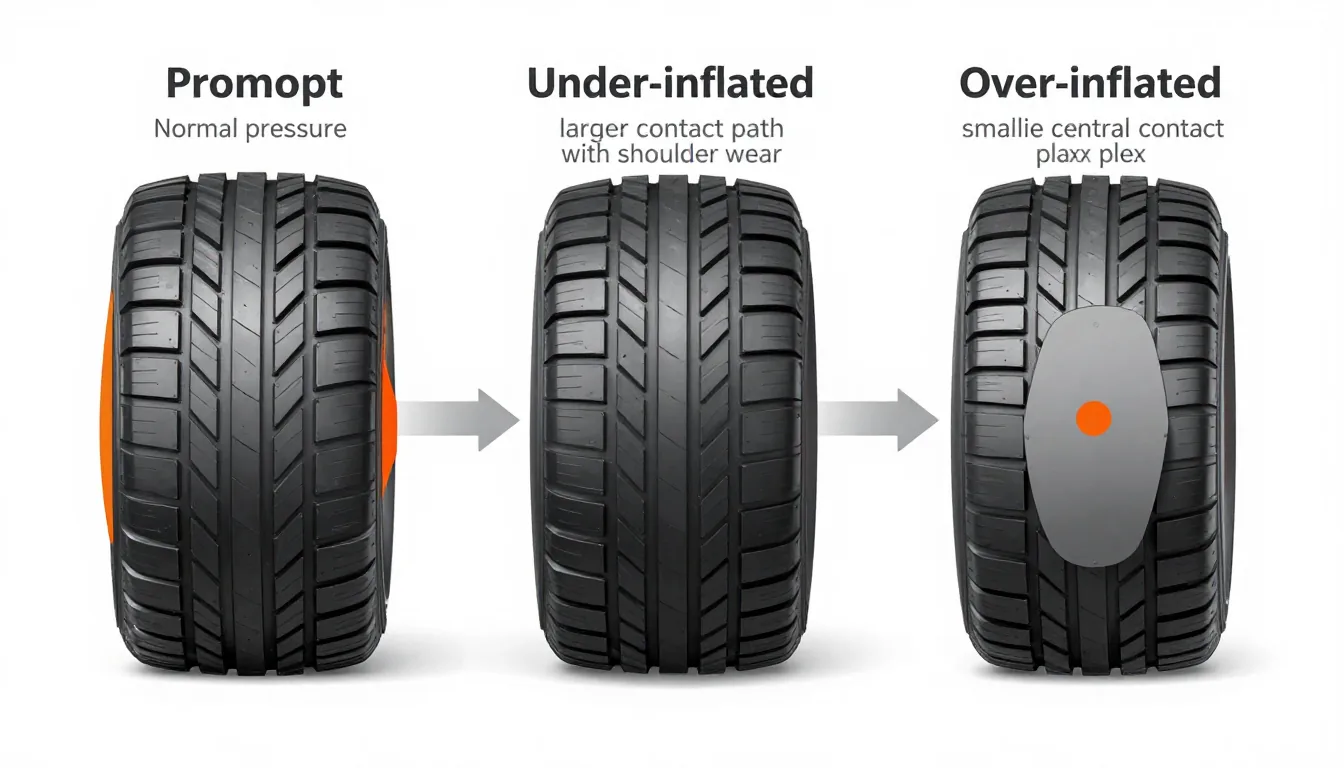
Under-inflation enlarges the contact patch but creates uneven pressure distribution, reducing lateral grip and accelerating shoulder wear. Over-inflation shrinks the patch in the center, decreasing traction and ride comfort.
For maximum dry grip, a slight decrease of 2–3 psi from the recommended level can help the tire conform to road irregularities. However, this must stay within load limits to avoid sidewall damage.
Wet conditions demand higher pressure to improve water evacuation and reduce hydroplaning risk. A good rule is to use the manufacturer’s cold pressure for general driving and increase by 2–4 psi for sustained highway speeds.
Balancing Grip, Wear, and Fuel Economy
Finding the ideal tire pressure rolling resistance balance is a matter of your driving priorities. For daily commuting, the manufacturer's recommendation offers the best compromise between rolling resistance and grip.
Performance driving may benefit from slight deviations, but always within safe limits.
Every 1 psi drop raises rolling resistance by about 0.3%, directly hurting fuel economy. At highway speeds, a 5 psi deficit can reduce MPG by 1–2%.
Conversely, over-inflating to the maximum sidewall rating yields minimal gains while compromising safety and comfort.
The sweet spot is the pressure recommended by the vehicle manufacturer, typically found on the door jamb or fuel door. This value considers tire load, speed, and heat generation for daily driving.
Temperature Effects on Tire Pressure
Tire pressure rises approximately 1 psi per 10°F increase in temperature. This means cold morning checks can read lower than midday pressures.
Always measure when tires are cold (after 3 hours of rest) for consistency.
Seasonal adjustments are important: inflate to the recommended cold pressure in summer; in winter, expect a 2–3 psi drop and compensate accordingly. Ignoring temperature swings leads to over‑ or underinflation, reducing performance and safety.
Special Considerations for Electric Vehicles
Electric vehicles are especially sensitive to tire pressure rolling resistance because it directly impacts range. A 5 psi deficit can reduce range by 2–3%, making proper inflation critical for EV owners.
Many EVs recommend higher than average pressures to minimize rolling resistance.
Check your EV owner’s manual for specific pressure recommendations, as the added battery weight often requires different settings than conventional cars.
Practical Performance Tuning for Enthusiasts
- Invest in a digital gauge: Accuracy to 0.5 psi ensures precise adjustments and helps maintain optimal tire pressure rolling resistance.
- Check monthly: Tires naturally lose 1–2 psi per month; less in cooler weather. Consistent monitoring keeps rolling resistance low.
- Don’t rely solely on TPMS: Systems typically warn only after a 25% pressure loss. Manual checks are essential.
- Adjust for load: Heavier loads require higher pressure—consult your owner’s manual.
- Track day strategy: Start 2–3 psi below street pressure, then increase after hot readings.
- Consider nitrogen inflation: Nitrogen loses pressure more slowly than air, reducing the frequency of adjustments and maintaining tire pressure rolling resistance stability.
- Monitor treadwear patterns: Uneven wear indicates incorrect pressure; center wear means over-inflation, edge wear means under-inflation.
By mastering tire pressure rolling resistance, you can enhance safety, performance, and efficiency. For more automotive insights, visit our Automotive & Mobility section. To dive deeper into tire physics, check out Tire Rack’s discussion on tire pressure or the SAE paper on rolling resistance optimization.