
Why Your Skin Reacts: The Science of Irritants
Your skin barrier is a delicate shield. When exposed to certain chemicals, it can become inflamed, dry, or broken out. Hidden skincare irritants often masquerade as beneficial ingredients.
Learning to decode an INCI list is your first line of defense. Many common irritants are not obvious at first glance.
For example, a product labeled "natural" may still contain sensitizing compounds.
Hidden Skincare Irritants: What to Look For
Fragrance and Essential Oils
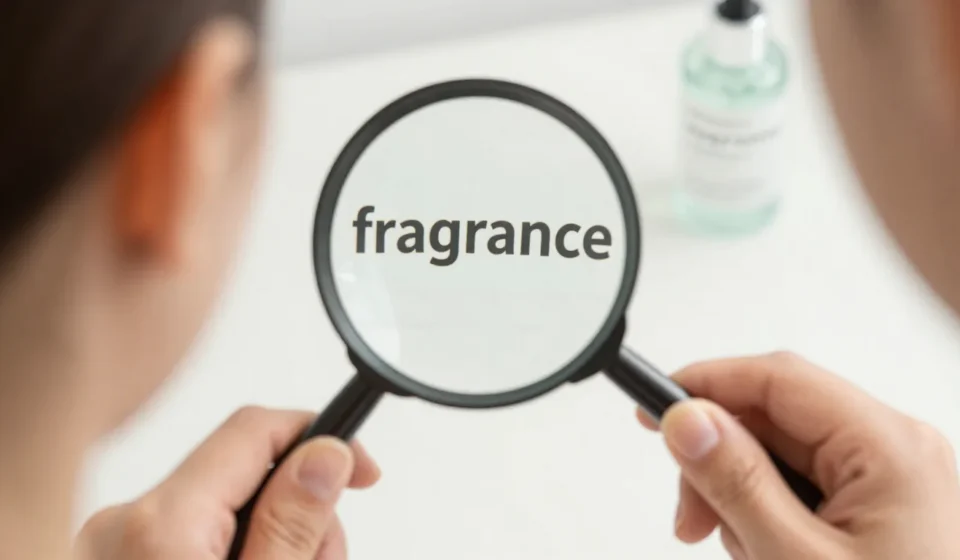
Fragrance is a catch-all term for hundreds of chemicals. It can cause contact dermatitis even in low concentrations.
Look for "parfum" or "fragrance" on the label.
Essential oils like lavender and tea tree are natural but can be sensitizing. They contain volatile compounds that disrupt the skin barrier.
Check for specific Latin names on the ingredient list, such as Lavandula angustifolia or Melaleuca alternifolia.
To avoid irritation, choose fragrance-free products labeled as such. Be aware that “unscented” sometimes still uses masking fragrances.
Drying Alcohols
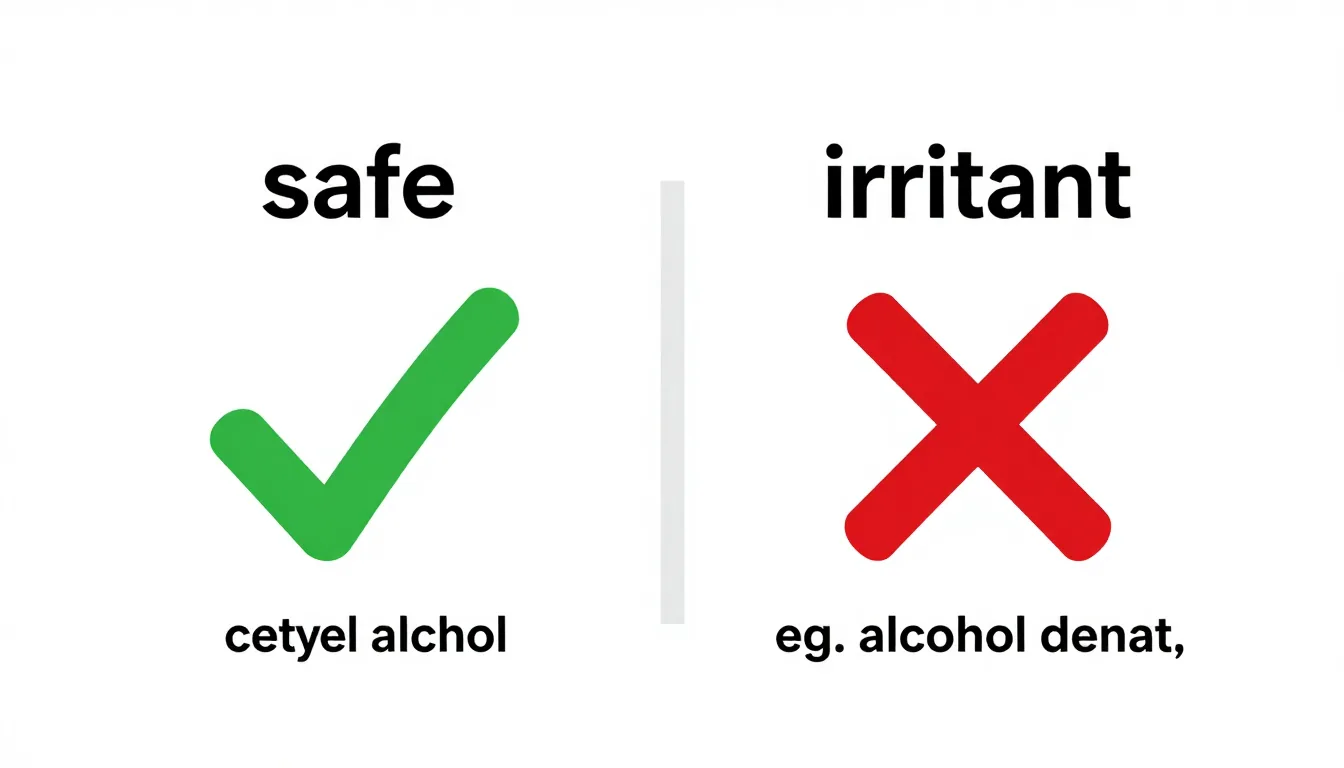
Alcohol denat., ethanol, and SD alcohol evaporate quickly. They strip natural oils and damage the moisture barrier.
These are often found in toners and mattifying primers.
Switch to products with fatty alcohols like cetyl or stearyl alcohol. These are emollients that actually help hydrate the skin.
Fatty alcohols are often mislabeled as irritants but are safe for most.
Drying alcohols can worsen conditions like rosacea and eczema. Always check the first five ingredients for these red flags.
Sulfates and Surfactants
Sodium lauryl sulfate (SLS) creates foam but destroys lipid barriers. It is common in cleansers and shampoos.
Opt for sulfate-free alternatives like coco-glucoside or sodium cocoyl isethionate.
Even some gentle surfactants can be too harsh for reactive skin. Patch testing is always a smart move before full application.
A good test is to apply a small amount behind your ear for a few days.
Cocamidopropyl betaine is a milder surfactant but can still cause reactions in some individuals. Watch for it in “sulfate-free” cleansers.
Preservatives and pH Disruptors
Methylisothiazolinone (MI) and formaldehyde-releasing preservatives like DMDM hydantoin can trigger allergies. Parabens are less common now but still appear in some formulas. Some preservatives are hidden skincare irritants that accumulate over time.
Also watch out for high pH products. Alkaline cleansers weaken the acid mantle.
Use pH-balanced products (5.5–6.5) to keep your skin happy.
Preservatives like phenoxyethanol are generally safer. However, even natural preservatives like grapefruit seed extract may cause irritation for some.
How to Read INCI Lists Like a Pro
Ingredients are listed in descending concentration. The first five make up most of the product.
Spot red flags early: any known irritant in the top five is a concern.
Cross-reference with trusted sources like EWG's Skin Deep database and INCIDecoder. These databases are excellent for uncovering hidden skincare irritants.
They provide safety ratings and specific alerts.
Tips for Spotting Irritants Early
Look for synonyms: sodium lauryl sulfate may be listed as SLS or sodium dodecyl sulfate. Fragrance can appear as essential oil blends.
Learn common Latin names for plants to spot hidden essential oils.
If a product lists over 20 ingredients, the bottom of the list is often where preservatives and fragrances hide. Still, the first five are most important.
Other Sneaky Irritants
Watch for camphor, menthol, and peppermint which can cause stinging on compromised skin. Even vitamin C in high concentrations may irritate some people.
Synthetic dyes like FD&C Red 40 can also be hidden skincare irritants.
Always introduce new products slowly. If you notice redness or breakouts, check the ingredient list for these hidden irritants.
A simple elimination diet for your skin can help identify triggers.
By mastering this skill, you can finally tailor your routine to your skin’s needs—no more guesswork, just science-backed choices that respect your barrier. For more tips, explore our Beauty & Skincare archive. Check out EWG’s Skin Deep database and INCIDecoder for reliable analysis to spot these hidden skincare irritants.