

Why ERP System Readiness Matters for Growing Companies
Enterprise resource planning (ERP) software integrates core business processes into one unified platform. For small businesses, assessing ERP system readiness is critical to avoid premature or delayed adoption.
Premature implementation can waste resources, but delaying stifles growth. Here are seven proven indicators that your company is ready to make the leap.
1. Data Silos Are Slowing Down Decision-Making
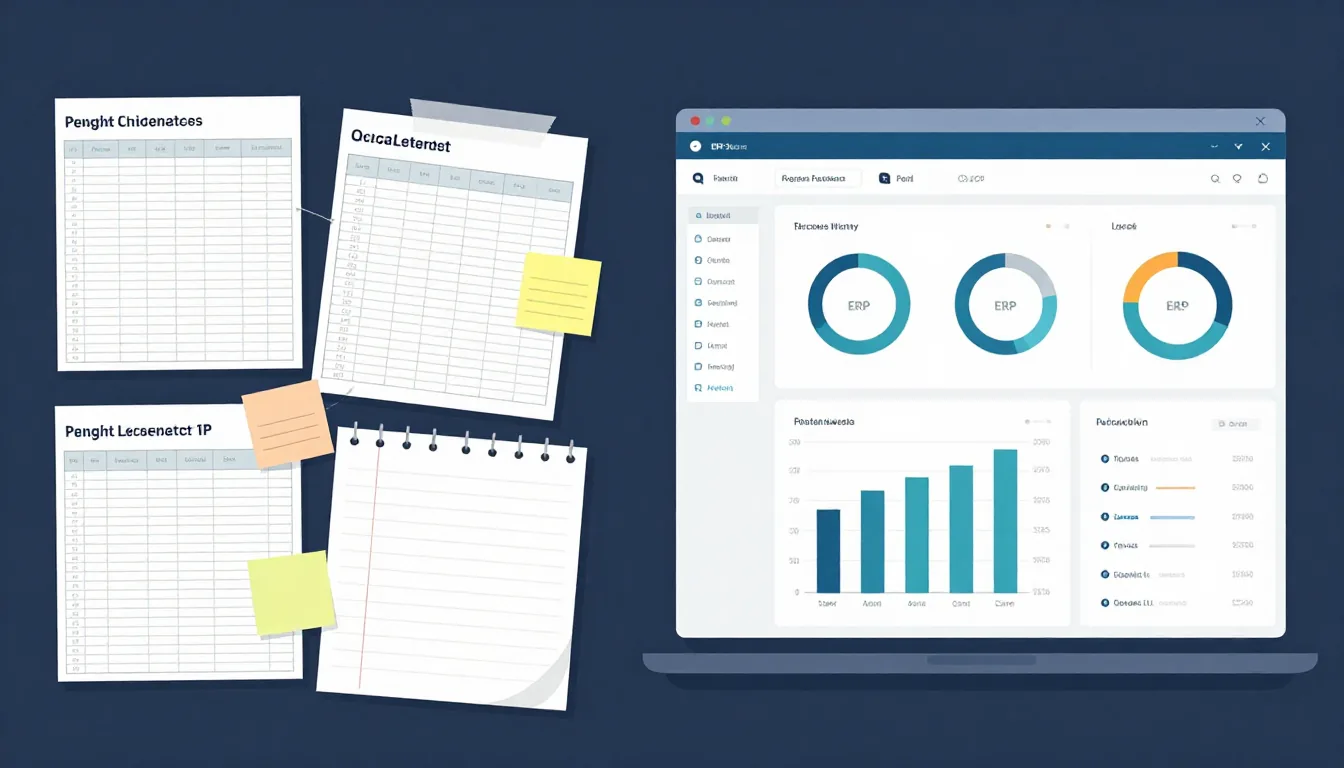
When your sales team uses one spreadsheet, accounting uses another, and inventory tracking is manual, you lose visibility. Reconciling data across departments eats hours each week.
If leaders can’t get a real-time view of orders, cash flow, or stock levels, it’s a clear sign your operations need consolidation. ERP breaks down silos by providing a single source of truth.
Example: Monthly Reporting Takes Days
If your finance team spends three days closing the books because they must manually match invoices to purchase orders, an ERP can automate those workflows. The time saved directly improves strategic agility.
Many businesses find that after implementing ERP, month-end close shrinks from days to hours.
2. Inventory Problems Multiply as You Grow
Stockouts, overstocking, and mis-shipments become more frequent with scale. Without a centralized system, tracking inventory across multiple locations or channels is prone to error.
If you’re constantly firefighting supply chain issues, it’s a sign that your current tools aren’t keeping up. ERP provides real-time inventory visibility and demand forecasting.
Case Studies Show 20–30% Inventory Reduction
Research from NetSuite indicates that businesses using ERP often reduce inventory carrying costs by 20–30%. For a small business, that directly impacts cash flow.
If you suspect your stock levels are inefficient, an ERP system readiness assessment can quantify the potential savings.
3. Your Revenue Is Growing but Margins Are Shrinking
Rising revenue alone doesn’t signal health. If gross margins decline as sales increase, operational inefficiencies may be eating profits.
Manual order processing, duplicate data entry, and lack of integrated costing all contribute to margin erosion. ERP automates these processes, giving you accurate profitability per product, customer, or project.
This is a hallmark of ERP system readiness—when growth amplitude outpaces your back-office capacity.
4. Spreadsheets Have Become Your Primary Business Tool
Many small businesses start with Excel or Google Sheets. But when you have multiple versions of the same spreadsheet, password-protected files emailed back and forth, and macros that break, it’s time to upgrade.
Spreadsheets lack audit trails, access controls, and real-time collaboration. If your team spends more time managing spreadsheets than managing the business, an ERP is the logical next step.
5. Compliance and Reporting Requirements Are Increasing
Whether it’s tax regulations, industry standards, or investor demands, compliance complexity grows. Manual tracking increases the risk of errors and penalties.
ERP systems include built-in compliance features, such as automated tax calculations, audit logs, and standardized reporting. If you’re spending significant resources just to stay compliant, your ERP system readiness is high.
6. Customer Service Is Suffering Due to Fragmented Information
When a customer calls about an order, do your support agents have to check three different systems? Delays in response times erode trust.
ERP unifies customer data, order history, and shipping status so any team member can provide accurate answers instantly. Improved customer satisfaction often follows ERP implementation.
If your NPS scores are dropping, consider whether fragmented data is the root cause.
7. You’re Planning to Scale—But Your Systems Can’t Handle It
Expanding into new markets, adding product lines, or acquiring another company puts strain on disconnected software. If your current setup requires manual workarounds for each new location or channel, scaling will be painful.
ERP is designed to scale with your business, supporting multi-entity, multi-currency, and multi-language operations. The right time to invest in ERP is before you hit a wall, not after.
Take the Next Step Toward Streamlined Operations
Recognizing these signs is the first step. To assess your specific situation, consider conducting a readiness audit with an ERP consultant.
Many vendors offer free trials or demos. Remember, the goal is not just to buy software but to transform how your business operates.
For more insights on Business & Entrepreneurship, explore our other resources. Also, check out Sage’s ERP readiness assessment guide or Workday’s checklist to evaluate your organization.
An ERP investment now can future-proof your growth.