

If you want serious muscle growth, you need to understand the power of heavy sets hypertrophy. This approach targets fast-twitch fibers and maximizes mechanical tension for rapid gains.
Why Your Muscle Fibers Matter
Your muscles contain different fiber types. Slow-twitch fibers endure long, light work.
Fast-twitch fibers fire for explosive, heavy efforts.
These fast-twitch fibers have the most growth potential. That’s why endless curls never build thick arms: they miss the stimulus of heavy sets hypertrophy.
To shock Type II fibers into growth, you need heavy loads. Sets of 5 reps force your nervous system to recruit every motor unit.
This is the foundation of serious mass and the key to unlocking new muscle.
The Science of Mechanical Tension
Mechanical tension is the primary driver of muscle growth. It's the force on your muscles under load.
Heavier weights create greater tension per rep.
Your cells sense this strain and signal protein synthesis. High-rep sets produce metabolic stress, which adds some size.
But heavy sets generate far more mechanical tension.
That tension is the non-negotiable stimulus for serious mass. Think about powerlifters: they don't stay small.
Their heavy training builds dense, powerful physiques.
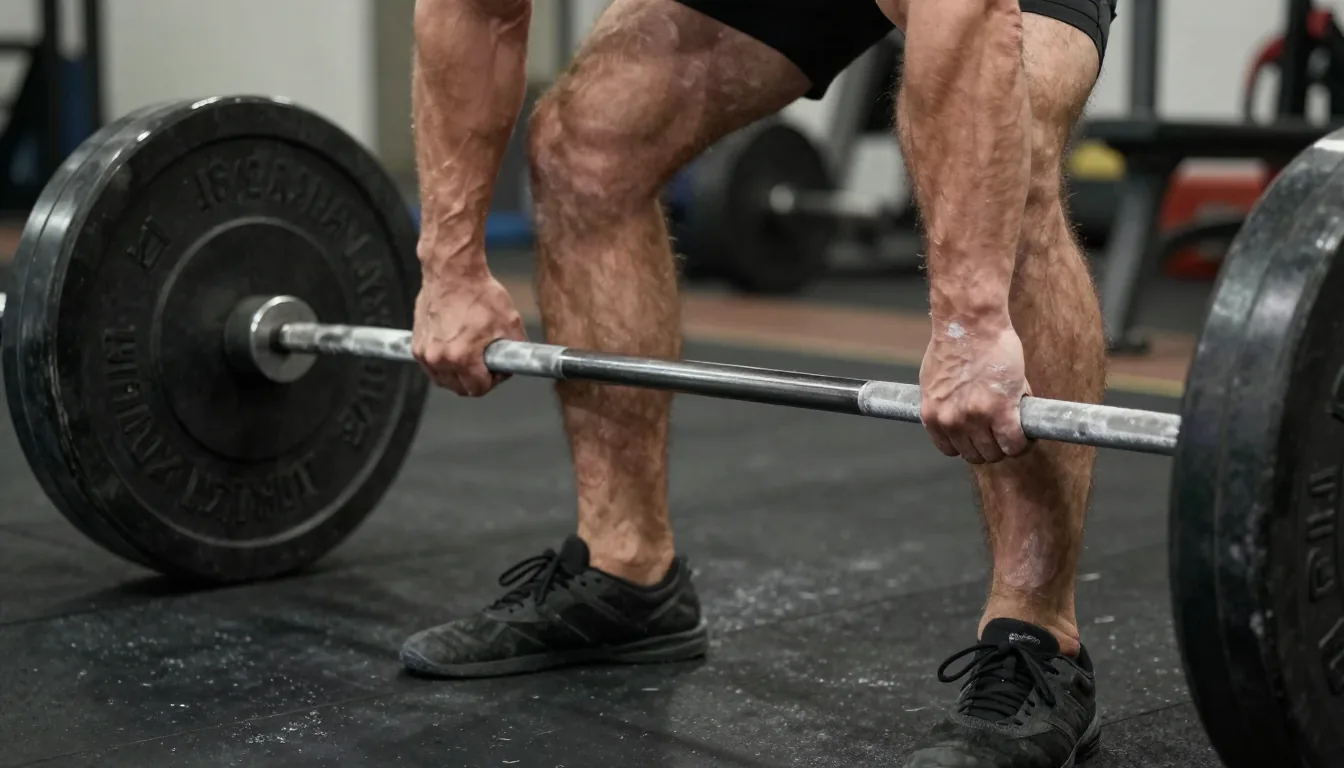
Why Heavy Sets Hypertrophy Works
The 5-rep rule leverages the strength-hypertrophy overlap. Lifting in the 3-6 rep range optimizes both strength gains and fiber recruitment.
You get stronger, which means you can lift heavier next week.
That progressive overload ensures continuous growth. Studies confirm that low-rep, high-load training produces comparable hypertrophy to higher-rep routines when volume is equal.
Heavy sets also boost bone density and neural adaptations.
Your body becomes a better machine for building muscle over time. This is why heavy sets hypertrophy is so effective.
How to Apply the 5-Rep Rule
Choose compound lifts: squats, deadlifts, presses, rows. Work up to a heavy set of 5 reps with perfect form.
Add weight each session or week.
Keep rest periods 3-5 minutes to recover fully. Do 3-5 working sets per exercise, 2-3 times per week.
Don't fear failure near the 5-rep mark.
Your technique must stay crisp to avoid injury. Use a spotter or safeties.
Track your numbers.
If you stall, deload or vary the rep scheme. This approach builds raw power and visible muscle density.
Breaking the High-Rep Myth
Many still believe only high reps pack on size. That belief comes from misinterpreting pump as growth signals.
The pump is temporary.
Real growth demands mechanical tension from heavy Fitness & Sports training. Look at any athlete with dense, powerful muscle: sprinters, gymnasts, strongmen.
They move heavy loads under control. The 5-rep rule is the most time-efficient way to force adaptation and stimulate heavy sets hypertrophy.
Progressive Overload and Recovery
Progressive overload is essential. You must gradually increase the weight lifted.
This constant challenge forces your muscles to adapt and grow.
Without progression, you plateau. Recovery is equally critical, especially when using heavy sets hypertrophy training.
Heavy training taxes the central nervous system.
Get 7-9 hours of sleep per night. Eat enough protein and calories.
Your muscles repair and get stronger during rest, not during the workout itself.
Sample Heavy Sets Routine
On Monday, do squats, overhead press, and barbell rows for 5 sets of 5 reps. On Wednesday, perform deadlifts, bench press, and pull-ups.
On Friday, work on front squats, incline press, and bent-over rows.
Add weight each week. Focus on form and control.
This simple template targets all major muscle groups.
It uses heavy sets hypertrophy principles to maximize growth. Stick with it for 8-12 weeks for noticeable results.
Combine heavy sets with adequate protein and sleep.
Recover hard, because your muscles grow outside the gym. Trust the process.
Lift heavy, grow big.
For more on the science, check out this study on low reps and hypertrophy. Also see this analysis of rep ranges.