
Hinge Patterns: The Foundation of Posterior Chain Power
If you want a strong back, powerful glutes, and healthy knees, you need hip hinge exercises. Most lifters squat and deadlift, but neglect pure hinge patterns. That is a mistake because hip hinge exercises target the posterior chain directly.
The hip hinge isolates the posterior chain better than any squat variation. You will build a bulletproof lower back and explosive hips.
Yet, most people hinge poorly.
They squat their deadlifts or round their lower back. That is why you need variations—different angles, loads, and speeds.
They reinforce proper mechanics and build resilience.
Why Your Training Needs More Hinge Variations
Incorporating more hip hinge exercises prevents imbalances. The hip hinge is one of the five basic movement patterns.
Skipping it creates imbalances.
Your glutes and hamstrings become weak. Your lower back pays the price.
Adding multiple hinge variations fixes this.
Different variations stress the posterior chain differently. Romanian deadlifts emphasize the hamstrings.
Good mornings target the erectors. Kettlebell swings build explosive power.
Rotate them weekly. You will see better strength gains and fewer injuries.
Integrating various hinge patterns also improves athletic performance.
The Big Three Hip Hinge Exercises: RDLs, Good Mornings, and Kettlebell Swings
Romanian Deadlifts
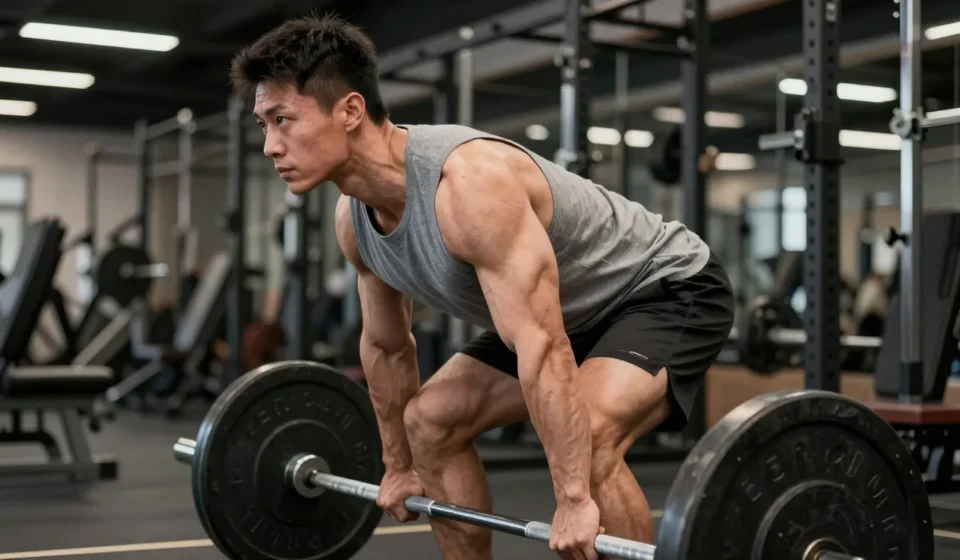
The RDL is the king of hamstring development. It is a fundamental hip hinge exercise.
You keep a slight bend in your knees. Push your hips back while keeping the bar close to your legs.
Lower until you feel a stretch in your hamstrings. Then drive your hips forward.
Use a moderate weight and focus on the eccentric phase.
Pause at the bottom for a two-count. This increases time under tension.
It builds muscle fast.
Good Mornings
Good mornings are your lower back's best friend. This hip hinge exercise strengthens the erectors.
Place a barbell across your shoulders. Keep your spine neutral and hinge at the hips.
Go slow. This movement teaches you to maintain a flat back under load.
Start with an empty bar.
Add weight only when you can keep perfect form to parallel. Good mornings transfer directly to your squat and deadlift stability.
Kettlebell Swings
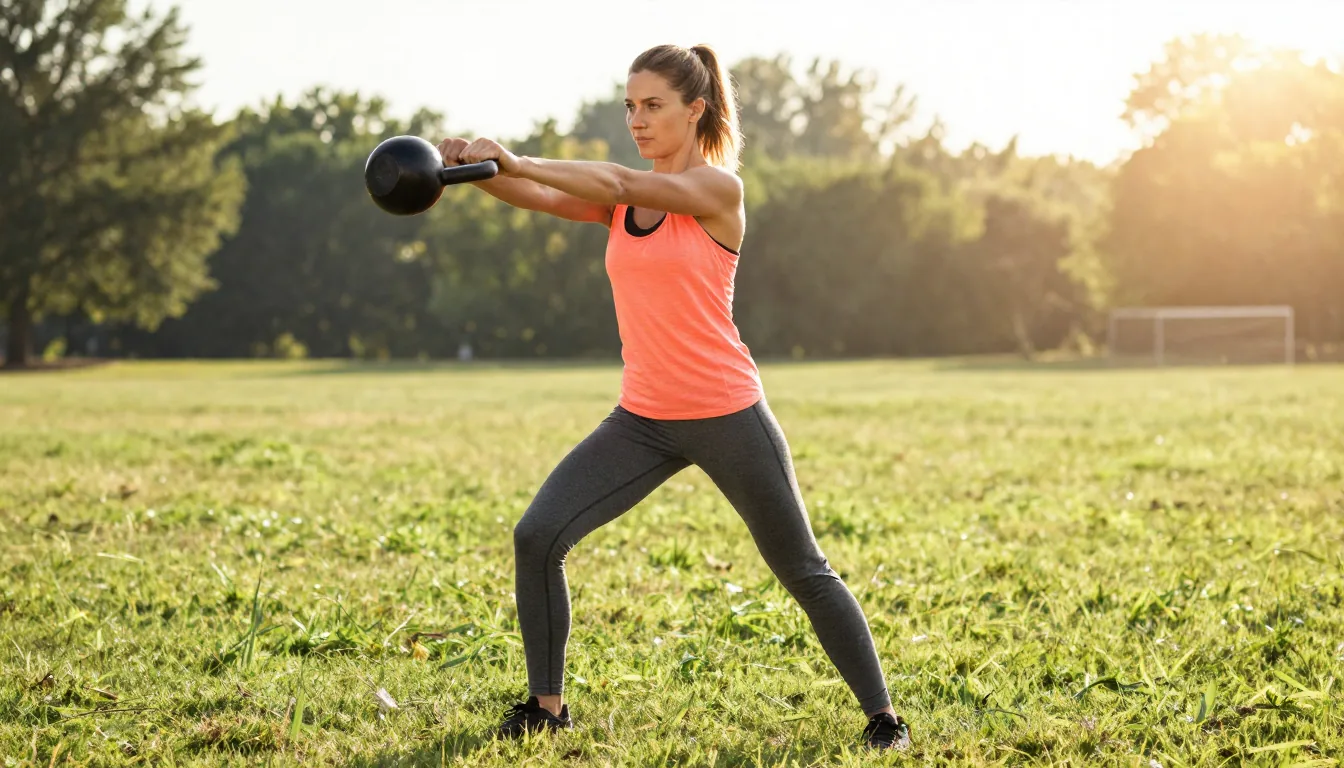
Kettlebell swings are the explosive version of the hip hinge. You use momentum from your hips, not your arms.
Hike the kettlebell between your legs.
Snap your hips forward to propel it to chest height. Do not squat the swing.
Keep your arms loose.
The power comes from your glutes and hamstrings. Swings improve athletic performance and cardiovascular conditioning.
They are a staple among hip hinge exercises for power athletes.
Scaling Your Hinge Variations
Start with bodyweight hip hinge exercises to master the form. Once you can touch your toes without rounding, add resistance.
Use dumbbells or kettlebells first.
Progress to barbell variations as you get stronger. For Romanian deadlifts, increase weight when you can do 3 sets of 8 clean reps.
For good mornings, prioritize depth over load.
Alternate between heavy and light days. Heavy days build strength; light days reinforce technique.
This balanced approach prevents overtraining.
Programming Your Hinge Variations
Pick one hinge variation per workout. Do not do all three on the same day—that is a recipe for central nervous system fatigue.
Rotate them across your training week.
For strength, use 3–5 sets of 5–8 reps for RDLs and good mornings. For power, use 3–5 sets of 10–15 reps for kettlebell swings.
Progress by adding weight or reps each week.
Track your progress. Consistency matters most.
Remember, mastering hip hinge exercises takes time.
Common Mistakes to Avoid
Rounding your lower back is the biggest sin. Keep your spine neutral throughout.
If you cannot, reduce the weight.
Also, do not bend your knees too much—you turn a hinge into a squat. Another mistake is moving too fast.
Control the descent and explode on the return.
This builds both strength and speed. For more training tips, check out our Fitness & Sports section. For scientific backing, read this study on posterior chain activation and Stronger by Science’s guide to the hip hinge.