
Why Grow Tomatoes from Seed?
Starting your own seedlings gives you access to hundreds of varieties you'll never find at a garden center. When you grow tomatoes from seed, you can choose early, mid, and late-season types to extend your harvest.
It also saves money and lets you control the entire growing process from the very beginning.
Starting seeds indoors means you avoid bringing in soil-borne diseases that sometimes hitchhike on nursery transplants. This is one of the biggest advantages when you choose to grow tomatoes from seed.
You also get a head start on the season, which is especially useful in short-summer climates.
Choosing the Right Tomato Varieties
Select varieties suited to your climate and growing space. Determinate types are compact and perfect for containers; indeterminate types keep growing and need sturdy supports.
Look for disease-resistant labels like VFN (Verticillium, Fusarium, Nematodes) if you’ve had issues before. For short seasons, choose early-maturing varieties like ‘Stupice’ or ‘Moskvich’.
Supplies You’ll Need
Gather seed-starting mix, clean pots or cell trays, a warm spot, and a light source. Avoid garden soil—it compacts and may carry pathogens.
You’ll also need labels, a spray bottle for gentle watering, and a heat mat if your room is cooler than 70°F. These simple tools make all the difference in successful germination.
Sowing Seeds: Step by Step
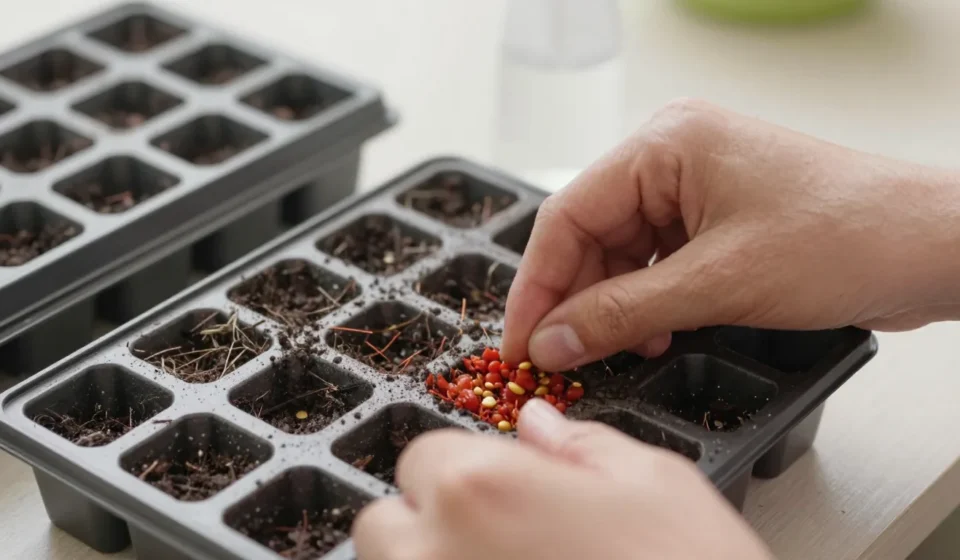
Fill containers with moistened seed-starting mix, then press two seeds per cell about ¼ inch deep. Cover lightly with mix and mist gently.
Place the tray on a heat mat (or in a warm spot) and cover with a humidity dome or plastic wrap. Check daily; seeds need consistent moisture but not soggy soil.
Germination Conditions
Tomato seeds germinate best at 70–80°F. Remove the dome once you see green sprouts—usually in 5–10 days.
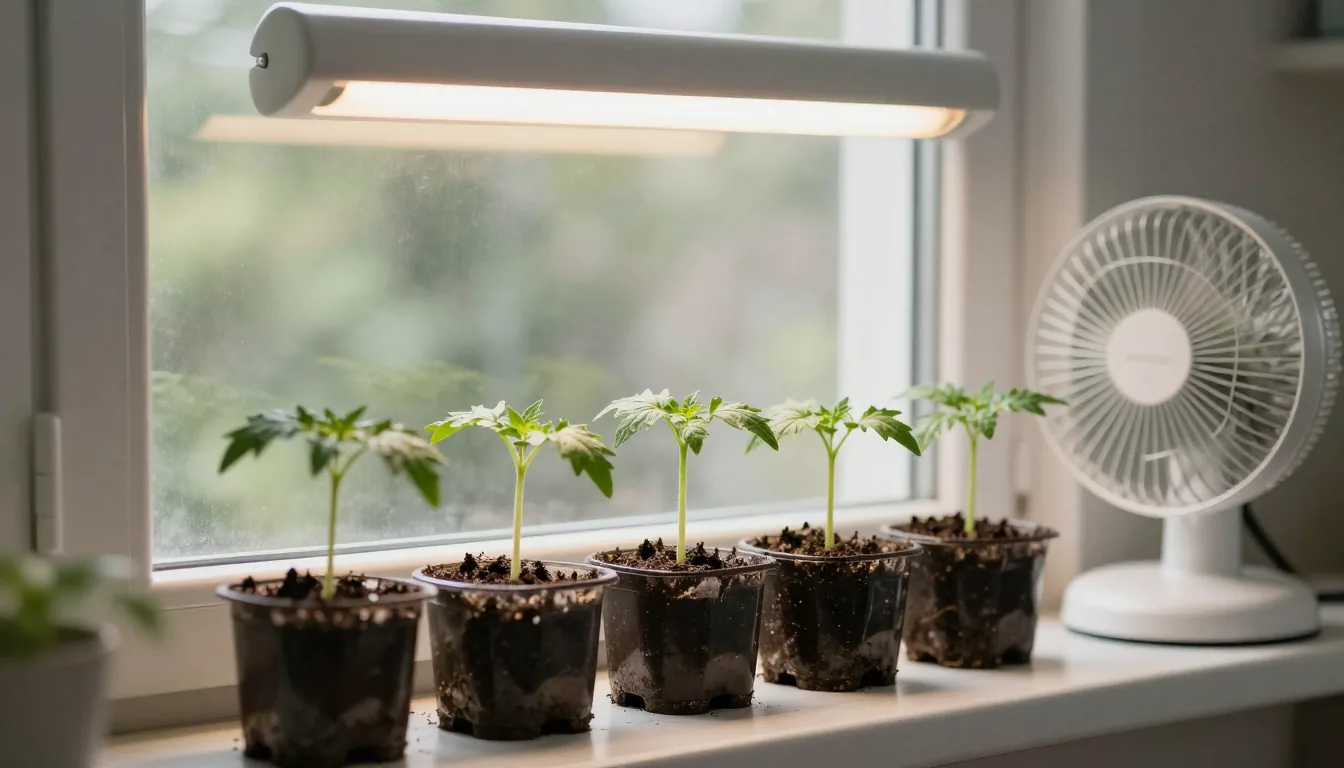
Move them immediately to bright light to prevent leggy growth.
Keep a fan on low for airflow; this strengthens stems and reduces damping-off disease. Water from below to avoid wetting leaves.
Caring for Seedlings
Once the first true leaves appear, start feeding with a dilute organic fertilizer every 7–10 days. Provide 14–16 hours of light—use grow lights if needed.
Repot into 4-inch pots when roots fill the cell. Bury them deep, up to the first leaves, to encourage strong root systems.
This step is crucial when you grow tomatoes from seed because it builds a robust plant.
Consistent care ensures healthy transplants. Keep the soil moist but not waterlogged.
Check for pests like aphids and treat with insecticidal soap if necessary.
Hardening Off Before Transplanting
About a week before planting out, start acclimating your seedlings to outdoor conditions. Set them outside for a few hours in the shade, gradually increasing sun and wind exposure.
Watch the forecast—avoid transplanting during a late frost. When nights stay above 50°F, they’re ready for the garden.
Transplanting and Ongoing Care
Dig a hole deep enough to bury two-thirds of the stem. Add a handful of compost and a teaspoon of organic bone meal.
Water thoroughly after planting.
Mulch with straw or shredded leaves to conserve moisture and suppress weeds. Install cages or stakes right away to support the plants as they grow.
Pruning and Feeding for Maximum Yield
For indeterminate varieties, remove suckers below the first flower cluster to channel energy into fruit production. Leave upper suckers if you want more branches.
Side-dress with compost tea or a balanced organic fertilizer every three weeks. Keep soil consistently moist—irregular watering leads to blossom-end rot and cracking.
Troubleshooting Common Seed Starting Issues
Leggy seedlings are usually caused by insufficient light. Move lights closer or increase duration.
If damping-off occurs, improve airflow and water less frequently.
Failing to grow tomatoes from seed successfully often comes from poor drainage or temperature swings. Maintain steady warmth and use sterile mix to avoid problems.
Harvesting and Enjoying Your Crop
Pick tomatoes when they’re fully colored (or slightly before for longer storage). The flavor peaks at room temperature, so don’t refrigerate ripe ones.
Enjoy fresh in salads, sauces, or canned goods. If frost threatens, pull green ones and ripen them indoors in a paper bag.
The satisfaction of eating a tomato you've grown from seed is unmatched.
For more Gardening & Nature tips, explore our other articles. And if you’re looking to extend your season, check out University of Minnesota’s tomato guide or Southern Exposure Seed Exchange for heirloom varieties.