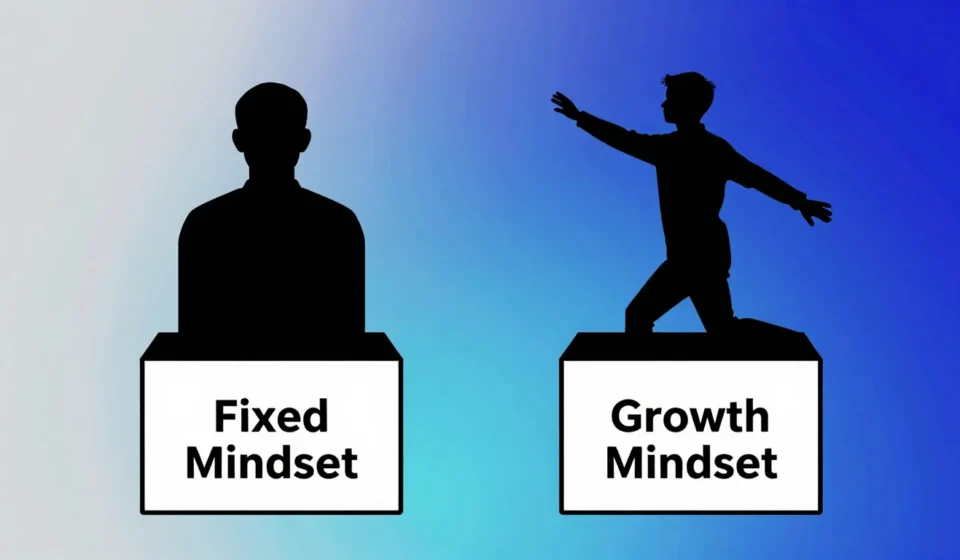

Understanding Fixed vs Growth Mindset: The Core Difference
The concept of fixed vs growth mindset was pioneered by psychologist Carol Dweck. It describes how our beliefs about intelligence and ability influence our behavior. A fixed mindset assumes traits are static, while a growth mindset sees them as developable.
This distinction affects how we approach challenges, setbacks, and learning. Recognizing your default pattern is the first step toward intentional change.
Understanding your tendency in the fixed vs growth mindset spectrum can help you make conscious shifts.

How Fixed Mindset Holds You Back
When you believe talent is innate, you avoid situations that might expose weakness. You stick to what you know, fearing failure as a reflection of your worth.
This avoidance is a classic sign of the fixed vs growth mindset struggle.
For example, you might skip a difficult project at work because you’re afraid of looking incompetent. Over time, this avoidance shrinks your comfort zone and stifles potential.
The Liberating Power of Growth Mindset
Embracing growth means seeing challenges as opportunities to expand your skills. Effort becomes the engine of mastery, not a sign of inadequacy.
Embracing the growth side of the fixed vs growth mindset continuum opens doors to resilience.
People with a growth mindset persist longer, learn from criticism, and celebrate others’ success. They understand that ability can be cultivated through dedication and strategy.
7 Shifts to Cultivate a Learning Orientation
To actively move from a fixed vs growth mindset to a growth-oriented perspective, try these seven shifts. Each builds on the last to rewire your thinking.
1. Reframe Challenges as Growth Opportunities
Instead of thinking, “This is too hard,” ask, “What can I learn from this?” This reframing is a direct application of the fixed vs growth mindset principles. Every obstacle carries a lesson.
Start small: pick one area where you’ve been avoiding difficulty and intentionally lean in. Notice how your perspective changes with practice.
2. Replace “I Can’t” with “I Can’t Yet”
The word “yet” transforms a fixed statement into a growth-oriented one. It acknowledges current limitations while opening the door to future possibility.
This simple linguistic shift can rewire your brain.
Use it daily when you catch yourself saying “I can’t do this.” Add “yet” and see how it feels. It signals patience and persistence.
3. Embrace Effort as the Path to Mastery
Effort is the dividing line in the fixed vs growth mindset debate. Fixed mindset views effort as a sign of low ability; growth mindset sees it as the fuel for skill development.
When you struggle, remind yourself that growth requires strain.
Think of a skill you admire—like playing an instrument or public speaking. Remember that every expert endured countless hours of practice, mistakes, and refinement.
4. Learn from Criticism Instead of Defending
Criticism can sting, but it contains valuable data. Instead of shutting down, ask: “What can I take from this feedback to improve?” Separate your identity from the critique.
Practice listening fully before responding. Thank the person, then reflect later.
Over time, you'll become less reactive and more curious.
5. Find Inspiration in Others’ Success
Fixed mindset feels threatened by others' achievements. Growth mindset uses them as motivation and a source of strategies.
When someone succeeds, ask what you can learn from their journey.
Instead of envy, cultivate admiration. Reach out to mentors or peers and ask about their process.
Their path can illuminate your own.
6. View Failure as Data, Not Defeat
Failure is not a verdict on your potential; it's a signal about your approach. Analyze what went wrong, adjust, and try again.
Each failure brings you closer to mastery.
Keep a growth journal: after a setback, write down three lessons learned and one action step. This turns disappointment into a roadmap.
7. Practice Self-Compassion During Setbacks
Growth doesn't mean being hard on yourself. In fact, self-compassion fosters resilience.
Acknowledge the disappointment, then gently redirect focus to learning.
Treat yourself as you would a friend: with kindness and encouragement. This creates a safe space for taking risks without fear of harsh self-judgment.
Your Path Forward
Understanding fixed vs growth mindset is just the beginning. Lasting change comes from daily practice—choosing challenge over comfort, effort over ego, and learning over proving. Start with one shift this week.
For more resources on Personal Growth, explore our guides on building resilience and habits. Also, read Carol Dweck’s research on Mindset: The New Psychology of Success and explore practical applications from Mindset Works.