
Lifecycle Emissions: Beyond the Tailpipe
When comparing electric vs hybrid cars, tailpipe emissions tell only part of the story. A full lifecycle analysis considers manufacturing, battery production, fuel sourcing, and disposal. For electric vehicles (EVs), the bulk of emissions come from battery manufacturing, while hybrids still burn gasoline, emitting CO2 throughout their lifetime.
Studies show that over a 150,000-mile lifespan, an average EV produces about 50% fewer greenhouse gases than a hybrid, even when accounting for battery production. However, the margin depends heavily on how clean your regional electricity grid is.
In coal-heavy areas, hybrids can sometimes match or beat EVs on total emissions.
Battery Production Footprint
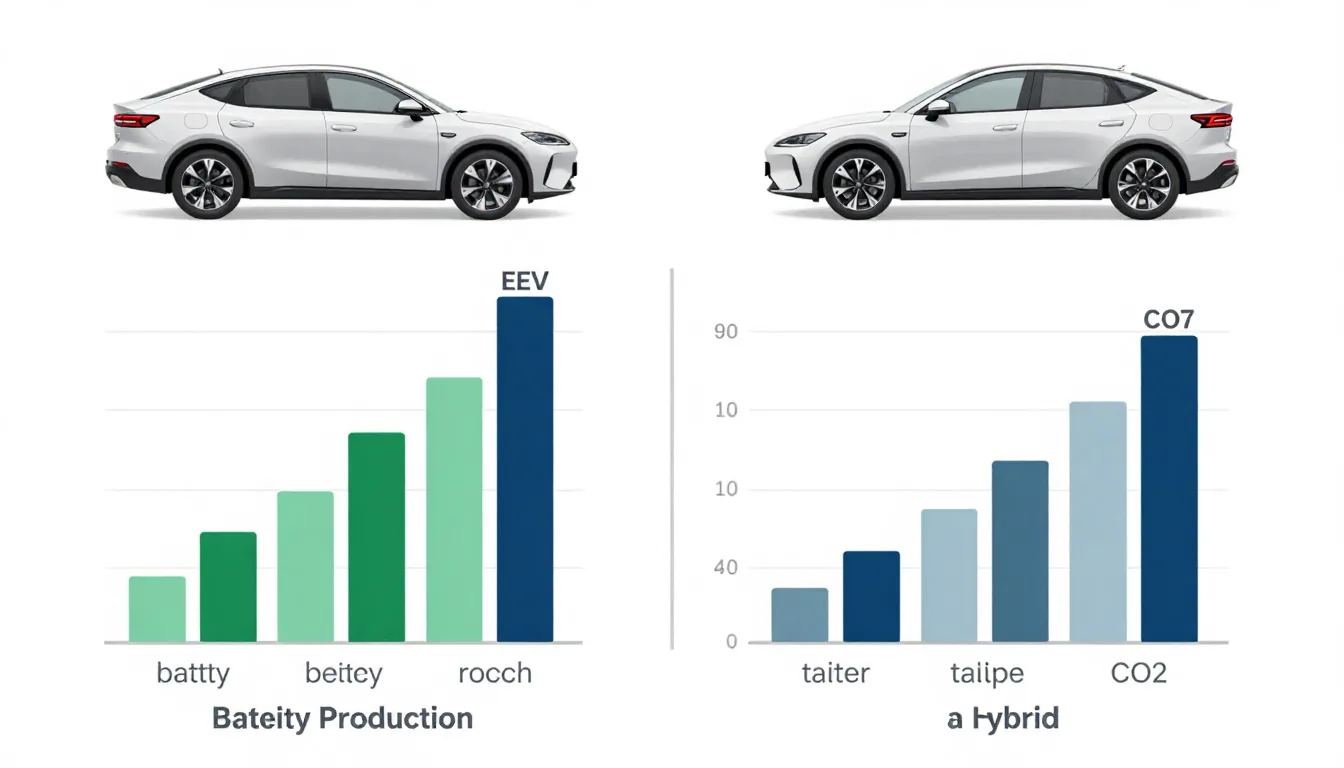
Lithium-ion batteries require mining lithium, cobalt, and nickel, which carries environmental and social costs. Producing a 60 kWh EV battery emits roughly 5–6 tons of CO2, equivalent to 1.5 years of driving a gasoline car.
Hybrid batteries are smaller (1–2 kWh), so their production footprint is lower. But hybrids still require an internal combustion engine, transmission, and exhaust system, adding their own manufacturing emissions.
Over the vehicle’s life, the EV’s higher upfront battery cost is offset by zero tailpipe emissions.
Electric vs Hybrid Cars: Driving Habits Decide
Your typical trips determine which powertrain is greener. If you drive short city distances and can charge at home, an EV shines — its efficiency is highest in stop-and-go traffic, and you rarely need the range.
For long highway commutes or areas with scarce charging, a hybrid can be more practical.
Plug-in hybrids (PHEVs) offer a middle ground: you can drive electric for 20–50 miles, then switch to gasoline for longer trips. But if you rarely plug in, a PHEV may emit more than a conventional hybrid due to added weight.
Ultimately, the choice between electric vs hybrid cars hinges on your daily routine.
Energy Source and Grid Mix
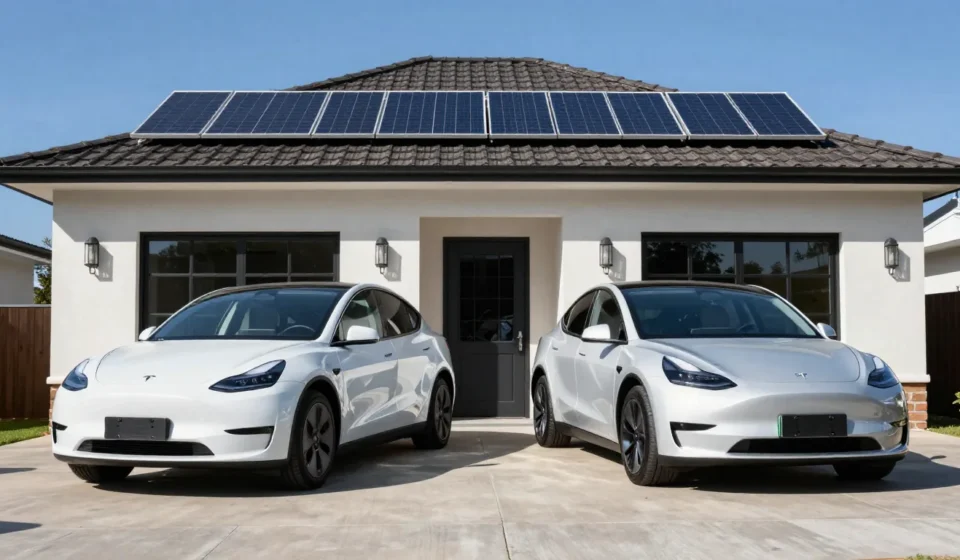
An EV charged on a solar-powered home array has near-zero operational emissions. But charging from a coal-dominated grid shifts the burden upstream.
In the U.S., regions like the Pacific Northwest (hydro-heavy) give EVs a big advantage, while the Midwest (coal-heavy) narrows the gap. When you evaluate electric vs hybrid cars, consider your local grid mix to get an accurate comparison.
Hybrids avoid grid dependence entirely, burning gasoline with consistent tailpipe emissions. Even so, the refining and transport of gasoline add about 25% more emissions upstream.
So a hybrid that gets 50 mpg still emits around 200 grams of CO2 per mile, whereas an EV on a moderate grid emits around 150 grams per mile.
Real-World Comparison Example
Consider the Toyota Prius (hybrid) vs. the Nissan Leaf (EV).
In California (clean grid), the Leaf emits 70 g CO2/mile lifecycle, the Prius 150 g/mile. In West Virginia (coal grid), the Leaf emits 180 g/mile, the Prius 150 g/mile — the hybrid wins.
This real-world test shows that electric vs hybrid cars have no universal answer.
Use the EPA’s vehicle emissions tool or AFDC’s lifecycle calculator to compare based on your ZIP code. Your local grid mix is the deciding factor.
Maintenance and Longevity
EVs have far fewer moving parts — no oil changes, transmission fluids, or exhaust repairs. Regenerative braking reduces brake wear.
Over 10 years, an EV typically saves $3,000–$5,000 in maintenance compared to a hybrid. This total cost advantage is important when weighing electric vs hybrid cars.
However, EV batteries degrade over time. Most manufacturers offer 8-year/100,000-mile warranties, and batteries often last 150,000+ miles.
Hybrid batteries also degrade but are cheaper to replace. For long-term ownership, an EV’s simpler drivetrain often wins on total cost of ownership.
Making Your Green Choice
To pick the greener option, assess: your daily driving distance, access to charging, and local grid carbon intensity. If you drive under 40 miles/day and have a garage, an EV is likely best.
For longer, unpredictable trips without convenient charging, a hybrid is the pragmatic eco-choice.
Visit our Sustainability & Ecology section for more guides on reducing your transport footprint. The debate over electric vs hybrid cars ultimately comes down to your specific circumstances.