
Actual 5G Speeds: What Real-World Tests Show
Carrier ads paint 5G as a transformative leap, but your actual 5G daily speed depends on several factors that often get glossed over. Let’s examine what real-world tests consistently show.
What Typical 5G Speeds Look Like Right Now
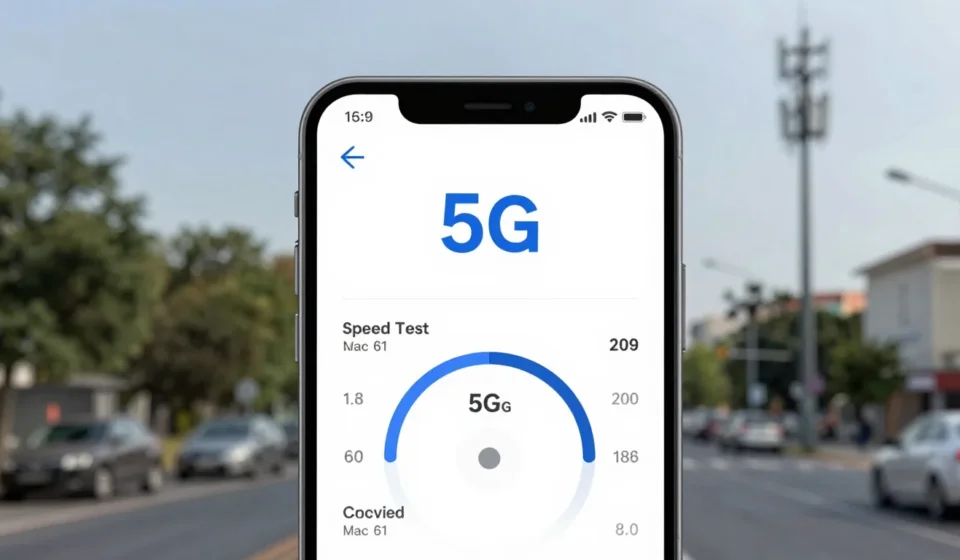
When considering your 5G daily speed, typical speeds in optimal conditions with mmWave 5G can exceed 1 Gbps, but you need to be within a few hundred feet of a tower with clear line-of-sight. Sub-6 GHz 5G, which covers far more area, typically delivers 50–300 Mbps.
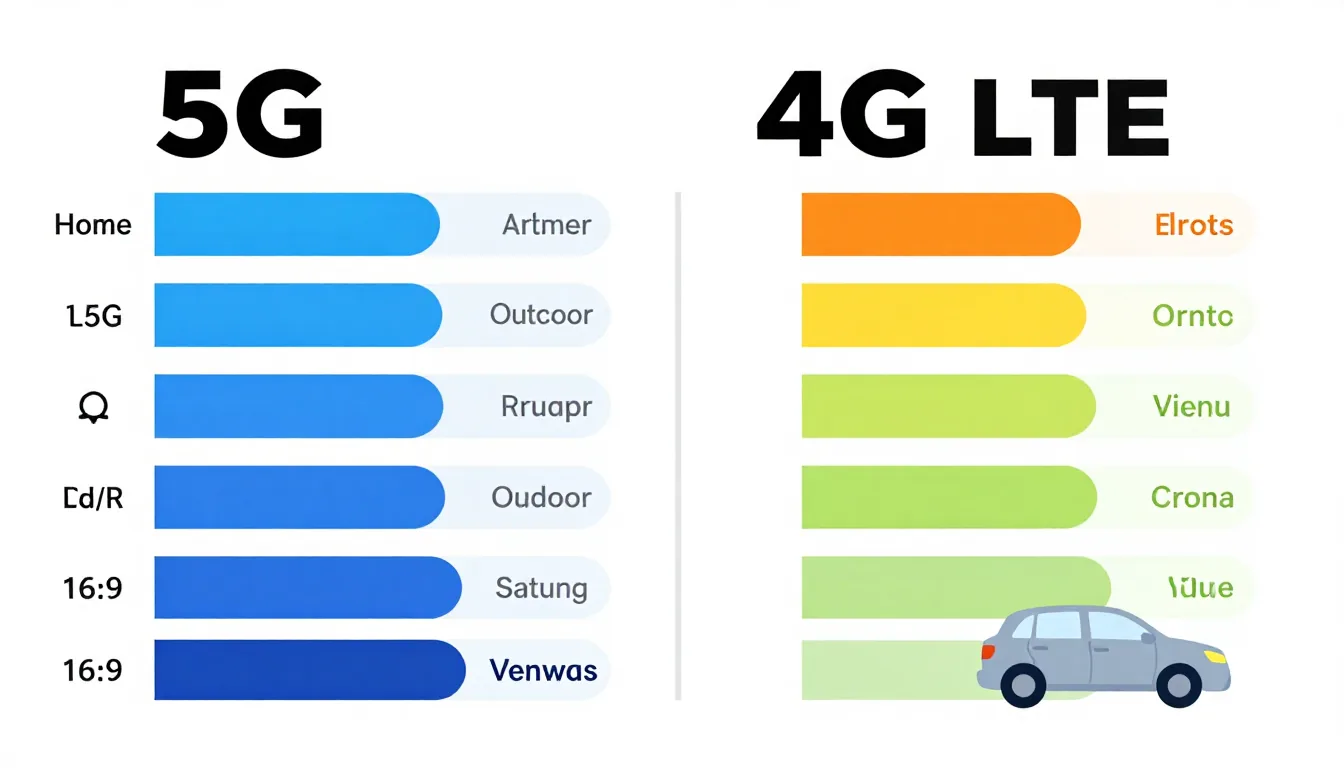
That is 2–5 times faster than average 4G LTE, but hardly the 10x jump often promised. Speedtest data from Q1 2025 shows median 5G download speeds around 180 Mbps in the US, versus 45 Mbps for LTE.
Coverage Constraints That Limit Your Experience
mmWave: Fast but Fragile
mmWave 5G uses high-frequency bands that barely penetrate walls, windows, or even foliage. You might see 2 Gbps standing outside a stadium, but drop to 4G speeds once you step indoors.
Carriers have deployed mmWave mainly in dense urban cores, arenas, and airports. In suburban or rural areas, you are almost certainly on sub-6 GHz, which offers better range but modest speed gains.
Your 5G daily speed will vary significantly based on which band you’re connected to at any given moment.
Sub-6 GHz: The Real Workhorse
Most users connect to sub-6 GHz mid-band (e.g., 2.5 GHz on T-Mobile, C-band on Verizon/AT&T). These bands provide solid coverage and speeds of 100–400 Mbps, but they share spectrum with 4G in many areas.
As more users join 5G, congestion affects mid-band speeds similarly to LTE. Peak hours can drop your 5G daily speed below what you’d get on a quiet 4G tower.
Practical Benefits Over 4G LTE Today
Lower Latency for Interactive Tasks
5G's real advantage is not raw speed but latency. Sub-6 GHz 5G cuts ping from ~40 ms (4G) to ~20 ms, while mmWave can go under 10 ms.
This matters for video calls, gaming, and remote desktop.
You will notice faster page loads and less buffering when streaming high-bitrate video, but only if you have a strong 5G signal.
Network Capacity and Consistency
5G's efficient spectrum use doubles or triples network capacity. In crowded venues, your connection is less likely to slow down compared to 4G.
This is a subtle but meaningful improvement.
However, battery life takes a hit. 5G modems draw more power, especially on mmWave.
Many phones now include a 5G toggle for when you don't need the extra speed.
When 5G Falls Short
Upload Speeds Remain Limited
Most 5G implementations still use 4G for uplink (NSA mode), so upload speeds rarely exceed 30–50 Mbps. Streaming video from your phone or uploading large files sees negligible improvement.
Standalone (SA) 5G with full uplink bands is rolling out slowly. Until then, your upload performance remains LTE-like.
Indoor Penetration Is Poor
Even sub-6 GHz 5G struggles indoors compared to 4G. Many homes and offices see 5G speeds drop to 30 Mbps—barely faster than LTE.
Carriers are adding small cells, but coverage gaps persist.
For a realistic comparison of your 5G daily speed: test at your usual locations (home, office, commute). If you live in a 5G coverage shadow, you may see little to no benefit.
Should You Upgrade for 5G Daily Speed?
If you already have a 5G phone, you are already benefiting in well-covered areas. If you are deciding between a 5G and a 4G-only device, consider where you spend most of your time.
Urban dwellers gain more than rural users.
For most people, improvements to 5G daily speed are incremental—faster downloads, smoother streaming, and lower latency—but not transformative. The hype vastly oversells the near-term reality. For a deeper dive into mobile technology, browse our Tech & Gadgets section.
To verify carrier coverage claims, check independent tests from Ookla and OpenSignal. Also see PCMag’s 5G explainer for technical details.