
Understanding the OLED QLED Mini-LED Difference
Let’s cut through the marketing fluff. OLED, QLED, and Mini-LED are fundamentally different approaches to TV backlighting and pixel control. The OLED QLED Mini-LED difference comes down to how each technology handles light emission and color reproduction.
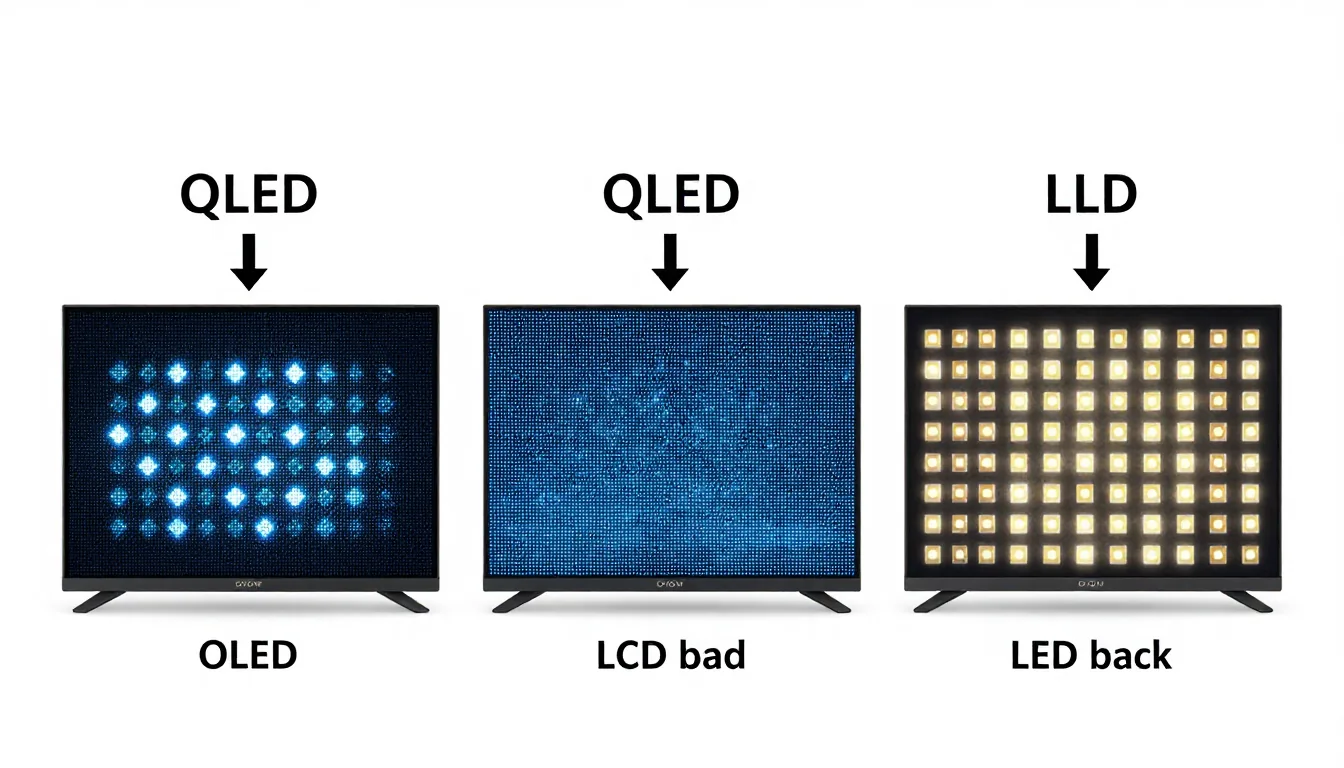
OLED uses self-emissive pixels that turn off completely for perfect blacks. QLED uses an LCD panel with quantum dots and an LED backlight.
Mini-LED is also LCD but uses thousands of tiny LEDs for more precise backlight zones.
All three have distinct trade-offs. Your choice depends on room lighting, content type, and budget.
Contrast and Black Levels
OLED wins by a landslide here. Each pixel can shut off independently, yielding infinite contrast and inky blacks.
That makes HDR content pop with stunning depth.
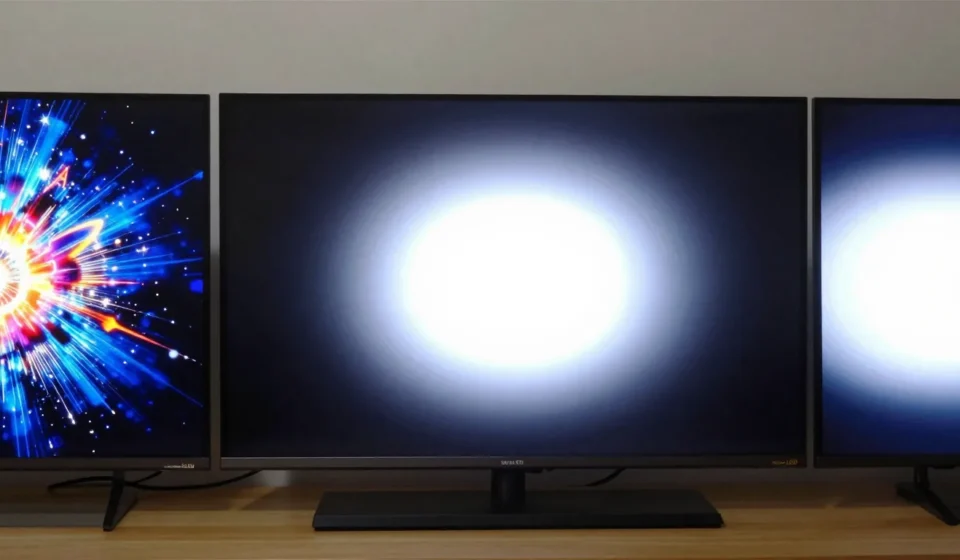
QLED relies on LED backlight zones. Even the best models show some blooming.
Mini-LED improves this dramatically: thousands of zones mean much finer control, but it still can't match OLED's per-pixel precision.
If you watch mostly bright room content or don't care about perfect blacks, QLED or Mini-LED are fine. For dark room movie watching, OLED is hard to beat.
The OLED QLED Mini-LED difference is most apparent here, making OLED the champ for dark rooms.
Brightness and HDR Performance
Here's where OLED stumbles. OLED panels typically hit 500–800 nits peak brightness.
High-end QLEDs and Mini-LEDs can exceed 1500–2000 nits. That extra headroom makes HDR highlights truly blinding.
Mini-LED offers the best of both worlds: high brightness with improved black levels. Sony’s X95L and Samsung’s Neo QLED use Mini-LED to great effect.
But brightness isn't everything. OLED's better black levels mean higher perceptual contrast at moderate brightness.
For most living rooms, 600–800 nits is plenty bright. Yet for HDR enthusiasts who prioritize peak brightness, Mini-LED offers a compelling alternative.
Burn-In and Longevity
Static elements can cause permanent image retention on OLED over time. Modern OLEDs have mitigation features like pixel shifting, but the risk isn’t zero.
QLED and Mini-LED are immune to burn-in because they use inorganic LCD materials. They can degrade over time, but typical lifespan exceeds 10 years of normal use.
If you leave CNN on all day or play the same game for hours, consider QLED/Mini-LED. For varied content, OLED is safe.
Considering the OLED QLED Mini-LED difference in longevity helps avoid future headaches.
Viewing Angles and Uniformity
OLED maintains color and contrast even at extreme angles. QLED and Mini-LED (especially VA panels) suffer from color shift when viewed off-axis.
IPS-based Mini-LEDs have better angles but lower native contrast.
If your seating arrangement is wide, OLED is the clear winner. For a single sofa directly in front, the difference is minor.
Price and Value
OLED has dropped in price but still commands a premium. A 65-inch OLED starts around $1,200.
Mini-LED often costs less for comparable size and features. QLED (edge-lit) is budget-friendly but compromises on blacks.
Mini-LED sits between them: better contrast than QLED, higher brightness than OLED, and no burn-in risk. However, Mini-LED can exhibit blooming in high-contrast scenes.
The OLED QLED Mini-LED difference in price narrows as sizes increase; 77-inch OLEDs cost significantly more than comparable Mini-LEDs.
Which One Should You Buy?
Decide based on your priorities. For cinema-grade picture quality in a dark room, get OLED.
For bright rooms, get Mini-LED or high-end QLED.
For a strict budget, entry-level QLED works but accept the light bleed. Don’t let marketing claims sway you.
Compare Tech & Gadgets reviews for real-world measurements. The best TV is the one that fits your room and your eyes. Also assess your typical content: varied viewing justifies OLED’s premium, while static content favors Mini-LED.
For deeper dives, check out Rtings’ comparison or Digital Trends’ guide and TechRadar’s breakdown.