From Pits to Bumps: The Ultimate Guide to Treating Acne Scars with Science-Backed Ingredients and Procedures

Understanding Scar Types: Atrophic vs. Hypertrophic
Acne scars fall into two main categories based on collagen response. Identifying your scar type is the first step toward effective acne scar solutions.
Atrophic scars (icepick, boxcar, rolling) result from collagen loss, leaving depressions. Hypertrophic or keloid scars are raised due to excess collagen production.
Treatment strategies differ dramatically. Atrophic scars benefit from collagen-stimulating ingredients and resurfacing procedures, while hypertrophic scars require inflammation control and collagen reduction.
Always consult a dermatologist to confirm your scar type before starting any regimen.
Topical Ingredients for Atrophic Scars
Retinoids: The Gold Standard
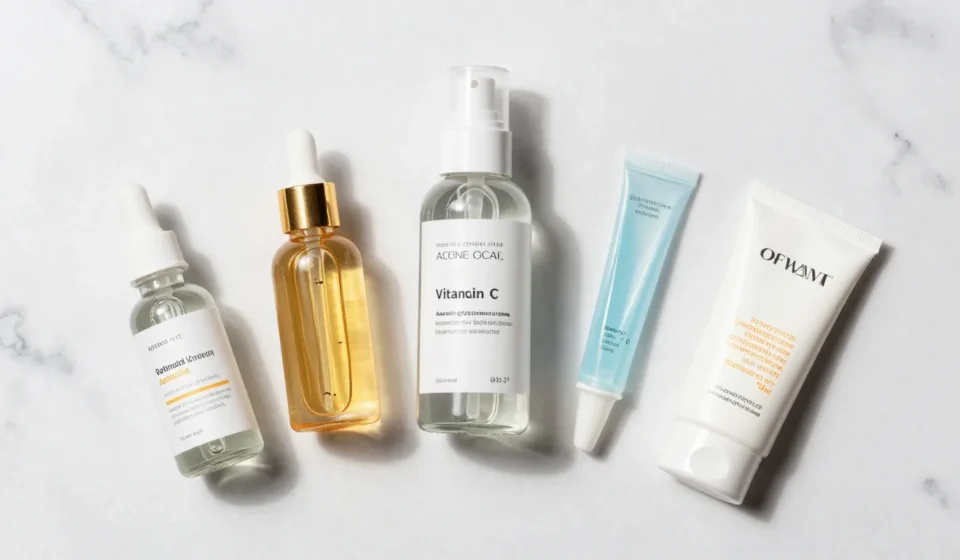
Retinoids (tretinoin, adapalene, retinol) accelerate cell turnover and stimulate collagen synthesis. As a key acne scar solution, they smooth texture and gradually fill depressions.
Start with low concentration to avoid irritation, and use nightly with sunscreen.
Prescription retinoids show superior efficacy for boxcar and rolling scars. Over-the-counter retinol offers modest benefits with less irritation.
Consistency over 6–12 months yields visible improvement.
Vitamin C (L-Ascorbic Acid)
As a potent antioxidant, vitamin C boosts collagen production and brightens hyperpigmentation around scars. Use a stable, pH-balanced serum in the morning.
Pair with vitamin E and ferulic acid for enhanced effect.
For deep atrophic scars, vitamin C alone is insufficient but complements other treatments. It also protects from UV damage that darkens scars.
AHAs (Glycolic, Lactic, Mandelic)
Alpha hydroxy acids exfoliate the stratum corneum, promoting cell renewal and collagen remodeling. Glycolic acid penetrates deeper, improving texture and reducing shallow scars.
Lactic acid adds hydration, ideal for sensitive skin.
Use 5–10% concentrations 2–3 times weekly. Stronger peels performed by professionals (20–30%) yield faster results for mild atrophic scarring.
Professional Procedures for Atrophic Scars
Microneedling (Collagen Induction Therapy)
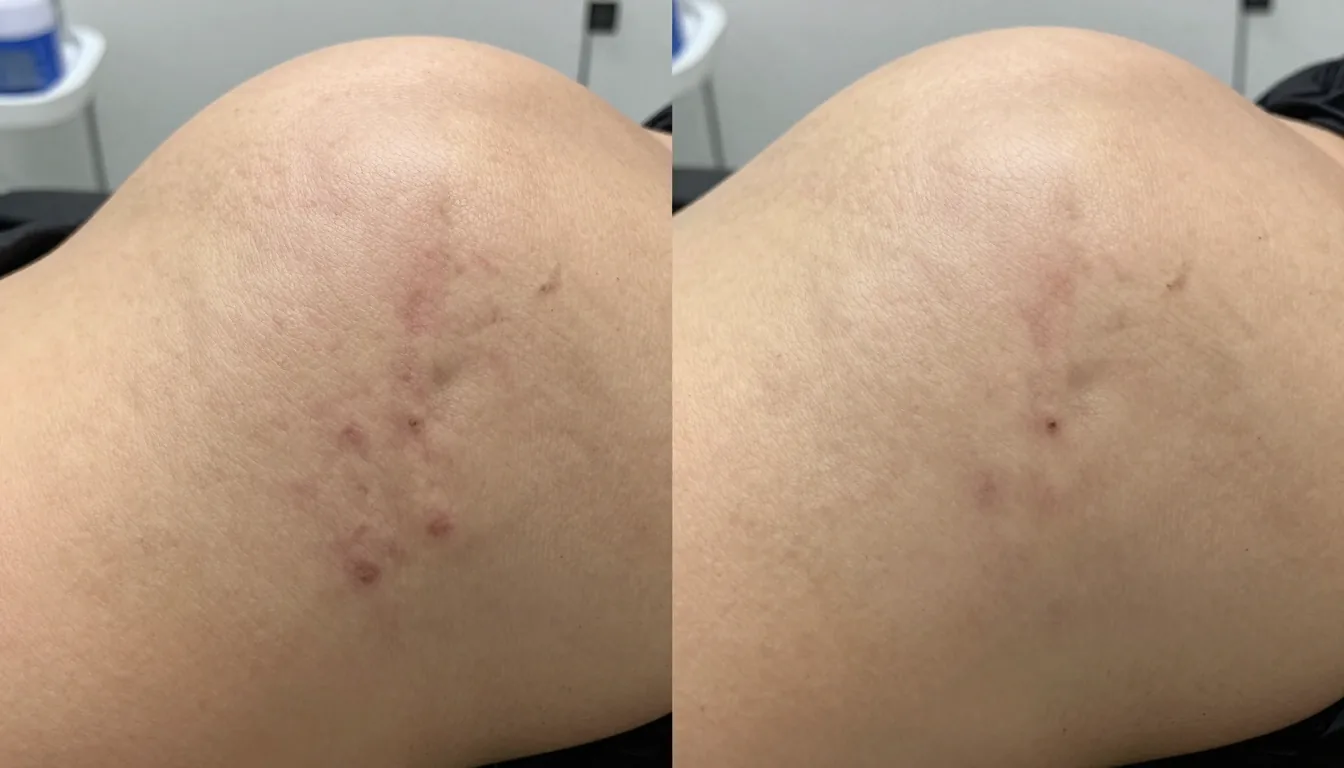
Microneedling uses fine needles to create micro-injuries, triggering collagen and elastin production. It is highly effective for rolling and boxcar scars.
Typically 3–6 sessions spaced 4–6 weeks apart improve depth by 50–70%.
Adding platelet-rich plasma (PRP) or topical growth factors enhances outcomes. Downtime is minimal (redness for 1–2 days).
For deeper icepick scars, microneedling with radiofrequency (RF) delivers heat to dermis for more collagen contraction.
Laser Resurfacing (Ablative and Non-Ablative)
Ablative lasers (CO2, Er:YAG) vaporize scar tissue and stimulate new collagen. They dramatically improve severe scars but require 1–2 weeks downtime.
Non-ablative fractional lasers (Fraxel) treat deeper layers with less downtime, ideal for darker skin tones.
Combining fractional laser with topical ingredients like retinol post-procedure maximizes results. Sun protection is crucial for 3–6 months after treatment to prevent hyperpigmentation.
Subcision and Fillers
Subcision involves inserting a needle to break fibrous bands tethering rolling scars. It lifts depressions immediately.
Fillers (hyaluronic acid, poly-L-lactic acid) can then plump the area, but effects are temporary (6–18 months).
These procedures work well for deeper atrophic scars, especially when combined with other acne scar solutions like microneedling. This combination addresses both volume loss and texture.
Topical Ingredients for Hypertrophic Scars
Silicone Gels and Sheets
Silicone is among the most effective acne scar solutions for raised scars. It hydrates, softens, and flattens hypertrophic scars by reducing collagen overproduction.
Apply silicone gel twice daily for at least 3 months.
Silicone sheets are worn 12–24 hours daily for optimal effect. They prevent keloid recurrence after surgical excision.
Onion Extract (Contractubex, Mederma)
Onion extract (Allium cepa) has anti-inflammatory and antifibrotic properties. It softens raised scars and reduces redness.
Studies show moderate improvement when used consistently, often combined with silicone.
Pressure Therapy
Pressure garments or devices apply constant compression to flatten hypertrophic scars. Commonly used for keloids, pressure therapy requires 6–12 months of daily wear for results.
It is often combined with silicone.
Professional Procedures for Hypertrophic Scars
Intralesional Corticosteroid Injections
Steroid injections (triamcinolone acetonide) reduce inflammation and collagen synthesis. They are the most effective treatment for keloids and hypertrophic scars.
Injections every 4–6 weeks flatten scars and relieve itching.
Side effects include skin atrophy and hypopigmentation, especially with high doses. Combining with cryotherapy (freezing) enhances response.
Cryotherapy
Cryotherapy destroys hypertrophic scar tissue via freezing. It is used alone for small keloids or prior to steroid injection for larger ones.
Multiple sessions may be needed, and post-inflammatory hyperpigmentation is a risk in darker skin.
Laser Therapy (Pulsed Dye Laser, ND:YAG)
Pulsed dye laser (PDL) targets blood vessels in hypertrophic scars, reducing redness and flattening texture. It works best for immature, red scars.
ND:YAG laser penetrates deeper to reduce collagen density in mature keloids. Typically 3–5 sessions required.
Customized Acne Scar Solutions: Combining Treatments
Effective acne scar solutions often combine multiple approaches. For example, use retinoids and vitamin C at home, with quarterly microneedling sessions for atrophic scars.
For hypertrophic scars, silicone gel plus steroid injections yields optimal results.
Always prioritize sun protection (SPF 50+ daily) to prevent scars from darkening. Patience is key—most treatments require 6–12 months for noticeable improvement. Explore more Beauty & Skincare guides for complementary routines.
For further reading, see the American Academy of Dermatology guide and this PubMed review on scar management. For personalized acne scar solutions, always consult a board-certified dermatologist.