Kojic Acid vs. Tranexamic Acid: Which Pigmentation Fighter Wins for Melasma and Dark Spots?

Kojic Acid vs Tranexamic Acid: Key Differences in Mechanism
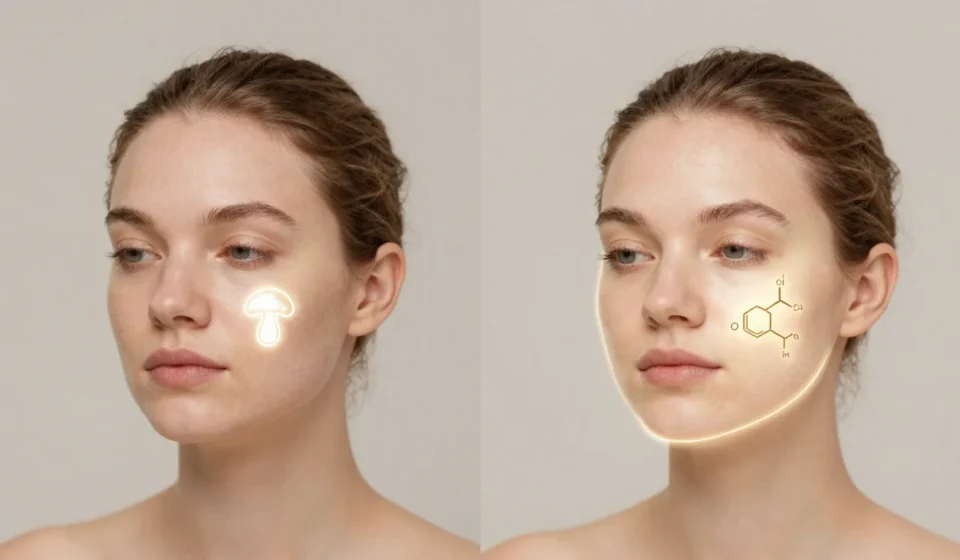
The debate of kojic acid vs tranexamic acid for hyperpigmentation centers on how each interrupts melanin production. Kojic acid, a fungal derivative, directly inhibits tyrosinase by chelating copper, a cofactor required for melanin synthesis.
This action makes it effective for photodamage and post-inflammatory hyperpigmentation (PIH).
Tranexamic acid, a synthetic lysine analog, works upstream by blocking plasminogen activation, which reduces arachidonic acid release and subsequent melanocyte stimulation. This pathway is particularly relevant for melasma, where vascular involvement is common.
Understanding these mechanisms is key when evaluating kojic acid vs tranexamic acid for your skin concerns.
Efficacy for Melasma: Tranexamic Acid Takes the Lead
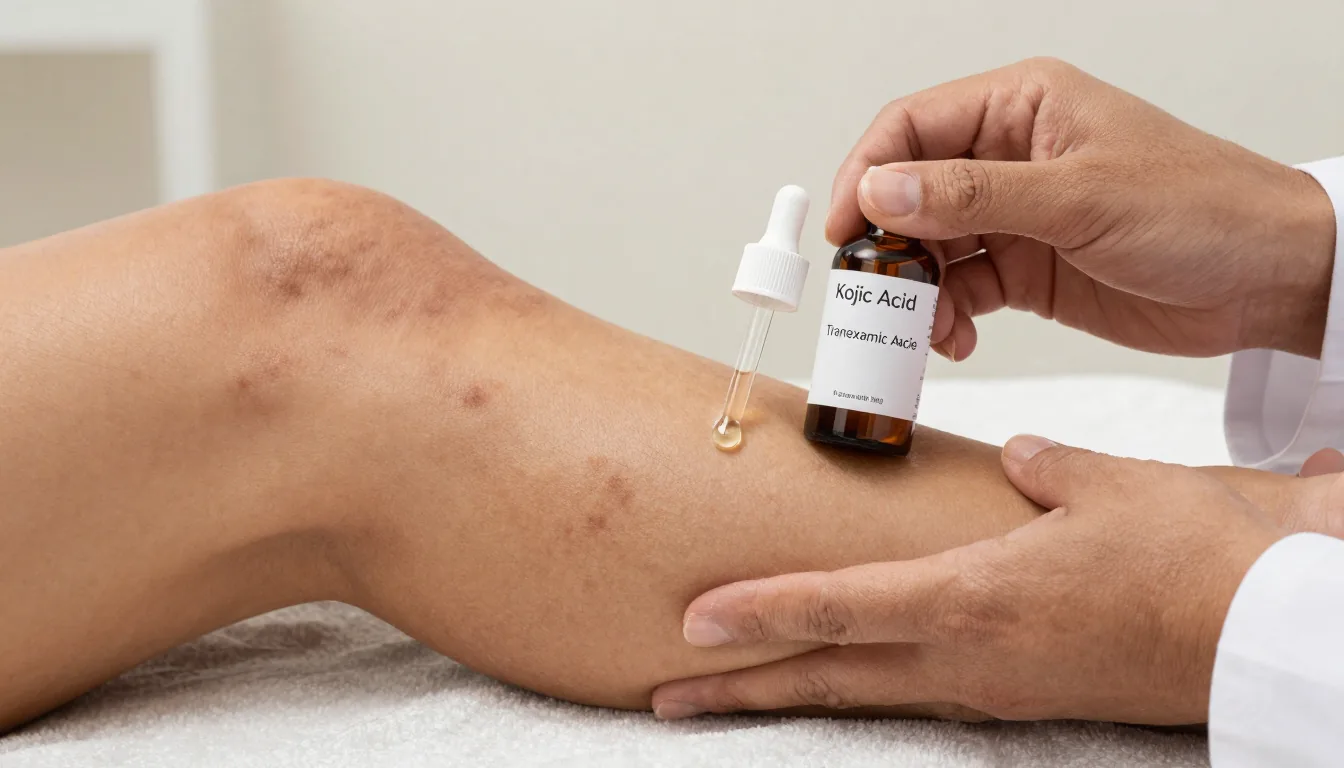
Clinical research consistently shows that tranexamic acid outperforms kojic acid for melasma. A 2023 systematic review found that topical 2-5% tranexamic acid reduced Melasma Area Severity Index (MASI) scores by 30-50% over 12 weeks.
Oral tranexamic acid shows even more dramatic results but requires medical supervision due to potential side effects.
Kojic acid, typically used at 1-4%, improves melasma by 20-35% in most studies. However, its effect plateaus earlier, and it may cause irritation in high concentrations.
For stubborn melasma, dermatologists often combine both ingredients to leverage their complementary mechanisms. Combining kojic acid vs tranexamic acid can yield superior results, especially for resistant cases.
Post-Inflammatory Hyperpigmentation: Kojic Acid Shines
For PIH after acne or injury, kojic acid demonstrates excellent results. A 2021 study comparing 2% kojic acid gel to 2% tranexamic acid gel on PIH found kojic acid reduced pigmentation intensity by 45% versus 30% for tranexamic acid after 8 weeks.
This is because kojic acid directly inhibits ongoing melanin production in the lesion.
Tranexamic acid works better when inflammation is still active, as it curbs the vascular component of pigmentation. But for established dark spots, kojic acid's direct tyrosinase inhibition provides faster visible fading.
Many experts recommend starting with kojic acid for PIH and switching to tranexamic acid if irritation occurs. Ultimately, the choice between kojic acid vs tranexamic acid depends on your specific pigmentation type.
Sun Spots: A Close Match
Solar lentigines (sun spots) respond similarly to both agents. A split-face trial demonstrated that 2% kojic acid serum and 2% tranexamic acid serum both achieved about 40% reduction in spot density after 12 weeks.
However, kojic acid required twice-daily use, while tranexamic acid needed only once-daily application, offering a compliance advantage for busy individuals.
Combination products (e.g., 2% kojic acid + 2% tranexamic acid) show synergistic effects, reducing sun spots by up to 60% in some studies. This synergistic approach is a key reason why the debate of kojic acid vs tranexamic acid often leads to using both for optimal results.
Safety and Tolerability Comparison
Kojic acid can cause contact dermatitis in sensitive individuals, especially above 2% concentration. Tranexamic acid is generally well-tolerated; systemic side effects are rare with topical use but include headache and gastrointestinal upset when taken orally.
Pregnant or nursing women should avoid oral tranexamic acid.
Both are safe for long-term use, but always pair with sunscreen. For deeper skin tones (Fitzpatrick IV-VI), tranexamic acid is preferred as it carries lower risk of hypopigmentation or paradoxical darkening.
When comparing kojic acid vs tranexamic acid for safety, tranexamic acid often has a better tolerability profile for sensitive skin.
How to Choose and Layer for Maximum Effect
Start with one ingredient—Beauty & Skincare experts recommend trying kojic acid for isolated dark spots and tranexamic acid for diffuse melasma. For optimal results, use a serum with both in a stabilized formulation. Apply after cleansing and before moisturizer.
Use gradually: 2-3 times per week initially, increasing to daily as tolerated. Always follow with a moisturizer and sunscreen (SPF 50, broad spectrum) to prevent new pigmentation.
Consistency is crucial—results typically appear after 8-12 weeks of regular use. The decision between kojic acid vs tranexamic acid should be based on your specific pigmentation type and lifestyle.
For evidence-based guidance on kojic acid vs tranexamic acid, consult resources like the American Academy of Dermatology or PubMed for peer-reviewed studies. Remember, what works for one person may not work for another, so patience and professional advice are key.
Cost and Accessibility
Kojic acid products are widely available and generally affordable due to its use in OTC skincare. Tranexamic acid serums are also available over the counter but may be pricier.
Oral tranexamic acid requires a prescription and is typically covered by insurance only for heavy menstrual bleeding, not for melasma.
Both ingredients are found in many serums and creams, but always look for stabilized formulations to ensure efficacy. Vitamin C and niacinamide also complement these pigments fighters, but that’s a topic for another day.