
When chefs speak of Japanese knives precision cooking, they refer to a philosophy where every slice, dice, and julienne becomes an extension of the hand.
Unlike Western knives, which prioritize durability for heavy tasks like cleaving bones, Japanese knives precision cooking is forged for surgical accuracy. Their thinner edges and harder steel enable cuts that preserve cell structure, unlocking flavors and textures impossible with duller tools.
This isn’t just about sharpness—Japanese knives precision cooking is about respecting ingredients through technical mastery. The precision of these knives transforms cooking into an art form.
Japanese Knives Precision Cooking: The Craftsmanship Behind the Blade
A Japanese knife begins with tamahagane steel, smelted from iron sand in a tatara furnace. This ancient method produces layered steel with distinct hard and soft zones—a technique lost in mass-produced Western knives.
Artisans hammer, fold, and quench the metal up to 16 times, creating a blade that holds an edge at 60–65 HRC (Rockwell hardness), far exceeding Western norms of 52–58. Each region specializes: Sakai for yanagiba (sashimi knives), Seki for gyuto (chef’s knives), and Echizen for deba (heavy-duty).
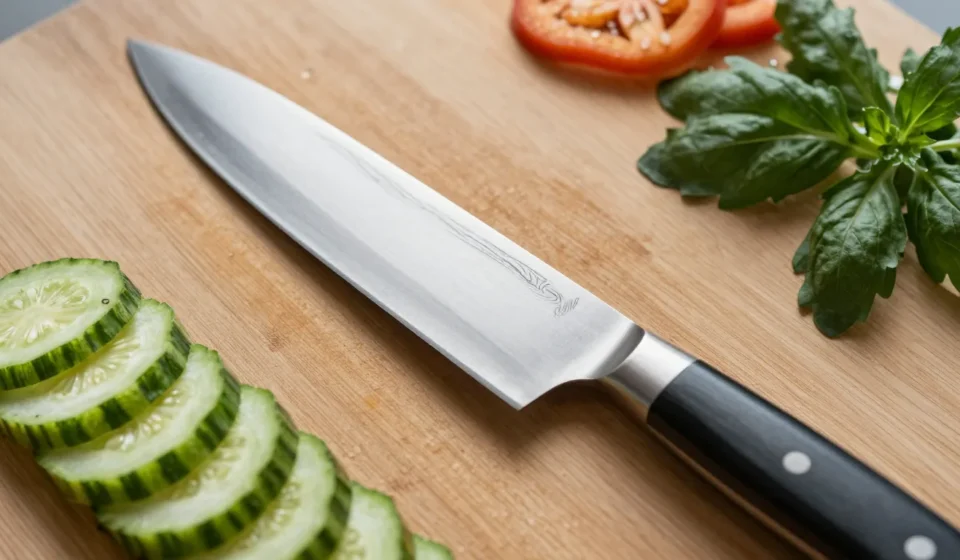
The handle—often magnolia wood with a water-buffalo horn ferrule—is designed for balance. A 210mm gyuto might weigh only 140 grams, letting you slice through tomatoes with just the blade’s weight, not brute force.
Steel Types for Precision
Two carbon steels dominate Japanese blades: Shirogami (white steel) and Aogami (blue steel). White steel, purer with fewer impurities, sharpens to a razor’s edge but rusts easily.
Blue steel adds chromium and tungsten for better stain resistance and edge retention, ideal for busy kitchens. Both require immediate drying after use—a ritual that builds discipline.
Western stainless knives can't match the fine-grained structure of Japanese knives precision cooking, which allows a 12–15° edge angle.
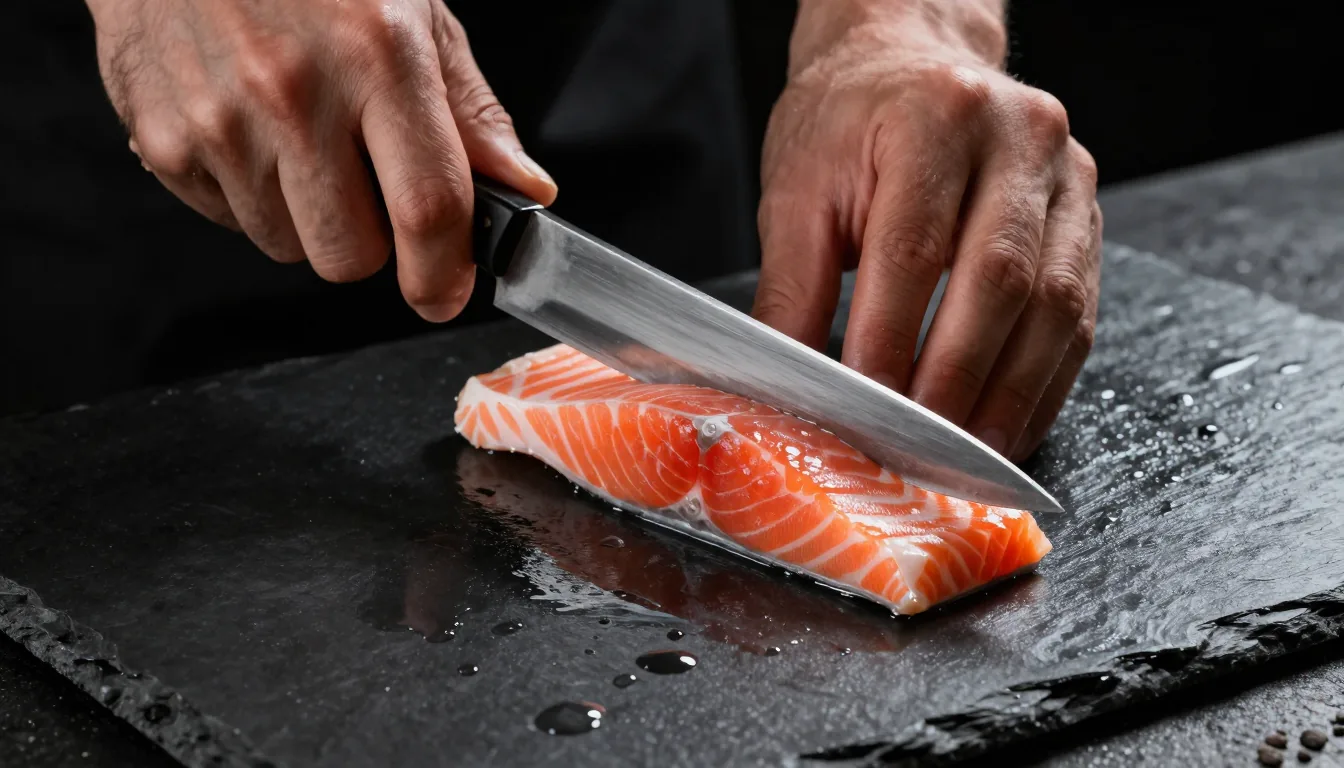
Japanese 16-layer Damascus blades combine hard core with softer outer layers, giving both sharpness and shock absorption. For precision work like slicing raw fish, a single-bevel yanagiba’s 5–10° edge produces paper-thin cuts that reveal the fish’s natural oils.
Cutting Techniques Mastery
Western chefs often rock chop; Japanese knives precision cooking emphasizes push cuts for better ingredient integrity. A Gyuto’s flat profile and gentle curve encourage a forward slicing motion, reducing drag and preserving ingredient integrity.
For herbs, a nakiri's straight edge chops without tearing leaves. The usuba, with its ultra-thin spine, excels at katsuramuki—peeling a daikon into a continuous sheet without breaking.
This philosophy extends to sharpening.
Waterstones (1000–6000 grit) polish the edge, removing burrs microscopically. A well-maintained Japanese knife can stay sharp for weeks of daily use, whereas a Western steel might require honing every session. Gastronomy & Food enthusiasts recognize that the knife’s role isn’t just cutting—it’s amplifying ingredient quality.
When Japanese Knives Shine—and When They Don’t
Japanese knives precision cooking excels at vegetables and fish: delicate work where precision matters. They struggle with frozen foods, bones, or hard squash due to brittleness.
For those tasks, a Western cleaver or serrated knife is safer. Many chefs own both—a 180mm santoku for daily prep and a 240mm chef’s knife for butchery. Consider the cultural significance: a Japanese knife is often a lifelong companion, passed down with care.
Similarly, specialty retailers emphasize that a single high-quality knife—like a Shun or Miyabi—can replace a block of mediocrity. The initial investment (starting at $150) pays dividends in cooking pleasure.
Caring for Your Precision Blade
Never use a dishwasher. Hand-wash with mild soap, dry immediately, and store in a wooden saya or magnetic strip.
Oil the blade monthly with camellia oil to prevent rust.
Sharpen on wet stones—never pull-through sharpeners—to maintain the edge's geometry. In practice, a sharp Japanese knife halves prep time.
Slicing a carrot into uniform 2mm rounds for a mirepoix becomes meditative. Japanese knives precision cooking transforms prep time into a meditative practice.
The craftsmanship embedded in each blade transforms cooking from chore to art. For those chasing precision, Japanese knives precision cooking is the ultimate tool.